Oesophageal Cancer Surgery (Oesophagectomy) in Chennai
- Consults across Chennai: Adyar · Alwarpet · T. Nagar · Kilpauk
- Evening OPD at Mira Health Care, Adyar: Mon – Sat, 4:00–7:00 PM
Oesophageal (food pipe) cancer surgery in Chennai: staging, chemoradiotherapy, minimally invasive oesophagectomy, risks, eating afterwards and cost.
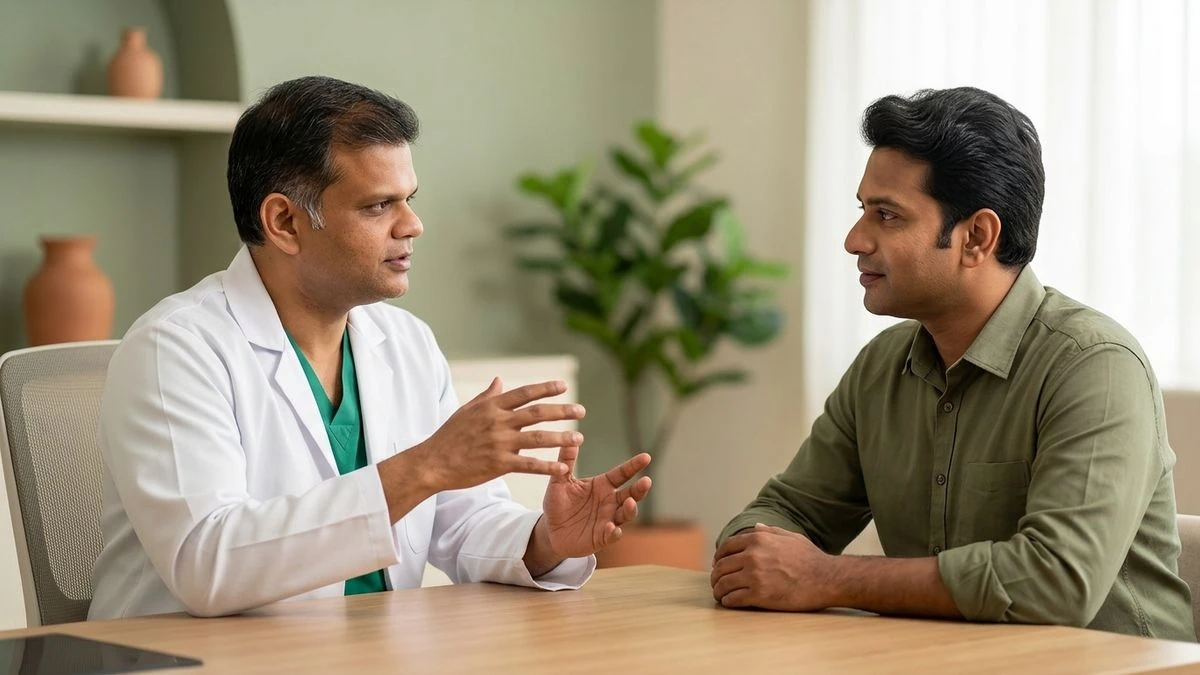
Medically reviewed by Dr. Babu Elangovan, MS · MCh (Surgical Gastro) · FMASLast reviewed
Oesophagectomy is surgery to remove part of the food pipe (oesophagus) affected by cancer, along with nearby lymph nodes, and to rebuild the passage for food, usually using the stomach. It is one of the most demanding operations in gastrointestinal surgery and is offered as part of a carefully staged multidisciplinary plan. Dr. Babu Elangovan, an MCh surgical gastroenterologist in Chennai with F.M.A.S. and Da Vinci robotic training, performs open and minimally invasive oesophagectomy for suitable patients.
Table of Contents
- Types of oesophageal cancer
- Symptoms and diagnosis
- Staging: deciding if surgery can help
- Treatment before surgery
- The operation
- Preparing for oesophagectomy
- Risks and complications
- Cost of oesophagectomy in Chennai
- Recovery and eating
Types of oesophageal cancer
There are two main types, and they behave differently:
Squamous cell carcinoma. Arises from the lining cells of the oesophagus, usually in the middle or upper portion. It is the more common type in India and is associated with tobacco in any form, alcohol, very hot beverages and certain dietary factors. Squamous cancers are often very responsive to chemoradiotherapy.
Adenocarcinoma. Usually arises in the lower oesophagus or at the junction with the stomach, often from long-standing acid reflux and Barrett's oesophagus. It is increasing in frequency. The link between reflux and cancer is explained in Barrett's oesophagus and long-term acid reflux.
Symptoms and diagnosis
- Progressive difficulty swallowing, first with solids, later with softer food.
- Food sticking behind the breastbone.
- Unintended weight loss.
- Pain on swallowing or behind the breastbone.
- Regurgitation, cough when eating, or hoarse voice in advanced cases.
Upper GI endoscopy with biopsy is the essential first test. It confirms the diagnosis and measures exactly where the tumour starts and ends. What to expect is described in what to expect during a gastroscopy.
Staging: deciding if surgery can help
Careful staging decides whether surgery has a role and in what sequence.
- CT scan of neck, chest and abdomen to look for spread to lymph nodes, liver or lungs.
- PET-CT, commonly used in oesophageal cancer to find distant spread that CT can miss.
- Endoscopic ultrasound to measure the depth of the tumour and nearby nodes.
- Bronchoscopy for upper and middle oesophageal tumours close to the windpipe.
- Staging laparoscopy for tumours at the junction with the stomach, which sit close to the territory of stomach cancer surgery.
Fitness assessment is equally important. Oesophagectomy stresses the heart and lungs, so lung function tests, cardiac evaluation and a nutrition assessment are part of the workup.
Treatment before surgery
For most cancers beyond the earliest stage, treatment before surgery improves outcomes.
- Neoadjuvant chemoradiotherapy: chemotherapy combined with radiotherapy over several weeks, followed by surgery after a recovery interval.
- Perioperative chemotherapy: cycles of chemotherapy before and after surgery, more often used for adenocarcinoma at the junction.
After treatment, scans are repeated to confirm the cancer has not spread before proceeding. For some squamous cancers that respond completely, the tumour board may discuss close surveillance or definitive chemoradiotherapy instead of surgery. These decisions are made jointly by the surgeon, medical oncologist and radiation oncologist.
The operation
Oesophagectomy has three parts: removing the affected oesophagus with its lymph nodes, preparing the stomach as a replacement tube, and joining the tube to the remaining oesophagus.
Common approaches
- Ivor Lewis (two-stage): an abdominal phase to prepare the stomach and a right chest phase to remove the oesophagus, with the join in the chest. Often used for lower oesophageal tumours.
- McKeown (three-stage): abdomen, chest and neck, with the join in the neck. Used for middle and upper tumours.
- Transhiatal: through the abdomen and neck without opening the chest, suitable for selected patients.
Minimally invasive oesophagectomy. The chest and abdominal phases can be performed by thoracoscopy and laparoscopy, or robotically, in suitable patients. Smaller incisions may reduce chest complications and pain, though the internal operation remains extensive. The approach is chosen based on tumour location, previous surgery and lung function.
Feeding jejunostomy. A thin feeding tube is often placed into the small intestine to support nutrition during recovery.
Preparing for oesophagectomy
Preparation, sometimes called prehabilitation, improves recovery from such a large operation:
- Stop smoking completely, as early as possible.
- Breathing exercises with an incentive spirometer and daily walking.
- Nutrition support, often with high-protein supplements or a feeding tube if swallowing is poor.
- Control diabetes and blood pressure.
- Dental review, since good oral hygiene may reduce chest infection risk.
Risks and complications
Oesophagectomy carries a higher risk than most GI operations, and this is discussed openly before consent.
- Anastomotic leak: a leak at the join, which may be managed with drainage, endoscopic treatment or further surgery.
- Pneumonia and breathing complications, the commonest problems after surgery.
- Heart rhythm disturbances, such as atrial fibrillation.
- Chyle leak: leakage of lymph fluid in the chest.
- Recurrent laryngeal nerve injury, causing hoarseness, more often temporary.
- Conduit problems, including poor blood supply to the stomach tube.
- Stricture at the join, treated with endoscopic dilatation.
- Mortality: oesophagectomy carries a real risk of death, lower in experienced centres. Your individual risk is discussed at consultation.
Cost of oesophagectomy in Chennai
This is a complex, high-resource operation, and costs vary with the approach and the course of recovery. A written, itemised estimate is provided after staging. The factors:
- Open or minimally invasive (thoracoscopic, laparoscopic or robotic) approach.
- ICU and hospital stay, which can extend if complications occur.
- Staging tests, including PET-CT and endoscopic ultrasound.
- Feeding support and nutritional products.
- Chemotherapy and radiotherapy, billed separately.
Ask for an estimate that separates surgeon, anaesthesia, theatre, consumables, ICU and room charges, and ask how the estimate changes if the stay is longer. Oesophageal cancer surgery is generally covered by private and corporate policies, and eligible patients may be covered under the Tamil Nadu CMCHIS at empanelled hospitals.
Recovery and eating
| Stage | Typical timing | What happens |
|---|---|---|
| ICU / HDU | First 1–3 days | Breathing support, pain control, early sitting out of bed |
| Ward | Days 3–14 | Walking, chest physiotherapy, feeding via jejunostomy, oral fluids once the join is checked |
| Home | Weeks 2–8 | Small soft meals, gradually more variety, tube feeds reduced |
| Rebuilding | Months 3–6 | Energy and weight stabilise; return to work for many |
Eating tips after oesophagectomy
- Six small meals a day rather than three large ones.
- Sit upright for meals and for at least an hour afterwards.
- Raise the head of the bed to reduce reflux at night.
- Chew well and avoid dry, sticky foods early on.
- Report increasing difficulty swallowing, which may mean a narrowing that can be dilated.
Follow-up with the surgeon and oncologist includes regular review, scans as needed, and nutrition monitoring.
Consult Dr. Elangovan
Dr. Elangovan is a surgical gastroenterologist (MS, MCh Surgical Gastroenterology, FMAS) with over 20 years of experience in GI cancer surgery, trained in Da Vinci robotic surgery. The cancer service is described on the GI cancer surgery speciality page, and minimally invasive techniques on the robotic and minimal-access surgery page.
He consults at Mira Health Care, Adyar and at Kauvery Hospital, Alwarpet, where he sees patients with GI cancers, with other Chennai hospitals on the locations page. Send your endoscopy, biopsy and scan reports through the booking form or WhatsApp; Dr. Elangovan reviews them and the team arranges a consultation.
To discuss oesophageal cancer surgery or a second opinion, book an appointment or call +91 94440 43478.
This page is general information, not medical advice. Treatment depends on the type and stage of cancer and individual multidisciplinary assessment. Outcomes vary between patients and cannot be guaranteed.
Frequently Asked Questions
What are the early signs of oesophageal cancer?
The most common symptom is difficulty swallowing, usually starting with solid foods such as rice or meat feeling stuck, then progressing to softer foods. Unintended weight loss, pain behind the breastbone, regurgitation, a persistent cough or hoarse voice can also occur. Swallowing difficulty that is new and persistent in an adult should be investigated with an endoscopy, not treated as acidity.
Is surgery the only treatment for oesophageal cancer?
No. Treatment depends on the type and stage of cancer. Very early tumours may be removed endoscopically. Many locally advanced cancers are treated with chemotherapy or chemoradiotherapy before surgery. For some squamous cell cancers, definitive chemoradiotherapy without surgery is a valid option. Advanced cancers that have spread are treated with systemic therapy and measures to relieve swallowing, such as a stent. A tumour board agrees the right sequence.
How is the food pipe replaced after oesophagectomy?
In most cases the stomach is shaped into a tube and brought up into the chest or neck to join the remaining food pipe. This is called a gastric conduit. If the stomach cannot be used, for example after previous stomach surgery, a segment of colon or small intestine can be used instead. The conduit works as a passage for food rather than a storage reservoir, which is why eating patterns change.
How long does recovery take after oesophagectomy?
The hospital stay is commonly around ten days to two weeks, longer if complications occur. Many patients go home with a feeding tube placed in the small intestine to support nutrition while eating builds up. Regaining energy and a stable weight often takes three to six months. It is one of the biggest operations in GI surgery, and recovery is a gradual process.
Will I be able to eat normally after oesophagectomy?
Most people return to eating a wide range of foods, but meals become smaller and more frequent. Some experience early fullness, dumping symptoms, or reflux, especially when lying flat, so sleeping with the head of the bed raised is advised. A narrowing at the join can cause swallowing difficulty in some patients; it is usually treated with endoscopic dilatation.
Does insurance cover oesophageal cancer surgery?
Oesophageal cancer surgery is covered by most private and corporate health insurance policies, subject to policy limits. Eligible patients may be covered under the Tamil Nadu CMCHIS for cancer surgery at empanelled hospitals. Chemotherapy and radiotherapy are billed separately and may have their own pre-authorisation.
Related procedures
Gastrectomy for Stomach Cancer
Stomach cancer surgery in Chennai: staging, partial or total gastrectomy with D2 lymph node clearance, chemotherapy, eating after surgery and cost.
Learn moreColorectal (Colon & Rectal) Cancer Surgery
Colon and rectal cancer surgery in Chennai by Dr. Babu Elangovan — laparoscopic and robotic colectomy, TME, sphincter preservation, stoma care and recovery.
Learn moreAnti-Reflux Surgery (Fundoplication)
Laparoscopic anti-reflux surgery in Chennai by Dr. Babu Elangovan — when GERD needs surgery, why manometry comes first, Nissen vs partial wraps, and recovery.
Learn moreRelated reading
Difficulty Swallowing (Dysphagia): Causes and When to Worry
Difficulty swallowing, medically termed dysphagia, occurs when moving food or liquid from your mouth to your stomach requires extraordinary effort or feels physically impossible.…
Read the guideBarrett’s Esophagus: Can Long-Term Acid Reflux Lead to Cancer?
Yes — long-standing, poorly controlled acid reflux can change the lining of the lower food pipe into Barrett’s esophagus, a pre-cancerous condition that raises the risk of…
Read the guideEarly Signs of Stomach and Colon Cancer to Watch For
The human digestive system is a complex network that processes nutrients and eliminates waste. Because it is constantly active, minor disruptions like occasional bloating, mild…
Read the guideWhat to Expect During a Gastroscopy or Colonoscopy
Undergoing any medical evaluation can bring about a mix of anxiety and uncertainty, especially when it involves examining your digestive tract from the inside. If your doctor has…
Read the guideAcid Reflux and GERD: When to See a Specialist
Heartburn is an incredibly common experience. Many people manage occasional chest discomfort or a sour taste in the mouth with over-the-counter antacids or simple dietary…
Read the guideWhere to consult Dr. Babu Elangovan for Oesophagectomy for Oesophageal Cancer
- Kilpauk
- Kumaran Hospital · by prior appointment
- THANC Hospital · by prior appointment
- Alwarpet
- Kauvery Hospital · Mon – Sat, 10:00 AM – 12:00 noon
- Adyar
- Mira Health Care · Mon – Sat, 4:00–7:00 PM
One booking line for every location; timings can change, so please confirm when you book. All locations
Planning your care
Book a consultation with Dr. Babu Elangovan
Get an expert surgical opinion on oesophagectomy for oesophageal cancer — from diagnosis and planning through to recovery, with one consistent plan.