
Piles (Haemorrhoids): Symptoms, Causes and When to Worry

Explained by Dr. Babu Elangovan, Surgical Gastroenterologist & Liver Transplant Surgeon, Chennai

Medically reviewed by Dr. Babu ElangovanLast reviewed

Piles are enlarged blood-vessel cushions in the lower rectum and anal canal. They are very common, especially with constipation, pregnancy and long hours of sitting, and most are not dangerous. The important point is that the same bleeding can come from other conditions, so a pile should be confirmed on examination rather than assumed.

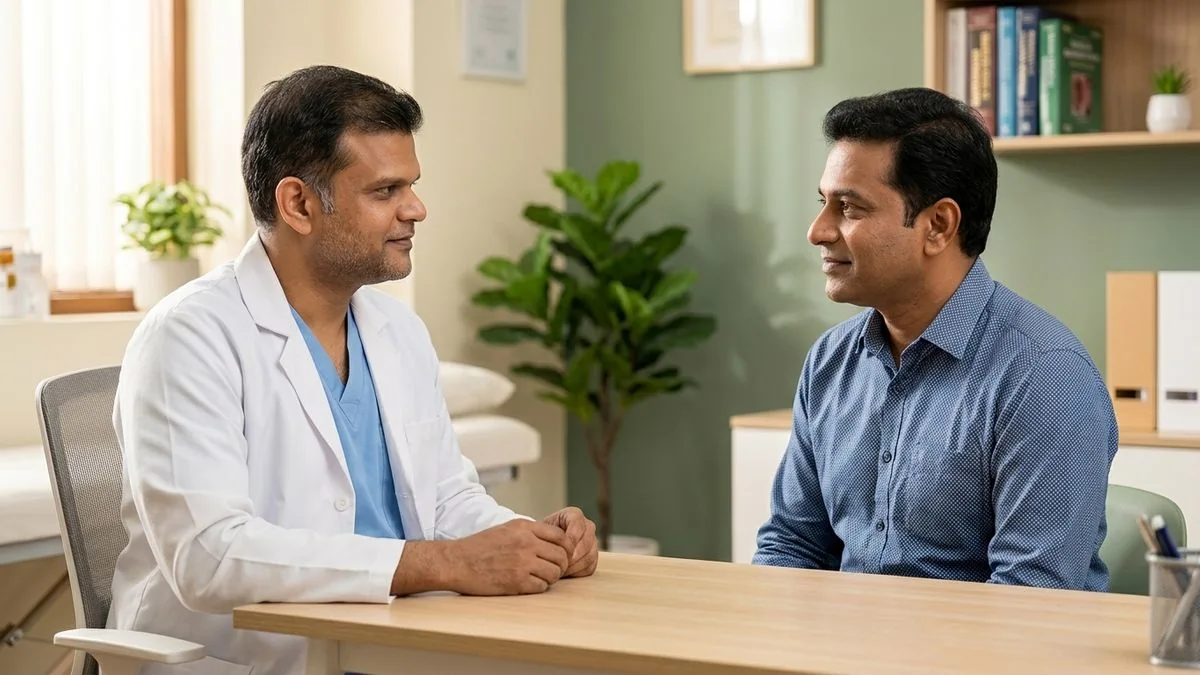
Surgical gastroenterologist explaining piles and rectal bleeding to a patient in Chennai

Signs & symptoms

  • Bright red blood on the toilet paper or dripping into the pan, usually painless
  • A soft lump that comes out during a motion and goes back, or needs pushing back
  • Itching, mucus leakage or a feeling of incomplete emptying
  • A sudden, very painful blue lump at the anal edge (clotted external pile)
  • Heavy bleeding, dizziness, or bleeding with weight loss (needs prompt review)

Symptoms that persist, keep coming back or are getting worse deserve a specialist assessment — book a consultation.

How we treat it

  • Examination with proctoscopy; colonoscopy when the bleeding pattern or age calls for it
  • Fibre, fluids, stool softeners and better toilet habits
  • Rubber band ligation in the clinic for bleeding grade 2 and 3 piles
  • Haemorrhoidectomy, stapled or other procedures for large or prolapsing piles

Your surgeon

Planned and followed through from diagnosis to recovery, with the hospital team.

What Are Piles?

Everyone has three soft cushions of blood vessels lining the anal canal. They help seal the back passage and keep it continent. When these cushions swell, stretch and slide downwards, usually from years of straining and pressure, they are called piles or haemorrhoids.

Internal piles start above the sensitive part of the anal canal, so they bleed but rarely hurt. External piles sit under the skin at the anal edge, where there are pain nerves, and are felt as lumps. Many people have both.

Grades of Internal Piles

  • Grade 1: bleeding without any lump coming out.
  • Grade 2: a lump comes out on straining and goes back by itself.
  • Grade 3: the lump comes out and has to be pushed back with a finger.
  • Grade 4: the lump stays outside and cannot be pushed back.

The grade is decided on examination and is the main guide to treatment; the options for each grade are set out in the piles treatment guide.

Common Causes and Risk Factors

  • Straining at stool: constipation, a low-fibre diet and not drinking enough water, which in Chennai heat is easy to do.
  • Long spells on the toilet: sitting for many minutes, often with a phone, keeps the cushions engorged.
  • Pregnancy and childbirth: hormonal changes, pressure from the womb and pushing in labour.
  • Work strain: heavy lifting and long hours of sitting or standing.
  • Raised abdominal pressure: chronic diarrhoea, chronic cough and obesity.
  • Liver disease: portal hypertension can cause rectal varices, which look similar but need a different approach; see portal hypertension.

How Piles Are Diagnosed

Piles are diagnosed by examination, not by ultrasound or blood tests. After asking about the bleeding and bowel habit, the surgeon looks at the area, does a gentle finger examination and passes a proctoscope, a short lighted tube, to see the internal cushions. It takes a few minutes and is done with a chaperone present.

A colonoscopy is advised when the bleeding could be from higher up: blood mixed with stool or darker blood, a change in bowel habit, anaemia, weight loss, age over about 45 to 50, or a family history of bowel cancer. Our guide to blood in the stool explains why.

Is It Piles or Something Else?

  • Anal fissure: sharp pain with motions and a little blood; see anal fissure.
  • Anal fistula: a small opening near the anus that keeps discharging; see anal fistula.
  • Polyps and colorectal cancer: can bleed exactly like piles, especially after middle age; see colon and rectal cancer.
  • Rectal prolapse: the full thickness of the rectum coming out, larger than a pile and ringed in appearance.

When to Get Help Urgently

  • Heavy bleeding, clots, or feeling faint or breathless.
  • A pile that has come out, will not go back and is turning dark and very painful.
  • A hard, extremely painful lump at the anal edge that appeared suddenly; it is relieved fastest if seen within two or three days.
  • Bleeding together with weight loss, tiredness or a change in bowel habit lasting more than a few weeks.

Detailed procedure guides

For the operation itself — how it is done, hospital stay, cost and recovery — see the guides below.

Related reading

Patient guides from Dr. Babu Elangovan on piles (haemorrhoids).

Where to consult Dr. Babu Elangovan for piles (haemorrhoids)

One booking line for every location; timings can change, so please confirm when you book. All locations

Frequently asked questions

Are piles dangerous?

Piles themselves are not cancerous and do not turn into cancer. They can cause anaemia if they bleed for a long time, and a prolapsed pile can become trapped and very painful. The main danger is assuming that bleeding is from piles when it is actually from a polyp or tumour higher up.

Why do piles bleed without pain?

Internal piles arise above the dentate line, where the lining has no pain-sensing nerves. Hard stool scrapes the swollen cushion and it bleeds bright red, without the sharp pain of a fissure.

Does spicy food cause piles?

Not directly. Spicy food can make existing piles or a fissure sting, but the main causes are straining, constipation, long sitting on the toilet, pregnancy and heavy lifting.

Can I tell my grade of piles myself?

You may have a fair idea from whether a lump comes out and whether it goes back, but grading needs an examination because skin tags, fissures, polyps and prolapse can all feel like piles.

Are piles common after pregnancy?

Yes. Pressure in late pregnancy and pushing during delivery often bring on piles or make them worse. Many settle in the months after birth with soft stools, and treatment is planned if they do not.

Related conditions

Planning your care

Part of piles, fissure & fistula care

Piles (haemorrhoids), anal fissure, fistula-in-ano and benign colorectal problems: examination, office procedures and surgery matched to the grade of disease.