Anal Fissure Treatment in Chennai: Cost, Botox & Surgery
- Consults across Chennai: Adyar · Alwarpet · T. Nagar · Kilpauk
- Evening OPD at Mira Health Care, Adyar: Mon – Sat, 4:00–7:00 PM
Anal fissure treatment in Chennai with Dr. Babu Elangovan at Mira Health Care, Adyar: ointments first, then Botox or LIS, with approximate cost.
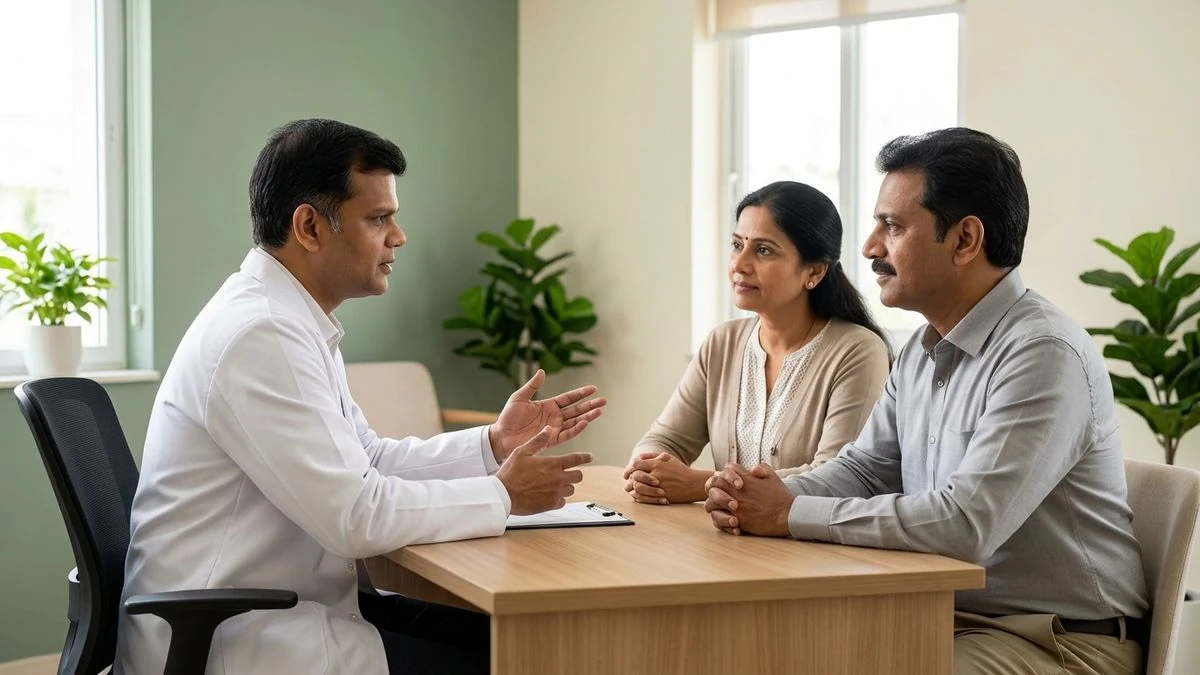
Medically reviewed by Dr. Babu Elangovan, MS · MCh (Surgical Gastro) · FMASLast reviewed
An anal fissure is a small tear in the lining of the anal canal that causes a sharp, cutting pain during a motion and a burning ache that can last an hour or more afterwards. Dr. Babu Elangovan, a surgical gastroenterologist whose practice includes proctology and colorectal surgery, treats fissures step by step: soft stools and ointments first, Botox or a small operation only if the tear will not heal. Most patients are seen at Mira Health Care, Adyar, with further clinics in Alwarpet, T. Nagar and Kilpauk.
The reason fissures linger is a vicious circle. The tear causes pain, the pain throws the internal sphincter muscle into spasm, and the spasm squeezes the small blood vessels that would otherwise heal the tear. Every treatment below works by breaking that circle.
Table of Contents
- Recognising a fissure
- Acute and chronic fissures
- Examination
- Step 1: soft stools and sitz baths
- Step 2: sphincter-relaxing ointments
- Step 3: botulinum toxin injection
- Step 4: lateral internal sphincterotomy
- Risks worth knowing
- Cost of fissure treatment in Chennai
- Recovery and preventing recurrence
Recognising a fissure
The pattern is distinctive:
- Pain with every motion, often described as passing glass, followed by a throbbing or burning ache.
- A little bright red blood on the paper or on the surface of the stool. Other sources of bleeding are set out in blood in stool: causes and when to see a doctor.
- Fear of going to the toilet, which leads people to hold back, so the stool becomes harder and the next motion tears the fissure again.
- A small skin tag at the anal margin in long-standing fissures, often mistaken for a pile.
Fissures commonly start after a hard stool or a bout of diarrhoea, and are frequent after childbirth. They affect people of all ages, including young adults and children. In Chennai, irregular meals, low water intake in the heat and long commutes without a toilet break all contribute to the hard stools that start the cycle.
Bleeding without pain is more typical of piles, and a discharging opening beside the anus suggests a fistula. The two can coexist with a fissure, so the examination looks for all three.
Acute and chronic fissures
| Acute fissure | Chronic fissure | |
|---|---|---|
| Duration | Less than about 6 weeks | More than 6 to 8 weeks, or recurring |
| Appearance | Clean, superficial split | Deeper, with raised edges, exposed sphincter fibres, skin tag (sentinel pile) and sometimes an inner papilla |
| Usual outcome | Most heal with soft stools, with or without ointment | Many still heal with ointment; some need Botox or surgery |
The distinction matters because it sets expectations. An acute fissure is very likely to heal without any procedure. A chronic fissure deserves a full course of medical treatment first, but it is reasonable to discuss the next step if it has not healed by the end of that course.
Examination
Most fissures are diagnosed simply by gently parting the buttocks and looking. A finger examination or proctoscopy is avoided if it would be too painful, and is completed later once treatment has eased the pain.
A fissure that sits off the midline, is multiple, is unusually large or painless, or fails to heal despite good treatment raises the possibility of another cause: Crohn's disease, tuberculosis, a sexually transmitted infection or, rarely, a cancer. In that situation an examination under anaesthesia with biopsy, and sometimes a colonoscopy, comes before any sphincter surgery.
Step 1: soft stools and sitz baths
This is the foundation of every fissure treatment and the step most often done half-heartedly.
- Fibre from vegetables, fruit, whole grains and pulses, plus a fibre supplement such as ispaghula husk taken every day.
- Water, enough to keep urine pale, which in Chennai's climate is often more than people think.
- A stool softener for the first few weeks so that every motion is soft.
- Warm sitz baths for ten to fifteen minutes after motions and before bed. Warm water relaxes the sphincter and eases the spasm.
- A local anaesthetic gel before motions for the first few days if the pain is making you hold back.
Many acute fissures heal with this alone within a few weeks.
Step 2: sphincter-relaxing ointments
If pain persists, or the fissure is chronic, an ointment that relaxes the internal sphincter is added. The two commonly used are glyceryl trinitrate (GTN) and diltiazem, applied to the anal margin two or three times a day for six to eight weeks.
- They lower the pressure in the sphincter and improve blood flow to the tear.
- GTN commonly causes headache in the first days; it often eases, and diltiazem is an alternative with fewer headaches.
- The course needs to be completed. Stopping as soon as the pain improves is the commonest reason a fissure returns.
A majority of chronic fissures heal with a full course of ointment combined with step 1.
Step 3: botulinum toxin injection
For a chronic fissure that has not healed with ointment, or for people at higher risk of continence problems, botulinum toxin (Botox) is injected into the internal sphincter. It temporarily weakens the muscle's spasm for around two to three months, long enough for the fissure to heal.
- It is a short procedure, usually done as day-care with brief sedation or anaesthesia.
- Any weakness it causes wears off as the toxin does.
- Healing rates are good but lower than with surgery, and some fissures recur once the effect fades.
Botox is often preferred first for women after childbirth, older patients and anyone with previous anal surgery, where preserving every bit of sphincter strength matters most.
Step 4: lateral internal sphincterotomy
Lateral internal sphincterotomy (LIS) is the most effective treatment for a chronic fissure. Through a small incision at the side of the anus, a measured part of the internal sphincter is divided, which permanently lowers the resting pressure and relieves the spasm. The fissure itself is left to heal, although a skin tag or papilla may be trimmed at the same time.
- It is done under spinal or general anaesthesia, usually as day-care.
- Pain relief is often felt within days of the operation.
- Healing rates are higher, and recurrence lower, than with ointment or Botox.
Because the division is permanent, the length of muscle cut is tailored to the fissure, and the operation is chosen carefully for people whose sphincter is already weakened. Older procedures such as forceful anal stretching are no longer recommended because they damage the sphincter unpredictably.
Risks worth knowing
- Ointments: headache and light-headedness with GTN; local irritation.
- Botox: temporary leakage of gas or slight soiling while the toxin acts; recurrence after it wears off; rarely, a perianal bruise or infection.
- Sphincterotomy: minor leakage of gas or slight soiling, usually temporary but occasionally lasting; bleeding or a small bruise; infection or, rarely, a small abscess or fistula at the incision.
- Non-healing or recurrence after any treatment, which is reassessed rather than simply repeated.
Cost of fissure treatment in Chennai
Most fissures are treated entirely in the outpatient clinic, which keeps costs low. As a planning guide:
| Treatment | Approximate cost in Chennai (private hospital) |
|---|---|
| Stool softeners, sitz baths and ointments | Consultations and medicines only |
| Botox injection or lateral internal sphincterotomy (open or laser) | ₹30,000 – ₹1,00,000 |
Approximate ranges from published Chennai hospital and insurer cost guides (2026); your hospital gives a written, itemised estimate after the consultation.
When a procedure is needed, the estimate depends on:
- Ointment course or procedure. Medicines and follow-up visits are modest outpatient costs.
- Botox or sphincterotomy. Botox adds the cost of the drug; both involve theatre and anaesthesia charges.
- Day-care or overnight stay, and the room category.
- Examination under anaesthesia and biopsy, if an atypical fissure needs it.
Sphincterotomy and Botox for a chronic fissure are usually covered by health insurance, subject to the policy's waiting period for anorectal conditions. If you hold a CMCHIS card, ask whether the hospital is empanelled for the specific procedure before admission.
Recovery and preventing recurrence
Day of surgery
Home the same day in most cases. The sharp fissure pain is often noticeably less within the first few days.
Week 1
Sitz baths after motions, stool softener and regular painkillers. Mild discomfort at the incision is expected.
Avoid: Straining or delaying when you need to go.
Weeks 1 to 2
Return to desk work and normal daily activity.
Weeks 4 to 8
The fissure heals fully. Review in the clinic to confirm healing.
Long term
Daily fibre, enough water and prompt toilet visits to keep stools soft and prevent a new tear.
Whatever the treatment, the habits that keep stools soft are what stop a fissure coming back. Report increasing pain, fever, a swelling beside the anus or difficulty controlling stool.
Consult Dr. Elangovan
Dr. Elangovan (MS, MCh Surgical Gastroenterology, FMAS) has more than 20 years of experience in surgical gastroenterology, with colorectal surgery and proctology as part of his everyday practice. His approach to fissures is conservative first, with procedures chosen to protect long-term continence. The wider service is described on the colorectal and proctology page.
Where to be seen for a fissure in Chennai
Dr. Elangovan sees patients with anal pain every evening, Monday to Saturday, at Mira Health Care in Indira Nagar, Adyar, where he is part of the surgical team for proctology; it is the nearest clinic for Besant Nagar, Velachery and the OMR. He also consults at Kauvery Hospital, Alwarpet on Monday to Saturday mornings for Mylapore and Teynampet, Capstone Clinic, T. Nagar on Tuesday and Thursday afternoons, and Kumaran or THANC Hospital, Kilpauk by appointment. If a procedure is needed, surgery and admission under Dr. Elangovan can be arranged at Kauvery Hospital (Alwarpet), THANC Hospital or Kumaran Hospital (Kilpauk), and at Mira Health Care, Adyar for suitable procedures, depending on your case, facilities needed and insurance. See proctology care in Adyar for timings and directions.
If you have already tried creams without relief, bring the names of what you used and for how long.
To have a painful fissure assessed, book an appointment or call +91 94440 43478.
This page is general information, not medical advice. Treatment depends on examination by a qualified surgeon, and outcomes vary between patients and cannot be guaranteed. Severe anal pain with fever or a throbbing swelling may be an abscess and needs prompt medical attention.
Frequently Asked Questions
What does anal fissure treatment cost in Chennai?
Most fissures heal with stool softeners, sitz baths and ointments, so the cost is mainly consultations and medicines. When a chronic fissure needs Botox or a lateral internal sphincterotomy (open or laser), a private hospital in Chennai typically charges about ₹30,000 to ₹1,00,000, depending on the procedure, hospital, room and stay. These are approximate published ranges; the exact figure is confirmed at consultation as a written estimate.
How long does an anal fissure take to heal?
A fresh (acute) fissure usually heals within two to six weeks once stools are kept soft, and faster with a sphincter-relaxing ointment. A fissure present for more than about six to eight weeks is called chronic. Chronic fissures often still heal with eight weeks of ointment, but a proportion do not and go on to botulinum toxin injection or surgery.
Is an anal fissure the same as piles?
No, though they are often confused and can occur together. A fissure is a tear in the lining of the anal canal and causes sharp, cutting pain during and after a motion, often with a little bright blood. Uncomplicated internal piles usually bleed without pain. The small skin tag that forms at the outer end of a chronic fissure is frequently mistaken for a pile.
Will fissure surgery cause loss of control of stool?
Lateral internal sphincterotomy divides only part of the internal sphincter, the involuntary muscle that is in spasm. Most people have no change in control. A minority notice minor leakage of gas or slight soiling, usually temporary; persistent problems are uncommon. The risk is higher in women who have had difficult vaginal deliveries, in older people and in anyone with previous anal surgery, which is why those groups are usually offered botulinum toxin first.
Does Botox for fissure need to be repeated?
Botulinum toxin relaxes the sphincter for about two to three months, which gives the fissure time to heal. Many fissures heal after a single injection. Some recur once the effect wears off, and a repeat injection or a sphincterotomy may then be offered. Its advantage is that any weakness it causes is temporary.
Can a fissure turn into a fistula or cancer?
A fissure does not turn into cancer. Very occasionally an infected fissure leads to an abscess and fistula. A fissure that is not in the usual position, does not heal with standard treatment, or comes with weight loss, diarrhoea or other bowel symptoms needs further examination to rule out Crohn's disease, infection or, rarely, a tumour.
Is fissure treatment covered by insurance?
Surgery for a chronic fissure, including sphincterotomy, is covered by most health insurance policies once any waiting period for anorectal conditions has passed. Ointments and clinic visits are usually outpatient costs that a basic policy may not reimburse. Patients under a government scheme should ask the hospital insurance desk whether the procedure qualifies under CMCHIS at that centre.
Related procedures
Piles (Haemorrhoids) Treatment
Piles treatment in Chennai with Dr. Babu Elangovan at Mira Health Care, Adyar: banding, laser and surgery options, approximate cost and recovery.
Learn moreFistula-in-Ano Surgery
Anal fistula surgery in Chennai with Dr. Babu Elangovan in Adyar and Kilpauk: MRI mapping, fistulotomy, seton, LIFT or laser, approximate cost.
Learn moreRelated reading
Piles, Fissure or Fistula? How to Tell Them Apart
Pain, bleeding or a swelling around the back passage gets called "piles" in most Chennai households, and many people buy a cream from the pharmacy before anyone has looked. Often…
Read the guidePiles Diet: What to Eat and Avoid in a South Indian Kitchen
Most piles and fissure flare-ups in Chennai start with the same thing: a hard stool after a few days of hot weather, too little water and too much maida or fried food. What you…
Read the guidePiles During Pregnancy and After Delivery: What Helps and When to See a Surgeon
Pain, a swelling or a little bleeding from the back passage is one of the most common complaints of late pregnancy and the first weeks after delivery, and one of the least talked…
Read the guideBlood in Stool: Causes, Diagnosis & When to See a Doctor
Blood on the paper or in the bowl stops people cold — correctly. Most causes are benign. None are safe to diagnose from the bathroom alone. This page is the bleeding triage:…
Read the guideWhere to consult Dr. Babu Elangovan for Anal Fissure Treatment
- Adyar
- Mira Health Care · Mon – Sat, 4:00–7:00 PM
- Kilpauk
- Kumaran Hospital · by prior appointment
- THANC Hospital · by prior appointment
- Alwarpet
- Kauvery Hospital · Mon – Sat, 10:00 AM – 12:00 noon
- T. Nagar
- Capstone Clinic · Tue & Thu, 2:00–4:00 PM
One booking line for every location; timings can change, so please confirm when you book. All locations
Planning your care
Book a consultation with Dr. Babu Elangovan
Get an expert surgical opinion on anal fissure treatment — from diagnosis and planning through to recovery, with one consistent plan.