Liver Resection Surgery (Hepatectomy) in Chennai
Led by Dr. Babu Elangovan · part of GI Cancer Surgery care
Consult Dr. Babu Elangovan for expert liver resection surgery in Chennai. Over 20 years of experience in advanced robotic, laparoscopic, and open hepatectomy.
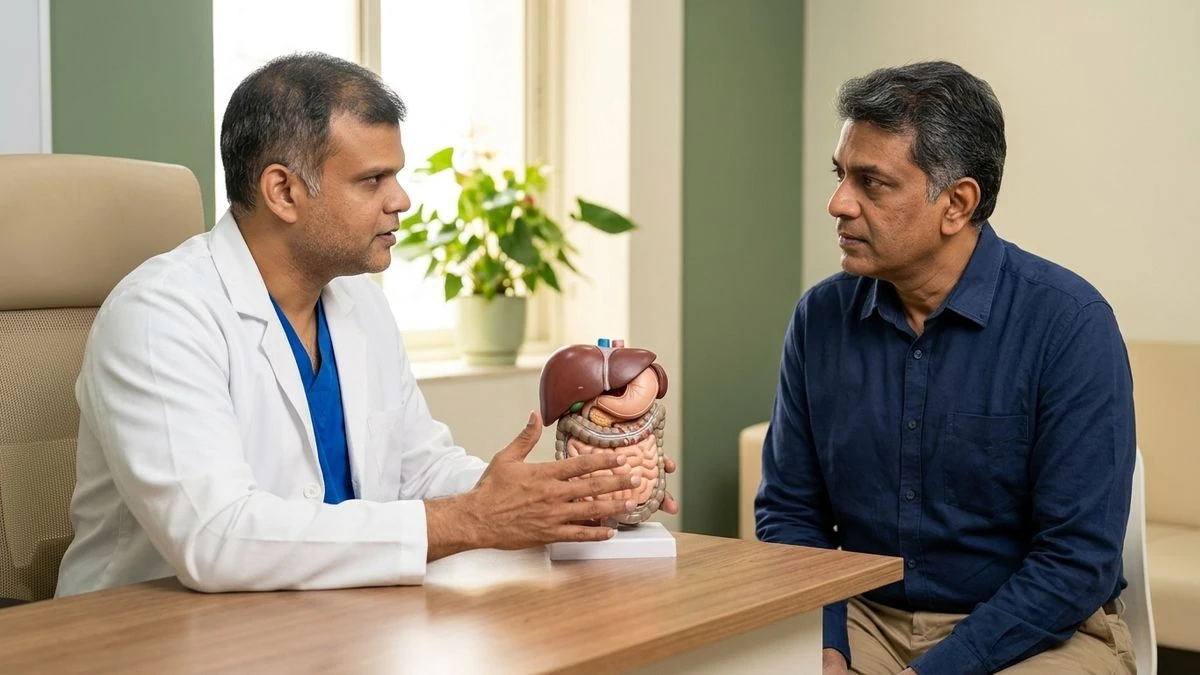
Liver Resection Surgery (Hepatectomy) in Chennai
Facing a complex liver diagnosis can be overwhelming, but understanding your surgical options is the first step toward recovery. If you or a loved one requires a partial liver removal, securing a highly specialised surgical team is critical to a successful and safe outcome. Dr. Babu Elangovan provides advanced, patient-centric liver resection surgery in Chennai to safely treat both benign and malignant liver conditions, as part of comprehensive HPB surgery care.
What is Liver Resection (Hepatectomy)?
A liver resection, medically known as a hepatectomy, is the surgical removal of a diseased or damaged portion of the liver. This procedure is designed to eliminate localised lesions, such as tumours or cysts, while preserving as much healthy liver tissue as possible. Because the liver performs hundreds of vital functions—including filtering toxins, producing bile, and regulating blood clotting—preserving healthy tissue is paramount to post-operative survival and quality of life.
The liver is unique among human organs for its extraordinary capacity to regenerate. When a portion of the liver is removed, the remaining healthy cells (hepatocytes) immediately begin to replicate. Within a matter of weeks, the remaining liver can grow back to nearly its original volume. This rapid regenerative ability allows surgeons to safely remove up to 70% of a healthy liver, knowing the remaining portion will expand to meet the body's metabolic demands.
How Liver Resection Differs from a Liver Transplant
It is common to confuse a liver resection with a liver transplant, but they are fundamentally different procedures:
- Liver Resection: The surgeon removes only the diseased segment or lobe of the liver. The patient keeps their remaining healthy liver tissue, which then regenerates. This is the primary approach when the disease is localised and the rest of the liver is healthy.
- Liver Transplant: The surgeon removes the patient's entire, failing liver and replaces it with a healthy donor liver. This is reserved for patients with end-stage liver disease, cirrhosis, or widespread tumours that cannot be safely removed. Learn more about liver transplant surgery.
During a resection, the surgeon always aims to achieve a "clear margin" or safety margin. This means removing a small rim of healthy tissue surrounding the tumour to guarantee that no microscopic cancer cells are left behind, reducing the risk of recurrence.
Conditions Treated with Liver Resection Surgery
Liver resection is a highly effective treatment for a variety of malignant, benign, and infectious conditions affecting the hepatobiliary system.
Malignant Liver Tumors and Metastases
- Hepatocellular Carcinoma (HCC): This is the most common form of primary liver cancer. When diagnosed early and in patients without severe cirrhosis, surgical resection offers the best chance for a long-term cure.
- Metastatic Liver Tumors: Many cancers originating in other parts of the body spread to the liver — particularly colorectal cancer. Removing colorectal cancer metastases via liver resection can significantly extend survival and, in some cases, provide a cure.
- Cholangiocarcinoma: Also known as bile duct cancer, tumours arising within the intrahepatic bile ducts often require a formal hepatectomy to achieve complete clearance.
Benign Liver Cysts and Hydatid Disease
- Benign Tumors: Large hepatic adenomas (which carry a risk of rupture or malignant transformation) and symptomatic haemangiomas (non-cancerous blood vessel growths) often require surgical removal when they cause pain or grow excessively.
- Complex Cysts and Hydatid Disease: Simple cysts rarely need surgery, but complex, large, or infectious cysts—such as hydatid cysts caused by parasitic infections—must be surgically resected or unroofed to prevent rupture or severe abdominal infection.
- Complex Liver Abscesses: While most liver abscesses respond to antibiotics or catheter drainage, chronic or multi-loculated abscesses that fail conservative management may require surgical resection.
Types of Hepatectomy: Open, Laparoscopic, and Robotic Approaches
The extent of the surgery and the surgical technique used depend entirely on the patient's anatomy, liver health, and the characteristics of the lesion.
Minor vs. Major Hepatectomy
- Minor Hepatectomy: Involves removing one or two small segments of the liver. Because the liver is divided into eight functional segments, minor resections preserve the vast majority of the organ and carry a lower risk of post-operative liver insufficiency.
- Major Hepatectomy: Involves removing three or more segments. Common major resections include a right hemihepatectomy (removing the entire right lobe) or a left hemihepatectomy (removing the left lobe). These require meticulous planning to ensure the remaining liver volume (the future liver remnant) is large enough to sustain life.
Minimally Invasive and Robotic Liver Resection
- Traditional Open Surgery: Uses a larger abdominal incision. It remains the gold standard for very large tumours, cases involving major blood vessel reconstruction, or tumours located deep within the posterior segments of the liver.
- Laparoscopic Hepatectomy: Performed through several keyhole incisions using specialised cameras and instruments. This approach reduces post-operative pain, shortens hospital stays, and accelerates recovery.
- Robotic Liver Resection: Using the Da Vinci robotic system, the surgeon operates with high-definition 3D visualisation and wristed instruments that mimic the human hand with greater precision — particularly beneficial for delicate dissections near major hepatic veins and the vena cava. See more on robotic GI surgery.
The choice of approach is highly individualised, balancing the safety of complete tumour removal with the benefits of faster recovery.
What to Expect During the Surgical Procedure
A liver resection is a highly technical procedure requiring precise execution to manage blood flow and protect surrounding organs.
Pre-Operative Planning and Imaging
Before surgery, patients undergo rigorous testing. Advanced imaging, including high-resolution CT scans and contrast-enhanced MRIs, is used to map the exact relationship between the tumour and major blood vessels. Liver function tests and indocyanine green (ICG) clearance tests may be performed to evaluate the functional capacity of the liver, ensuring the remaining portion can support the patient after surgery.
Intraoperative Navigation and Safety Protocols
During the procedure, the surgical team employs advanced intraoperative ultrasound directly on the surface of the liver. This allows the surgeon to visualise deep-seated blood vessels and real-time tumour boundaries that cannot be seen or felt from the outside, ensuring a highly precise cut.
To minimise blood loss during the division of liver tissue (parenchymal transection), surgeons use specialised energy devices, ultrasonic aspirators, and temporary blood inflow occlusion techniques (such as the Pringle manoeuvre). Following the resection, patients are monitored closely in a specialised surgical ICU where liver function, fluid balance, and blood clotting parameters are tracked.
Recovery Timeline and Life After Liver Resection
Post-operative recovery is a step-by-step process focused on pain control, mobilisation, and supporting the liver as it begins to regenerate.
The First Weeks at Home
The typical hospital stay ranges from 5 to 10 days. Patients who undergo minimally invasive laparoscopic or robotic resections are often discharged on the earlier side of this window. Upon returning home, patients should focus on:
- Wound Care: Keeping incision sites clean and dry, watching for signs of infection.
- Activity: Gradual mobilisation is encouraged to prevent blood clots, but heavy lifting and strenuous exercise must be avoided for 6 to 8 weeks.
- Diet: Consuming small, frequent, protein-rich meals to support tissue healing and liver regeneration.
Monitoring Liver Regeneration and Function
Over the first 4 to 6 weeks, the liver undergoes rapid biological regeneration. During this phase, patients may experience mild fatigue as the body directs energy toward growing new liver tissue. Regular follow-up appointments, blood tests, and surveillance imaging (CT or MRI) are scheduled to monitor the liver's growth and rule out any recurrence of the primary disease.
Cost of Liver Resection Surgery in Chennai
For patients seeking high-quality care, Chennai is a premier destination, offering world-class medical infrastructure and highly trained surgical teams at a fraction of the cost found in Western countries.
Factors Influencing Surgical Costs
The total cost of liver resection surgery in Chennai depends on several clinical and logistical variables:
- Surgical Approach: Minimally invasive robotic and laparoscopic surgeries involve specialised disposable instruments, which can increase the upfront surgical cost but often reduce overall expenses by shortening the hospital stay.
- Extent of Resection: A major hemihepatectomy requiring extensive ICU monitoring and blood products will cost more than a localised, minor segmental resection.
- Hospital Category & Stay: Choice of room category (private, semi-private, or deluxe) and the total duration of the ICU and ward stay heavily influence the final billing.
- Ancillary Charges: Pre-operative high-resolution imaging, specialised anaesthesia, intraoperative ultrasound, and post-operative medications.
Insurance and Financial Planning
Because liver resection is a life-saving, medically necessary intervention for tumours, cysts, and abscesses, it is widely covered by major health insurance policies and corporate health schemes in India. It is advisable to coordinate with the hospital's third-party administrator (TPA) desk well in advance to secure pre-authorisation and understand any out-of-pocket limits or co-pay clauses.
Why Choose Dr. Babu Elangovan for Liver Surgery in Chennai
When undergoing complex hepatobiliary surgery, the experience and skill of your surgeon are the most critical factors in achieving a successful outcome.
An Experienced HPB and Liver Transplant Specialist
Dr. Babu Elangovan is a highly regarded surgical gastroenterologist and liver transplant specialist based in Chennai, with over 20 years of clinical experience. Having been actively involved in more than 230 liver transplant procedures, he possesses a deep, nuanced understanding of hepatobiliary anatomy and vascular reconstruction. This transplant-level precision translates directly into safer, more precise liver resection surgeries, even for tumours located near major blood vessels.
Comprehensive Care Across Premier Chennai Hospitals
Dr. Babu Elangovan operates across leading tertiary healthcare facilities in Chennai, ensuring patients have access to state-of-the-art operating theatres, advanced robotic platforms, and highly equipped intensive care units. His practice at Mira Health Care in Adyar, Chennai, emphasises a continuous care model — from your initial diagnostic workup through customised surgical planning and dedicated post-operative recovery support.
If you have been diagnosed with a liver lesion or require a surgical evaluation, book an appointment with Dr. Babu Elangovan or call +91 99626 60009 to discuss your surgical options.
Frequently Asked Questions
Can you live a normal life after a liver resection?
Yes. Once the recovery period is complete and the liver has regenerated to its functional capacity, most patients return to their normal daily activities, diet, and lifestyle without needing long-term medication or dietary restrictions, provided their underlying liver is healthy.
How long does it take for the liver to grow back after surgery?
The liver begins regenerating almost immediately after surgery. Most of the regeneration occurs within the first 2 to 4 weeks, and the liver typically regains its normal volume and functional capacity within 2 to 3 months.
What are the main risks of a hepatectomy?
As with any major surgery, risks include bleeding, infection, and reaction to anaesthesia. Risks specific to liver surgery include bile leaks from the cut surface of the liver and temporary liver insufficiency, both minimised through precise surgical technique and advanced intraoperative technology.
How is liver resection different from a liver transplant?
A liver resection removes only the diseased segment or lobe of the liver, leaving the remaining healthy tissue to regenerate — used when the disease is localised and the rest of the liver is healthy. A liver transplant replaces the entire failing liver with a healthy donor liver, and is reserved for end-stage liver disease or widespread disease that cannot be safely resected.
Related procedures
Whipple Procedure (Pancreaticoduodenectomy)
Consult Dr. Babu Elangovan for the Whipple procedure in Chennai. Over 20 years of expertise in complex HPB and pancreatic cancer surgeries.
Learn moreGallbladder Stone Surgery
Consult Dr. Babu Elangovan for advanced laparoscopic gallbladder stone surgery in Chennai. Learn about cholecystectomy costs, recovery, and diet.
Learn moreConsult Dr. Babu Elangovan in Chennai
Get an expert surgical opinion on liver resection (hepatectomy) — from diagnosis and planning through to recovery, with the same surgeon at every step.