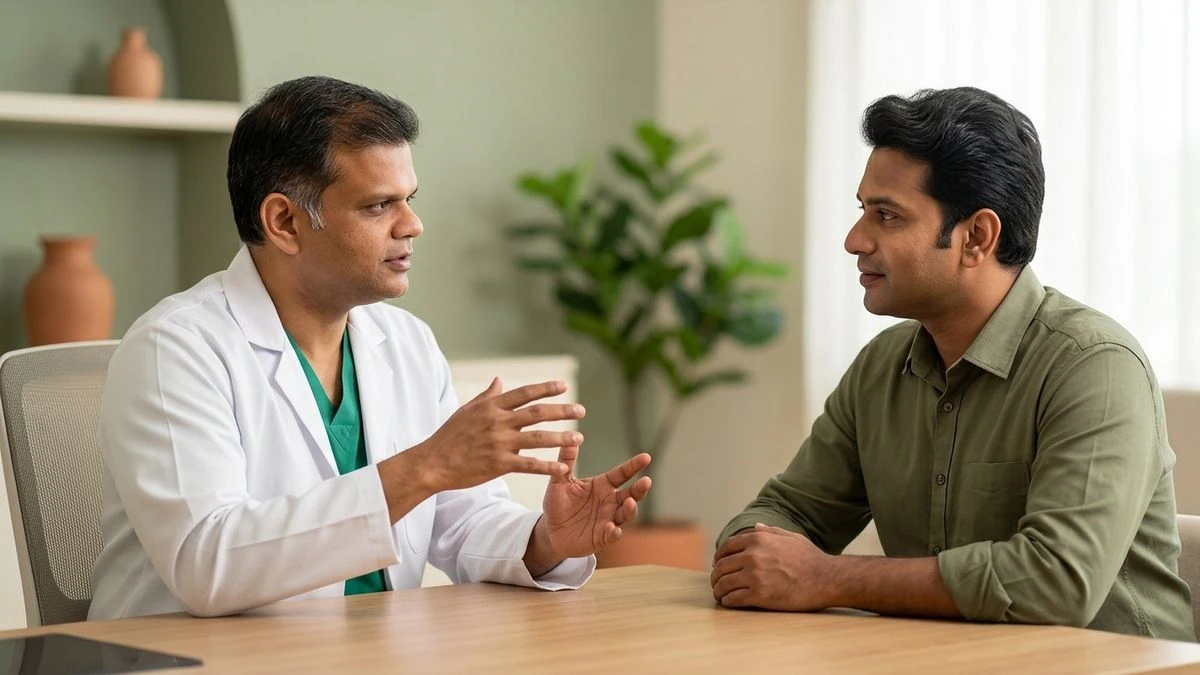
Minimal-access surgery — keyhole (laparoscopic) and robotic — is a key part of Dr. Babu Elangovan’s practice. For suitable patients it means smaller incisions, less pain, shorter hospital stays and a quicker return to normal life, without compromising the operation.
When facing gastrointestinal (GI) surgery, many patients feel anxious about the recovery process, pain, and scars. Fortunately, modern surgical techniques have evolved significantly from traditional open operations. Today, minimal-access surgery offers a highly effective alternative for many patients.
Minimal-access surgery, which includes both laparoscopic surgery and robotic-assisted surgery, allows surgeons to perform complex procedures through small incisions. This approach generally results in less tissue damage, reduced post-operative discomfort, and a faster return to daily life.
Dr. Babu Elangovan, a highly experienced surgical gastroenterologist in Chennai, evaluates each patient thoroughly to determine the most suitable surgical approach. While minimal-access options offer excellent recovery advantages, they are selected based on clinical suitability to ensure the highest standard of patient safety.
Understanding Laparoscopic and Robotic GI Surgery
Both laparoscopic and robotic-assisted surgeries are forms of minimally invasive GI surgery. They share the same goal of minimizing trauma to the body, but they utilize different technological systems to achieve this.
Laparoscopic (Keyhole) Surgery
In laparoscopic surgery, the surgeon inserts a thin tube equipped with a light and a high-definition camera, known as a laparoscope, through a small incision. Specialized, long-shafted surgical instruments are inserted through other tiny incisions. The surgeon views the surgical field on a monitor and manually manipulates the instruments to perform the procedure.
Da Vinci Robotic Surgery
Da Vinci robotic surgery represents an advanced evolution of keyhole surgery. Dr. Babu Elangovan is trained in Da Vinci robotic surgery, where the surgeon sits at a specialized console near the patient. The console provides a highly magnified, three-dimensional (3D) view of the surgical field. Using master controls, the surgeon directs robotic arms that hold micro-instruments. These instruments feature wristed joints that mimic the human hand but with a far greater range of motion and precision, allowing for steady, detailed work in tight anatomical spaces.
Gastrointestinal Conditions Treated with Minimal-Access Techniques
Many abdominal and digestive conditions can be managed effectively using minimally invasive approaches. Dr. Babu Elangovan utilizes these techniques to treat a wide range of conditions:
Gallstones: Hardened deposits in the gallbladder that cause pain and inflammation, often managed with keyhole gallbladder removal.
Hernias: Weaknesses in the abdominal wall, including inguinal, ventral, and hiatus hernias, which can be repaired using laparoscopic or robotic techniques.
Gastrointestinal Cancers: Malignant tumours of the stomach, colon, or rectum that require highly precise dissection and lymph node removal.
Acid Reflux: Chronic gastro-oesophageal reflux disease (GERD) that does not respond to medical therapy, requiring surgical reinforcement of the valve.
Severe Obesity: Clinically significant obesity and associated metabolic conditions, managed through specialized weight-loss surgeries for patients with a high body mass index (BMI).
The suitability of a laparoscopic or robotic approach depends entirely on the individual patient's medical history, the severity of the condition, and previous abdominal surgeries.
Common Minimally Invasive GI Procedures Performed
Dr. Babu Elangovan performs several advanced minimal-access procedures, tailoring the technique to the specific needs of the patient:
Laparoscopic Gallbladder Removal: A standard keyhole procedure to remove the gallbladder safely, resulting in minimal scarring and a quick recovery.
Laparoscopic or Robotic Hernia Repair: Reinforcing the weakened abdominal wall using a surgical mesh placed through small incisions.
Robotic GI Cancer Surgery: High-precision removal of tumours in the stomach, colon, or rectum, utilizing the enhanced visualization of the robotic system.
Laparoscopic Anti-Reflux Surgery: A procedure to wrap the upper portion of the stomach around the lower oesophagus to prevent acid reflux.
Laparoscopic Bariatric Surgery: Weight-loss procedures, such as sleeve gastrectomy or gastric bypass, performed using keyhole techniques.
Each procedure is planned with a focus on achieving the best clinical outcome while minimizing physical stress on the patient's body.
What to Expect During Your Recovery
Recovering from a minimal-access procedure is generally smoother and faster than recovering from traditional open surgery. Most patients experience significantly less pain, which reduces the need for strong pain medications. Hospital stays are usually shorter, with many patients returning home within one to three days depending on the complexity of the operation.
While recovery is quicker, patients must still follow specific post-operative guidelines. This includes a gradual progression of diet, proper wound care for the small incision sites, and avoiding heavy lifting or strenuous physical activity for a few weeks.
Patients travel to Dr. Babu Elangovan's Chennai practice from across Tamil Nadu and the wider South India region. Outstation and international patients are welcomed, and remote video second opinions are available to help patients plan their care before they travel to Chennai.
Robotic & Minimal-Access — watch & learn
GI & Liver Health Awareness
A general awareness video on gastrointestinal and liver health.
What is the difference between laparoscopic and robotic surgery?
Laparoscopic surgery involves the surgeon manually manipulating rigid instruments while viewing a two-dimensional screen. Robotic surgery utilizes a console where the surgeon controls highly flexible, wristed instruments with a magnified, three-dimensional view, allowing for greater precision in complex or tight spaces.
Is robotic GI surgery safer than traditional open surgery?
Minimally invasive approaches generally offer lower infection rates, less blood loss, and faster recovery. However, safety depends on the patient's health and the specific condition. Dr. Babu Elangovan assesses every patient to determine if a robotic, laparoscopic, or open approach is the safest option.
How long is the recovery period after keyhole surgery?
Recovery varies by procedure. For simple keyhole surgeries like gallbladder removal, patients often return to light activities within a week. For complex robotic cancer or bariatric surgeries, full recovery may take three to six weeks. Dr. Babu Elangovan provides a personalized recovery plan for each patient.
Will I have visible scars after a robotic or laparoscopic procedure?
Minimal-access techniques use several small incisions, usually ranging from five to twelve millimetres, rather than a single large incision. While some small scars will remain, they are much less noticeable than open surgery scars and typically fade significantly over time.
Can all gastrointestinal surgeries be done robotically?
No. While robotic technology is highly advanced, some complex cases, severe scar tissue from previous surgeries, or emergency situations may require a traditional open approach. Dr. Babu Elangovan evaluates each patient's unique anatomy and health status to select the most appropriate surgical method.
How much does robotic GI surgery cost in Chennai?
The cost of robotic and laparoscopic surgery in Chennai depends on the specific procedure, the choice of hospital, the complexity of the case, and the technology used. Many health insurance policies cover minimally invasive and robotic surgeries. Our administrative team helps patients navigate insurance approvals and provides detailed cost estimates.
Which conditions can be treated with robotic or keyhole surgery?
Minimal-access and Da Vinci robotic surgery are used for a wide range of conditions — gallbladder disease, inguinal and hiatus hernias, colon and rectal cancer, stomach cancer, anti-reflux (GERD) surgery, bariatric procedures, and selected liver, pancreas, and bile-duct operations. Dr. Babu Elangovan chooses the approach that is safest and most effective for your specific condition.
Does the robot operate on its own during surgery?
No. The Da Vinci system never acts independently. Every movement of the robotic instruments is controlled in real time by Dr. Babu Elangovan from a console beside the patient. The technology simply translates his hand movements into steadier, more precise micro-movements with a magnified 3D view — the surgeon remains fully in control at all times.
Is robotic surgery covered by insurance, and is it worth the cost?
Many insurers now cover robotic-assisted surgery for approved indications, though coverage of the robotic component varies by policy. Robotic surgery adds the most value in complex, deep-cavity procedures such as rectal cancer, hiatus hernia, and selected HPB surgery. For simpler operations, standard laparoscopy may give equally good results at lower cost — Dr. Babu Elangovan advises what genuinely benefits your case.
Which Chennai hospitals offer robotic GI surgery with Dr. Babu?
Dr. Babu Elangovan performs Da Vinci robotic-assisted gastrointestinal surgery at robotic-equipped Chennai hospitals, including Kauvery Hospital (Alwarpet) and hospitals in Kilpauk such as Kumaran and THANC. Consultations are also available at Mira Health Care (Adyar) and Capstone Clinic (T. Nagar).
Where does Dr. Babu Elangovan consult in Chennai?
Dr. Babu Elangovan consults across Chennai, including Mira Health Care (Adyar), Kauvery Hospital (Alwarpet), Capstone Clinic (T. Nagar), Kumaran Hospital (Kilpauk) and THANC Hospital (Kilpauk). See the Locations page for days and timings.
How do I book an appointment or a second opinion with Dr. Babu?
Use the Book Appointment button or message on WhatsApp. Share your reports and scans when you book so the consultation is focused. We also arrange remote second opinions for outstation patients before they travel to Chennai.
Robotic & Minimal-Access in Chennai
Dr. Babu Elangovan provides advanced minimal-access and robotic gastrointestinal surgeries across Chennai. He consults at Mira Health Care in Adyar, Kauvery Hospital in Alwarpet, Capstone Clinic in T. Nagar, and Kumaran Hospital and THANC Hospital in Kilpauk.
Concerned about robotic & minimal-access?
Request a consultation and choose your preferred hospital. Enquiries reach Dr. Babu’s team and you are directed to the most suitable consulting location.