How to Improve Gut Health Naturally
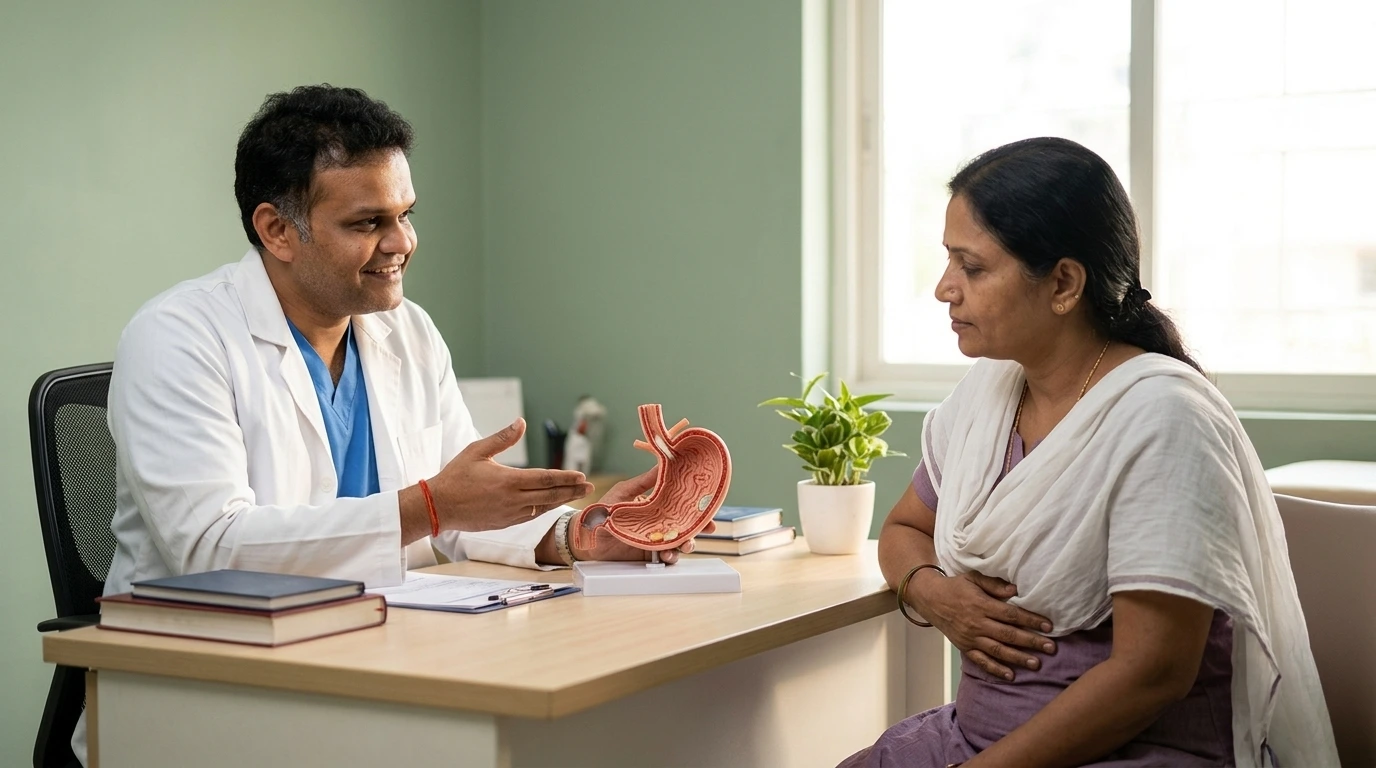
Need expert consultation? Book an appointment with Dr. Babu Elangovan.
Book AppointmentHow to Improve Gut Health Naturally
“Gut health” online usually means buying something. Clinically it means a digestive tract that digests, absorbs, moves and defends without chronic pain, bleeding or malabsorption — built mostly from habits, not sachets. This is a practical, India-relevant version from a surgical gastroenterologist’s desk, not a wellness shop.
This is not another reflux meal plan — that is GERD diet and trigger foods. Liver-specific food advice sits in best foods for liver health.
What gut health actually means
A useful gut:
- Empties the stomach and moves contents along without constant distension
- Handles fibre without perpetual crisis (adaptation takes days to weeks)
- Hosts a microbial community fed by plant diversity, not one miracle strain
- Signals pain only when something is wrong — not after every meal
If you have alarm symptoms, you do not have a “gut health gap.” You have a diagnostic problem.
Fibre, the Indian way
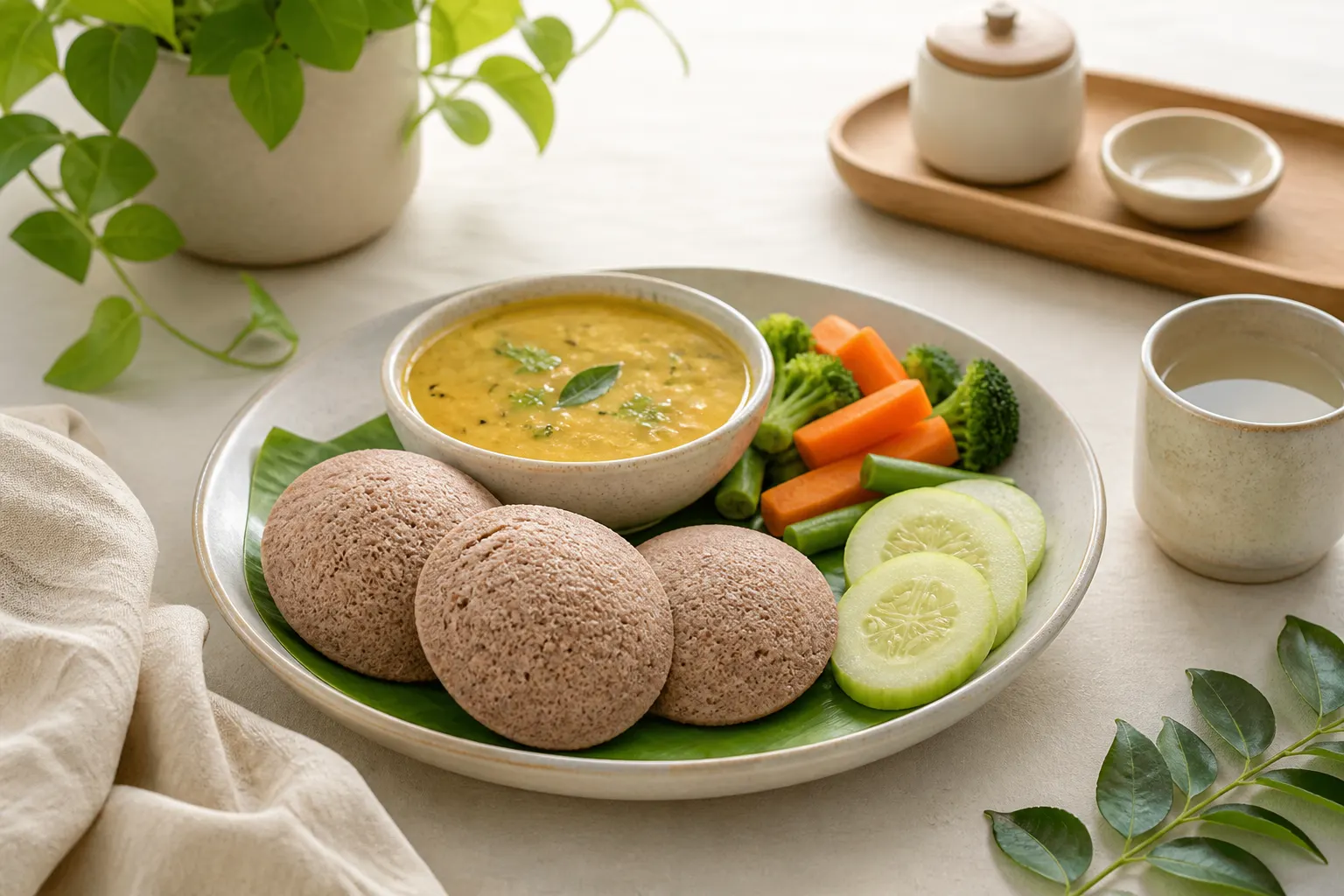
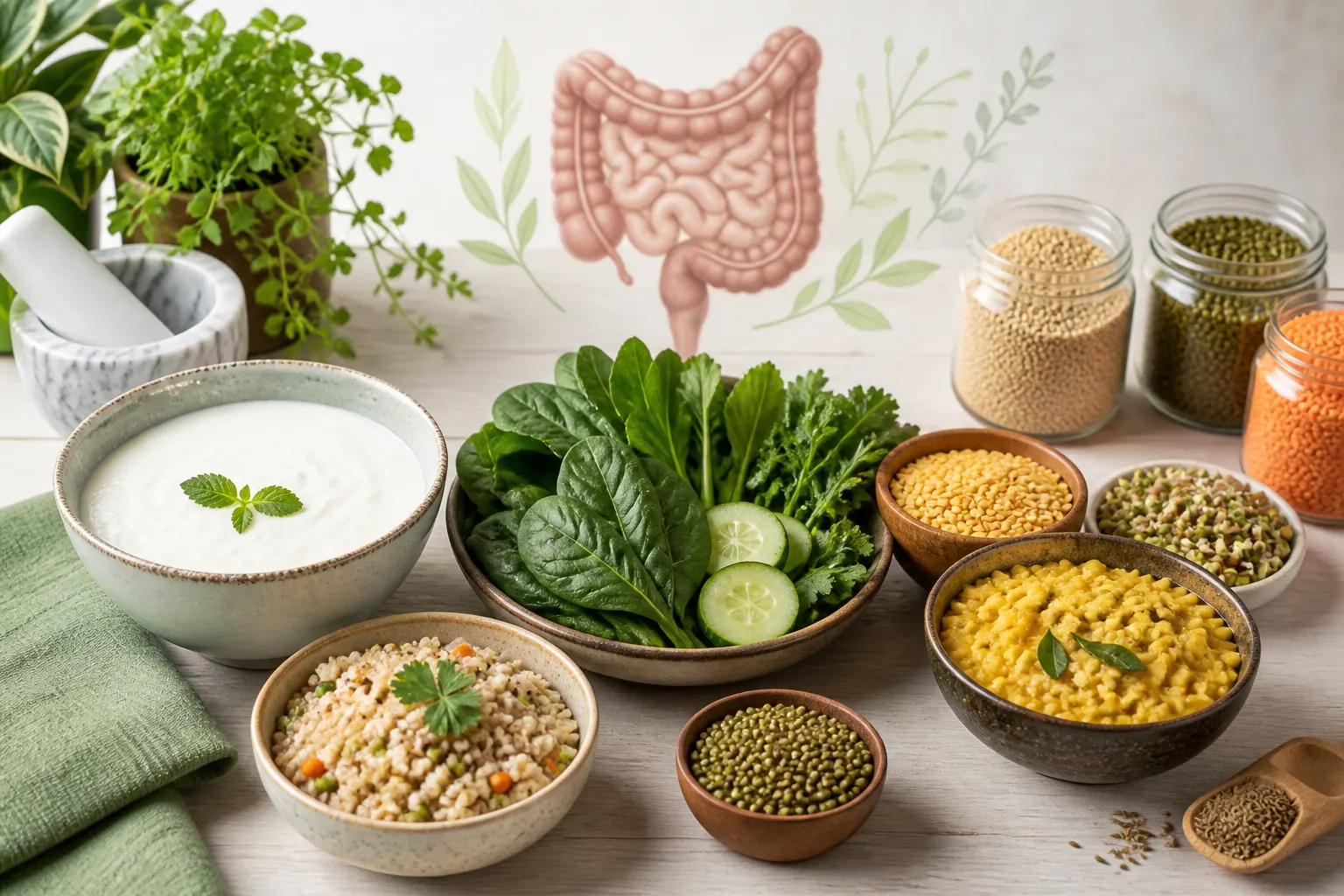
Dals, vegetables, millets (ragi, jowar, bajra), whole fruit and salads beat imported powders for most households. Fibre feeds beneficial bacteria and softens stool — which reduces straining, piles risk and the bloating that comes from constipation.
Think in terms of diversity across the week, not one superfood. Rotating greens, gourds, okra, and different dals gives the microbiome a wider menu than the same cucumber salad every day.
Two kinds of fibre, two different jobs
Most everyday foods contain both, but the balance explains why one person's remedy is another's problem:
| Type | Found in | What it does |
|---|---|---|
| Soluble | Oats, dals, apple, banana, psyllium | Forms gel, softens stool, feeds bacteria — helpful in both constipation and loose stool |
| Insoluble | Wheat bran, salad greens, vegetable skins | Adds bulk and speeds transit — excellent for constipation, can aggravate a sensitive or bloated gut |
If adding raw salads made things worse, that is not a failure of willpower. It usually means insoluble fibre was increased too fast in a gut that needed the soluble kind first.
Increase slowly. A sudden leap from polished rice to three bowls of chickpeas produces gas and abandonment. Soak and cook legumes well; use hing, jeera and ginger if they help you personally. Allow two to three weeks for the microbiome to adapt — early gas is a transition symptom, not proof that fibre disagrees with you.
Hydrate as fibre rises. Fibre without water is a constipation recipe. Most adults do better drifting toward roughly 25–30 g of fibre daily from food — exact counting is optional; the direction is not.
Fermented foods — useful, not magic
Fresh curd, buttermilk, properly fermented idli/dosa batter — traditional, cheap, often better tolerated than random capsules. They are adjuncts. They do not eradicate H. pylori (full H. pylori guide), heal Crohn’s disease, or replace colonoscopy when bleeding appears.
In Chennai heat, batter can over-ferment quickly — sour enough to irritate rather than soothe. Commercial batters sometimes add salt and preservatives that undo the point. Fresh homemade curd at room temperature beats sweetened “probiotic” drinks with a dessert sugar load.
Skip sweet probiotic drinks with more sugar than microbes. For liver patients, liquid sugar is the opposite of help.
Where probiotic capsules do and do not earn their price
Specific strains have reasonable evidence in specific situations — reducing antibiotic-associated diarrhoea, for instance, or helping some people with IBS symptoms. What the evidence does not support is a general daily capsule taken indefinitely by someone with no diagnosis, in the hope of unspecified improvement.
If you want to trial one, treat it like any other intervention: pick a defined reason, give it four weeks, and stop if nothing changes. A cupboard of half-finished bottles is a sign the strategy, not the strain, was wrong. Fermented food eaten regularly does more for most people than a capsule taken irregularly.
Sleep, stress and movement
Gut motility and visceral sensitivity track sleep debt and chronic stress. The gut–brain axis is real physiology, not a slogan: sympathetic drive slows or scrambles motility and can heighten pain signalling from ordinary gas.
This is also why symptoms often improve on holiday and worsen in the week of a deadline, with the diet unchanged. Patients sometimes hear that as "so it's all in my head" — it is not. The nerve signalling is genuine; the modifiable input is simply stress rather than food.
Short walks after meals improve gastric emptying for many people. You do not need a marathon — consistency beats intensity. Aim for a regular sleep window; irregular nights correlate with messier bowel patterns in clinic as often as messy diets do.
Do not ignore the urge to go. Habitually postponing defecation — common with long commutes and reluctance to use office toilets — retrains the rectum to tolerate loading and is a genuinely frequent contributor to chronic constipation. A consistent unhurried few minutes after breakfast, when the gastrocolic reflex is strongest, works better than any supplement.
Smoking and excess alcohol damage barrier function and motility. Alcohol's digestive effects are covered in alcohol, acidity and GERD.
What not to do
- Multi-day “gut resets” and liver detox juices — myths and harms in do liver detox drinks really work
- Endless empiric antibiotics for “gas”
- Ignoring blood, black stools, or progressive weight loss while shopping probiotics
- Extreme elimination diets without a plan to reintroduce foods
Red flags — stop the lifestyle list and get assessed
- Blood in stool or black tarry stools — see blood in stool causes
- Persistent vomiting, difficulty swallowing, unexplained weight loss
- Fever with severe pain, or night pain that wakes you
- New progressive bloating with anaemia — why bloated after eating and cancer early-signs when relevant
Evaluation may include stool tests, breath tests, ultrasound, or endoscopy under GI endoscopy.
A realistic first month
If you want a sequence rather than a list, this is the order that works most often in clinic:
- Week 1 — fix hydration and the morning routine. Do not change the diet yet.
- Week 2 — add one soluble-fibre source daily and a ten-minute walk after your largest meal.
- Week 3 — widen plant diversity; rotate dals and vegetables rather than adding volume.
- Week 4 — introduce fresh curd or buttermilk daily if tolerated, and review what actually changed.
Changing one variable at a time is what makes the outcome interpretable. Overhauling everything on a Monday tells you nothing about which part helped, and is the reason most attempts collapse by the third week.
If habits are not enough
Bring a two-week food–symptom note. We can separate functional patterns from ulcer disease, H. pylori, biliary pain or inflammatory bowel disease — and treat the actual problem.
Consultations with Dr. Babu Elangovan are available at Mira Health Care (Adyar), Kauvery Hospital (Alwarpet), Capstone Clinic (T. Nagar), Kumaran Hospital and THANC Hospital (Kilpauk).
Book an appointment or call +91 99626 60009.
This article is general information, not personal medical advice. Seek urgent care for vomiting blood, black stools, severe abdominal pain with fever, or sudden inability to pass stool with vomiting.
References
- American Gastroenterological Association (AGA). "Clinical Practice Guideline on the Role of Probiotics in the Management of Gastrointestinal Disorders." Gastroenterology, 2020. https://www.gastrojournal.org/
- Reynolds, A., et al. "Carbohydrate Quality and Human Health: A Series of Systematic Reviews and Meta-Analyses." The Lancet, 2019. https://www.thelancet.com/
- National Institute of Diabetes and Digestive and Kidney Diseases (NIDDK). "Your Digestive System and How It Works." https://www.niddk.nih.gov/
- Indian Council of Medical Research (ICMR). "Dietary Guidelines for Indians." National Institute of Nutrition. https://www.nin.res.in/
- Valdes, A. M., et al. "Role of the Gut Microbiota in Nutrition and Health." BMJ, 2018. https://www.bmj.com/
Authored by