Difficulty Swallowing (Dysphagia): Causes and When to Worry

Need expert consultation? Book an appointment with Dr. Babu Elangovan.
Book AppointmentDifficulty swallowing, medically termed dysphagia, occurs when moving food or liquid from your mouth to your stomach requires extraordinary effort or feels physically impossible. Patients experiencing this symptom often feel anxious, wondering whether a persistent sensation in their throat is harmless or points to an obstruction in the food pipe. Understanding the underlying difficulty swallowing causes allows you to evaluate your symptoms clearly and seek timely diagnostic care from a specialist.
What Are the Primary Difficulty Swallowing Causes?
Identifying whether your swallowing issue stems from a physical blockage or a muscular coordination problem is the first step toward getting an accurate diagnosis.
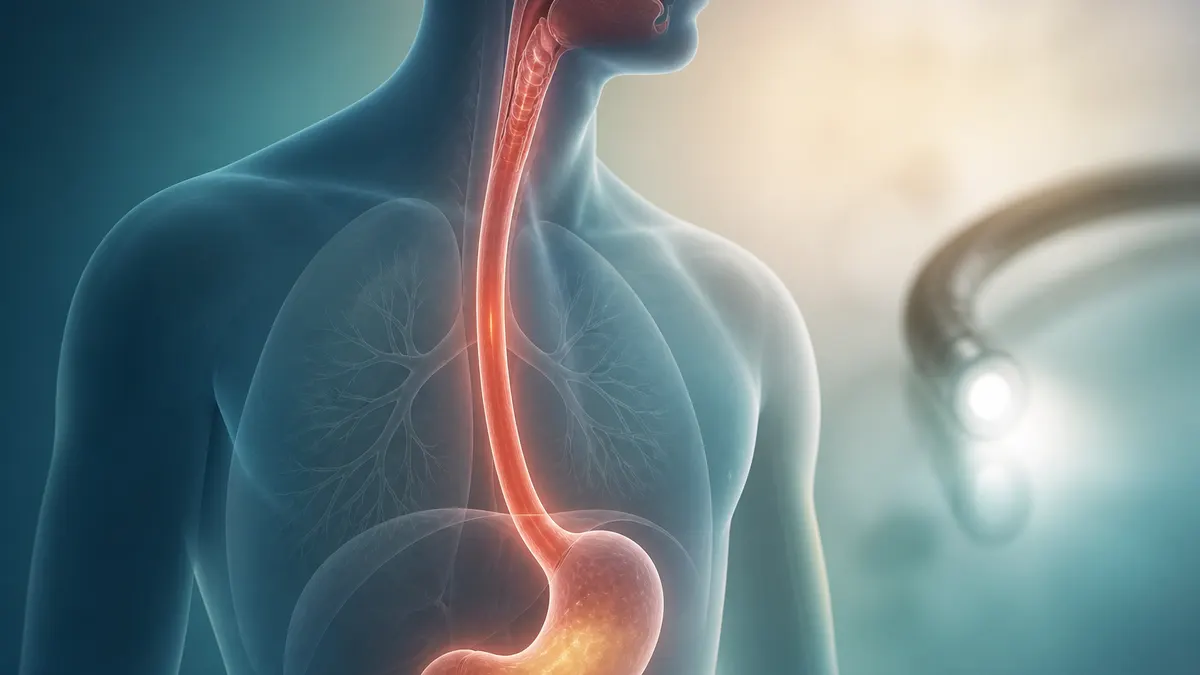
Dysphagia is classified into two distinct anatomical regions: oropharyngeal dysphagia, which originates in the mouth or throat, and oesophageal dysphagia, which originates in the muscular tube (food pipe) leading down to the stomach. High throat swallowing issues often manifest as coughing, choking, or nasal regurgitation when attempting to swallow. Ooesophageal dysphagia typically causes a distinct sensation of food sticking in the chest several seconds after swallowing.
Mechanical vs. Motility Dysphagia
Mechanical dysphagia happens when the oesophageal lumen narrows due to structural changes, making it difficult for solid food to pass down. Common structural culprits include peptic strictures, benign tumours, foreign bodies, or compression from external structures like enlarged lymph nodes. Motility dysphagia involves a breakdown in the nerve and muscle coordination required to propel food downward. Conditions like achalasia cardia disrupt normal peristaltic waves, causing both solids and liquids to stick indiscriminately.
Inflammatory and Immune-Mediated Triggers
Chronic inflammation causes swelling and scarring along the mucosal lining, leading to physical narrowing over time. Long-term acid reflux causes oesophagitis, where stomach acid burns the lower oesophagus until scar tissue restricts the passage. Eosinophilic oesophagitis, an allergic or immune-mediated condition, causes chronic inflammation that stiffens the oesophageal walls. Patients with severe mucosal irritation may also experience secondary digestive issues, similar to how underlying stomach bacterial infections like Helicobacter pylori infection irritate the gastric lining.
Swallowing Difficulty vs Painful Swallowing vs Throat Lump: What Is the Difference?
Learning the precise terminology for your throat symptoms helps your gastroenterologist pinpoint the source of your discomfort faster.
Dysphagia means food or liquid physically struggles to pass down the digestive tract. Patients frequently confuse this with odynophagia, which refers specifically to pain while swallowing. While dysphagia often presents as a painless sensation of food hanging up in the chest, odynophagia feels like a burning, sharp, or squeezing pain as the food bolus travels past an inflamed area.
Understanding Globus Pharyngeus
Globus pharyngeus is the persistent sensation of a lump, tightness, or full feeling in the throat when no true physical obstruction exists. Unlike mechanical dysphagia, globus typically improves when eating or drinking and worsens during dry swallowing. Stress, heightened anxiety, and mild laryngopharyngeal acid reflux often trigger or intensify globus pharyngeus.
Why Painful Swallowing (Odynophagia) Differs from Dysphagia
Odynophagia usually indicates acute mucosal erosion, deep ulcers, or infection rather than a tight structural narrowing. Severe candidiasis (fungal infection), herpes simplex virus, or corrosive injury from swallowed medications cause intense swallowing pain. While severe inflammation can make swallowing painful enough that patients avoid eating, the underlying issue remains tissue injury rather than mechanical blockage.
Which Structural and Motility Disorders Cause Food to Get Stuck?
Chronic digestive disorders can alter the physical structure or nerve signalling of the food pipe over time.
When stomach acid flows backward into the lower oesophagus continuously, it damages the fragile mucosal lining. The body attempts to heal this chronic damage by producing fibrotic scar tissue. Over months or years, this fibrotic tissue contracts, forming a peptic stricture that narrows the internal diameter of the food pipe.
Peptic Strictures and Hiatus Hernia
A hiatus hernia occurs when the upper portion of the stomach pushes upward through the diaphragm into the chest cavity. This anatomical displacement disrupts the lower oesophageal sphincter (LOS), rendering the natural anti-reflux barrier ineffective. The resulting acid exposure increases the risk of developing peptic strictures, ulceration, and severe swallowing difficulty.
Achalasia Cardia and Ooesophageal Spasms
Achalasia cardia is a primary motility disorder where the nerve plexus controlling the lower oesophageal sphincter degenerates. As a result, the sphincter fails to relax during swallowing, and the muscular body of the oesophagus loses its coordinated contraction waves. Food and liquid collect in the food pipe, causing regurgitation, chest pressure, and difficulty swallowing both solids and liquids. Diffuse oesophageal spasm causes uncoordinated, high-amplitude muscle contractions that mimic severe chest pain.
Could Difficulty Swallowing Be a Sign of Ooesophageal or Stomach Cancer?
Progressive difficulty in swallowing requires prompt diagnostic evaluation to rule out malignant structural blockages.
Ooesophageal cancer or gastric cardia cancer physically obstructs the lumen of the upper gastrointestinal tract as the tumour grows. In early stages, small lesions may cause no symptoms at all. As the mass expands, it reduces the passage space, leading to persistent symptoms that steadily worsen over weeks or months.
Progressive Dysphagia as a Warning Sign
Progressive dysphagia is the classic clinical symptom of an expanding upper GI malignancy. Patients typically notice that dry, solid foods like meat or rice begin sticking first. Over time, as the blockage grows tighter, soft foods like porridge become difficult to swallow, followed eventually by liquids and saliva.
Risk Factors for Upper GI Malignancies
Several chronic conditions and lifestyle factors elevate the risk of developing upper GI cancers:
- Chronic untreated gastro-oesophageal reflux leading to Barrett's oesophagus (metaplastic changes in the lower lining)
- Long-standing tobacco use and heavy alcohol consumption
- Age over 50 years with new-onset digestive symptoms
- History of caustic injury or chronic achalasia cardia
Evaluating upper GI concerns early is critical. Just as patients watch for non-obstructive systemic digestive warnings like blood in stool causes, persistent swallowing friction requires urgent specialist attention.
What Red Flag Symptoms Require Immediate Medical Evaluation?
Certain high-risk symptoms signal an acute medical emergency or advanced pathology that demands rapid intervention.
A complete food bolus impaction occurs when food becomes entirely wedged in the oesophagus, making it impossible to swallow even your own saliva. Patients experiencing acute impaction often experience severe distress, chest pain, and immediate regurgitation. This situation requires emergency endoscopic removal to prevent tissue necrosis or perforation.
Emergency Red Flags (Food Impaction & Hematemesis)
Go to an emergency department immediately if you experience any of the following symptoms:
- Inability to swallow saliva or clear fluids (drooling)
- Vomiting blood (hematemesis) or passing dark, tarry stools
- Sudden-onset swallowing difficulty accompanied by severe chest, back, or neck pain
- Shortness of breath, wheezing, or choking while trying to swallow
When to See a Surgical Gastroenterologist Promptly
If your symptoms are not acute enough for the emergency room, you should still schedule a prompt specialist evaluation if you are over 50 and develop new swallowing symptoms. Unexplained weight loss, persistent vomiting, progressive difficulty with solid foods, or a family history of GI cancer all warrant urgent investigation. Early specialist evaluation ensures structural issues are treated before severe nutritional deficits or complications develop.
How Do Doctors Diagnose the Underlying Cause of Swallowing Problems?
Specialists use targeted diagnostic tools to look inside the upper digestive tract and evaluate muscle performance.
Diagnostic evaluation begins with a detailed history to distinguish between mechanical blockages and functional motility disorders. Your specialist will order diagnostic testing based on whether your symptoms affect solids, liquids, or both.
Upper GI Endoscopy (Gastroscopy)
Upper GI endoscopy is the gold standard primary diagnostic test for dysphagia. Under light sedation, a gastroenterologist passes a small, flexible camera down the oesophagus, stomach, and duodenum. This permits direct visual inspection of the mucosal lining, identification of strictures or masses, and tissue biopsies. If benign strictures are seen, the doctor can often dilate them during the same endoscopic procedure.
| Diagnostic Test | Primary Use Case | What It Measures |
|---|---|---|
| Upper GI Endoscopy | First-line structural evaluation | Mucosal lining integrity, strictures, masses, biopsies |
| High-Resolution Manometry | Motility disorder evaluation | Wave pressures, lower sphincter relaxation |
| Barium Swallow Study | Structural overview & transit | Dynamic flow of liquid contrast through the oesophagus |
| Contrast CT Scan | Staging & external compression | Extraluminal structures, tumour extent, lymph nodes |
Ooesophageal Manometry and Barium Swallow Studies
When an endoscopy reveals a clean mucosal lining with no physical blockage, high-resolution oesophageal manometry is the next diagnostic step. A thin, pressure-sensitive catheter measures the timing and strength of muscular contractions along the food pipe during swallows. Barium swallow studies involve drinking a contrast liquid while real-time X-rays capture structural abnormalities like large hiatus hernias, diverticula, or anatomical twists.
What Medical and Surgical Treatment Options Exist for Dysphagia?
Treating swallowing disorders effectively depends entirely on correcting the confirmed structural or functional root cause.
Benign peptic strictures usually respond well to endoscopic balloon dilatation, where a inflatable balloon expands the narrowed segment. High-dose proton pump inhibitor (PPI) medications are prescribed concurrently to suppress gastric acid production and prevent scar tissue from recurring.
Anti-Reflux Surgery and Advanced Procedures
When severe GERD and large hiatus hernias fail to respond to medical management, surgical repair offers durable relief:
- Laparoscopic Hiatal Hernia Repair: The herniated stomach is brought back down into the abdomen, and the diaphragmatic defect is narrowed with sutures.
- Laparoscopic Fundoplication: The upper part of the stomach (fundus) is wrapped around the lower oesophagus to recreate a tight valve, preventing acid reflux.
- Laparoscopic Heller Myotomy: For achalasia cardia, the tight muscle fibres of the lower sphincter are cut surgically to allow food to pass freely into the stomach.
Complex structural diseases require advanced surgical management. In cases of localised upper GI cancer, surgical resection (oesophagectomy) remains a primary definitive treatment. Just as advanced HPB procedures address complex liver or biliary issues—such as evaluating symptoms of liver jaundice or managing complex stone disease detailed in the guide to bile duct stones treatment—upper GI surgical care requires specialised expertise. Reflux is the commonest cause; the acid reflux and GERD guide and Barrett's oesophagus explain why long-standing heartburn matters. When surgery is the answer, the options include anti-reflux surgery, hiatus hernia repair and, for cancer, oesophagectomy, explained alongside the oesophageal cancer guide. For how a surgical gastroenterologist differs from a medical one, see gastroenterologist in Chennai.
Specialist Dysphagia Evaluation with Dr. Babu Elangovan in Chennai
Persistent or progressive difficulty swallowing requires accurate diagnostic evaluation by an experienced specialist to protect your health and peace of mind.
Dr. Elangovan, Surgical Gastroenterologist (MCh), sees patients at Mira Health Care, Adyar (Monday to Saturday, 4 to 7 PM), and also at Kauvery Hospital (Alwarpet), Capstone Clinic (T. Nagar) and Kumaran and THANC Hospitals (Kilpauk).
Patients can access specialist consultations across these locations in Chennai:
- Mira Health Care (Adyar)
- Kauvery Hospital (Alwarpet)
- Capstone Clinic (T. Nagar)
- Kumaran Hospital (Kilpauk)
- THANC Hospital (Kilpauk)
For all appointment enquiries across any of these consulting centres, contact Dr. Elangovan's direct line at +91 94440 43478.
If you are experiencing persistent swallowing discomfort, food sticking, or reflux symptoms, book an appointment with Dr. Elangovan to receive a comprehensive clinical evaluation.
Written & medically reviewed by