Large Hiatal Hernia Surgery in Chennai: Paraoesophageal
- Consults across Chennai: Adyar · Alwarpet · T. Nagar · Kilpauk
- Evening OPD at Mira Health Care, Adyar: Mon – Sat, 4:00–7:00 PM
Surgery for large and paraoesophageal hiatal hernias in Chennai: symptoms beyond reflux, emergency signs, keyhole repair, mesh debate, recovery and cost.
Medically reviewed by Dr. Babu Elangovan, MS · MCh (Surgical Gastro) · FMASLast reviewed
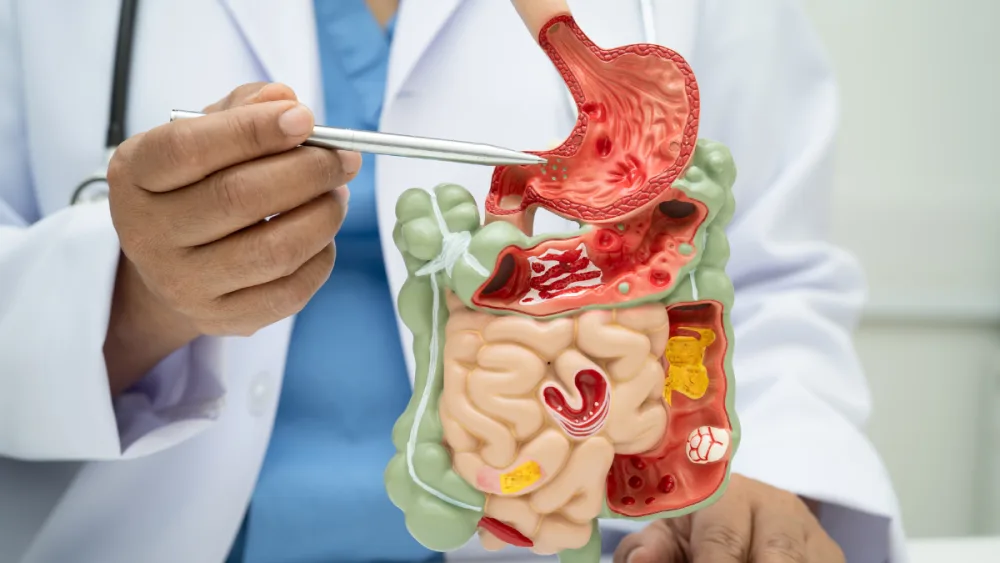
A hiatal hernia means part of the stomach has moved up through the opening in the diaphragm where the food pipe passes, called the hiatus. Small sliding hernias are common and mostly cause reflux. Large and paraoesophageal hernias are a different problem: much of the stomach can end up in the chest, and the symptoms are often more about the mechanics of eating and breathing than about acid. Dr. Babu Elangovan, an MCh surgical gastroenterologist in Chennai with F.M.A.S. training in minimal access surgery, repairs large and paraoesophageal hiatal hernias by laparoscopy.
When reflux is the main issue and the hernia is small, the relevant operation is fundoplication, covered in anti-reflux surgery. Larger hernias, where part of the stomach has moved into the chest, need a different operation, described below.
Table of Contents
- Types of hiatal hernia
- Symptoms of a large hernia
- Emergencies: volvulus and obstruction
- Who needs repair
- Tests before surgery
- The operation
- Risks and recurrence
- Cost in Chennai
- Recovery and diet
Types of hiatal hernia
Surgeons describe four types:
- Type I, sliding. The junction of the food pipe and stomach slides up into the chest. By far the commonest; usually small.
- Type II, pure paraoesophageal. The junction stays in place, but the top of the stomach rolls up beside the food pipe.
- Type III, mixed. Both happen together. This is the commonest form among large hernias.
- Type IV. Another organ, such as the colon, spleen or fat, has also entered the chest.
Types II to IV are grouped as paraoesophageal hernias. When most of the stomach lies in the chest, it is sometimes called an intrathoracic stomach.
Symptoms of a large hernia
Large hernias often build up quietly over years, and many people adapt their eating without realising why. Common symptoms:
- Fullness, chest pressure or pain soon after meals, sometimes mistaken for heart pain.
- Difficulty swallowing, or food feeling stuck low behind the breastbone.
- Regurgitation of undigested food.
- Breathlessness after eating, because the stomach in the chest takes up lung space.
- Tiredness from iron-deficiency anaemia, caused by slow bleeding from erosions where the stomach is pinched at the diaphragm.
- Heartburn, though often less prominent than in a small sliding hernia.
Bloating and fullness have many causes, discussed in why do you feel bloated after eating. A large hiatal hernia is one that is easily missed.
Emergencies: volvulus and obstruction
The serious risk with a paraoesophageal hernia is that the stomach twists on itself inside the chest, called gastric volvulus, or becomes trapped. The blood supply can be compromised.
Seek emergency care if you have:
- Sudden severe chest or upper abdominal pain.
- Retching or trying to vomit but bringing nothing up.
- Inability to swallow even saliva.
- Vomiting blood or black material.
Emergency surgery for a twisted stomach is a much larger undertaking than a planned repair, which is one reason symptomatic paraoesophageal hernias are generally repaired electively.
Who needs repair
Repair is generally advised for:
- Paraoesophageal hernias causing symptoms, including swallowing difficulty, post-meal pain, breathlessness or anaemia.
- Any hernia that has caused an episode of volvulus or obstruction.
- Large sliding hernias with reflux that has not responded to medication.
Observation may be reasonable for a large hernia that causes no symptoms, particularly in an older person or someone with heart or lung disease that raises surgical risk. The risk of a future emergency in someone without symptoms appears to be low, and the decision is made together after weighing your health and wishes.
Tests before surgery
- Upper GI endoscopy to assess the stomach and food pipe, look for erosions, ulcers or Barrett's change, and exclude cancer. What the test involves is explained in what to expect during a gastroscopy.
- Barium swallow or CT scan to show how much stomach is in the chest, its position, and whether other organs are involved.
- Oesophageal manometry in selected patients, to check how well the food pipe squeezes before deciding on the type of wrap.
- Blood count and iron studies, since anaemia is common and may need correction first.
- Heart and lung assessment, as many patients with large hernias are older.
The operation
The repair is performed laparoscopically under general anaesthesia in most cases. It has four parts:
- Reduce the hernia. The stomach is gently brought back down into the abdomen.
- Excise the sac. The lining that has stretched up into the chest with the stomach is freed and removed. Leaving it behind is a recognised cause of recurrence.
- Mobilise the food pipe. Enough length of oesophagus is freed within the chest so the junction sits comfortably below the diaphragm without tension. Very occasionally, a lengthening procedure is needed if the food pipe has become shortened.
- Close the hiatus and add a wrap. The muscular pillars of the diaphragm are stitched together around the food pipe. A partial or full fundoplication is usually added, both to control reflux and to help anchor the stomach in the abdomen. Mesh reinforcement is considered selectively, as discussed in the FAQ.
The hospital stay is usually two to four days. Patients with heart or lung disease may be monitored in a high-dependency setting initially.
Risks and recurrence
- Temporary difficulty swallowing, common for a few weeks as swelling settles.
- Bloating and inability to belch after a full wrap, which usually improves.
- Bleeding, infection and anaesthetic risk, including chest complications in older patients.
- Injury to the food pipe, stomach, lung lining or spleen, uncommon.
- Recurrence. Large hiatal hernias have a meaningful rate of recurrence on imaging over the long term, though many small recurrences cause no symptoms. Careful sac excision, adequate oesophageal length and avoiding early straining all help. A symptomatic recurrence can be re-repaired; see recurrent hernia surgery.
Cost in Chennai
Cost depends on the size of the hernia, the hospital and your health, so a written, itemised estimate is given after assessment. The factors:
- Complexity and operating time, which rise with hernia size and previous surgery.
- Whether mesh is used, and its type.
- Length of stay and HDU monitoring.
- Pre-operative tests, such as manometry, CT and cardiac evaluation.
- Hospital and room category.
Ask for the estimate to separate surgeon, anaesthesia, theatre, consumables and room charges. Symptomatic hiatal hernia repair is covered by most private and corporate policies, and eligible patients may be covered under the Tamil Nadu CMCHIS at empanelled hospitals.
Recovery and diet
| Stage | Timing | What it looks like |
|---|---|---|
| Liquids | First 1–3 days | Water, buttermilk, thin rasam, strained soup |
| Soft diet | Weeks 1–4 | Idli, pongal, curd rice, dal, mashed vegetables |
| Gradual normal | Weeks 4–6 onward | Small portions, chewed well; bread and dry rotis reintroduced last |
Walking starts the day after surgery. Desk work is usually possible within two weeks. Heavy lifting and straining are avoided for about six weeks. Report persistent vomiting, inability to swallow liquids, or chest pain promptly.
Consult Dr. Elangovan
Dr. Elangovan is a surgical gastroenterologist (MS, MCh Surgical Gastroenterology, FMAS) with over 20 years of experience, performing laparoscopic hiatal hernia repair and anti-reflux surgery. The wider service is described on the hernia surgery speciality page, and keyhole surgery on the laparoscopic GI surgery page.
He consults at Mira Health Care, Adyar and Kauvery Hospital, Alwarpet, with other Chennai hospitals on the locations page. Send your endoscopy and CT or barium reports through the booking form or WhatsApp; Dr. Elangovan reviews them and the team confirms a slot.
To discuss a large hiatal hernia, book an appointment or call +91 94440 43478.
This page is general information, not medical advice. Whether surgery is advisable depends on individual assessment, and outcomes vary between patients and cannot be guaranteed. Sudden chest pain, retching without vomiting or inability to swallow needs emergency care immediately.
Frequently Asked Questions
What is the difference between a sliding and a paraoesophageal hiatal hernia?
In a sliding hiatal hernia, the junction between the food pipe and stomach slides up through the diaphragm. It is very common, often small, and mainly matters because it can cause reflux. In a paraoesophageal hernia, part of the stomach rolls up into the chest beside the food pipe, and sometimes the whole stomach or other organs follow. That type behaves differently: it can twist, obstruct or bleed, and it is the one more often treated with surgery even when reflux is mild.
Does every large hiatal hernia need an operation?
No. A large hernia that causes no symptoms in an older or frail person is often observed, because the risk of a serious complication in that situation is generally low and surgery has its own risks. Repair is advised when the hernia causes symptoms such as difficulty swallowing, pain or fullness after meals, breathlessness, anaemia from slow bleeding, or episodes of obstruction. A hernia that has caused an emergency once is usually repaired.
Can a hiatal hernia cause anaemia or breathlessness?
Yes. Large hernias can cause slow blood loss from erosions where the stomach is squeezed at the diaphragm, which shows up as iron-deficiency anaemia and tiredness. A large portion of stomach in the chest can also reduce lung space, causing breathlessness, particularly after eating. These symptoms are sometimes attributed to age or heart disease before the hernia is recognised.
Will mesh be used to repair my hiatal hernia?
Not routinely. The main repair is closing the widened opening in the diaphragm with stitches. In very large or recurrent hernias, a mesh may be used to reinforce the closure, but this is genuinely debated among surgeons because mesh at the hiatus can rarely erode into the food pipe or cause narrowing. The decision is made at surgery from the size of the defect and the quality of the muscle, and it is discussed with you beforehand.
What can I eat after hiatal hernia surgery?
Most people start with liquids, then move to soft foods for a few weeks while swelling at the repair settles. Soft idli, curd rice, pongal, dal and well-cooked vegetables are typical. Bread, dry rotis, tough meat and large mouthfuls are avoided early because they can stick. Small frequent meals help, and the diet is gradually normalised over about four to six weeks.
Is it covered by insurance?
Hiatal hernia repair for a symptomatic or complicated hernia is a medically necessary operation and is covered by most private and corporate insurance policies. Eligible patients may be covered under the Tamil Nadu CMCHIS at empanelled hospitals. The hospital insurance desk will confirm pre-authorisation.
Related procedures
Anti-Reflux Surgery (Fundoplication)
Laparoscopic anti-reflux surgery in Chennai by Dr. Babu Elangovan — when GERD needs surgery, why manometry comes first, Nissen vs partial wraps, and recovery.
Learn moreRecurrent Hernia Surgery
Recurrent hernia surgery in Chennai: why hernias come back, choosing a fresh tissue plane, old mesh, redo repair risks and cost factors explained.
Learn moreGastrectomy for Stomach Cancer
Stomach cancer surgery in Chennai: staging, partial or total gastrectomy with D2 lymph node clearance, chemotherapy, eating after surgery and cost.
Learn moreRelated reading
Difficulty Swallowing (Dysphagia): Causes and When to Worry
Difficulty swallowing, medically termed dysphagia, occurs when moving food or liquid from your mouth to your stomach requires extraordinary effort or feels physically impossible.…
Read the guideAcid Reflux and GERD: When to See a Specialist
Heartburn is an incredibly common experience. Many people manage occasional chest discomfort or a sour taste in the mouth with over-the-counter antacids or simple dietary…
Read the guideWhat to Expect During a Gastroscopy or Colonoscopy
Undergoing any medical evaluation can bring about a mix of anxiety and uncertainty, especially when it involves examining your digestive tract from the inside. If your doctor has…
Read the guideWhy Do You Feel Bloated After Eating?
Post-meal tightness is one of the commonest complaints in clinic — and one of the easiest to misread. Most of the time it is gas, fibre load, constipation or reflux-related air…
Read the guideWhere to consult Dr. Babu Elangovan for Paraoesophageal & Large Hiatal Hernia Repair
- T. Nagar
- Capstone Clinic · Tue & Thu, 2:00–4:00 PM
- Adyar
- Mira Health Care · Mon – Sat, 4:00–7:00 PM
- Kilpauk
- Kumaran Hospital · by prior appointment
- THANC Hospital · by prior appointment
One booking line for every location; timings can change, so please confirm when you book. All locations
Planning your care
Book a consultation with Dr. Babu Elangovan
Get an expert surgical opinion on paraoesophageal & large hiatal hernia repair — from diagnosis and planning through to recovery, with one consistent plan.