Acid Reflux and GERD: When to See a Specialist

Need expert consultation? Book an appointment with Dr. Babu Elangovan.
Book AppointmentHeartburn is an incredibly common experience. Many people manage occasional chest discomfort or a sour taste in the mouth with over-the-counter antacids or simple dietary adjustments. However, when these symptoms transition from occasional inconveniences to persistent daily struggles, they may indicate a more chronic condition: Gastroesophageal Reflux Disease (GERD).
Understanding acid reflux and gerd when to see a specialist is crucial for preventing long-term damage to your digestive tract. When left unmanaged, chronic acid exposure can lead to complications that extend far beyond simple discomfort. Day-to-day food timing and an Indian meal template are covered separately in our complete GERD diet plan.
With over two decades of clinical and operative experience in surgical gastroenterology, Dr. Babu Elangovan offers comprehensive, highly personalized care to patients across Chennai. This guide outlines the physiological mechanisms of reflux, identifies the critical warning signs that necessitate specialist intervention, and discusses modern diagnostic and therapeutic pathways.
Understanding the Difference: Acid Reflux vs. GERD
While the terms "acid reflux" and "GERD" are frequently used interchangeably, they represent different points on the spectrum of gastroesophageal dysfunction.
What is Acid Reflux?
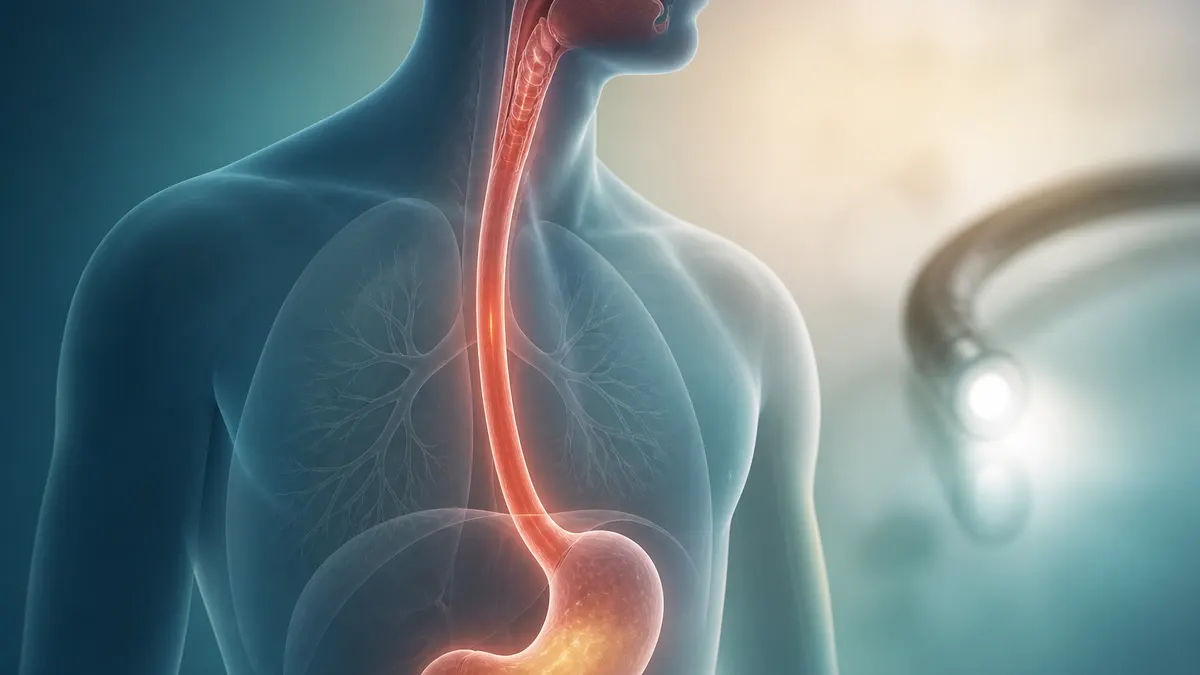
Acid reflux is the physical movement of stomach acid backward into the esophagus. Under normal physiological conditions, a muscular ring at the lower end of the esophagus—the Lower Esophageal Sphincter (LES)—acts as a one-way valve. It opens to let food and liquid pass into the stomach and then tightly closes. If the LES relaxes inappropriately or is weakened, acidic stomach contents can escape upward, causing irritation of the sensitive esophageal lining. Occasional acid reflux is normal and typically triggered by specific dietary choices, large meals, or lying down too quickly after eating.
What is Gastroesophageal Reflux Disease (GERD)?
GERD is the chronic, more severe manifestation of acid reflux. It is clinically defined when reflux occurs multiple times a week, causes bothersome symptoms, or results in objective mucosal damage to the esophagus. GERD is a progressive disease. Over time, constant exposure to hydrochloric acid and digestive enzymes (like pepsin) can cause chronic inflammation, tissue scarring, and cellular changes within the esophageal lining.
| Feature | Acid Reflux | Gastroesophageal Reflux Disease (GERD) |
|---|---|---|
| Frequency | Occasional (e.g., once or twice a month) | Frequent (typically more than twice a week) |
| Symptom Severity | Mild, temporary, easily relieved | Moderate to severe, persistent, impacts quality of life |
| Triggers | Specific heavy meals, carbonated drinks, lying down | Occurs regardless of diet; persists despite lifestyle changes |
| Esophageal Damage | Extremely rare | Possible (esophagitis, strictures, Barrett's esophagus) |
| Primary Management | Lifestyle changes, occasional antacids | Specialist evaluation, prescription medications, surgery |
Acid Reflux and GERD: When to See a Specialist
Determining when to transition from self-care to consulting a surgical gastroenterologist is a key decision in preserving your digestive health. If you experience any of the following scenarios, scheduling a specialist evaluation with Dr. Babu Elangovan is highly recommended.
1. The Presence of "Alarm Symptoms" (Red Flags)
Alarm symptoms indicate that the disease may have progressed to a complicated stage or that another serious gastrointestinal pathology is present. If you experience any of the following, you should seek a specialist evaluation immediately:
- Dysphagia (Difficulty Swallowing): Feeling as though food is sticking in your throat or chest. This can indicate a narrowing of the esophagus (stricture) or a motility disorder.
- Odynophagia (Painful Swallowing): Sharp or burning pain when swallowing, often pointing to severe ulceration or inflammation of the esophagus.
- Unexplained Weight Loss: Dropping weight without trying can be a sign of advanced esophageal disease, including malignancy.
- Persistent Vomiting or Hematemesis: Chronic vomiting, or vomiting blood (which may look like dark coffee grounds), is a medical emergency indicating active upper gastrointestinal bleeding.
- Anemia or Dark Stools: Chronic, slow blood loss from esophageal ulcers can lead to iron-deficiency anemia, often detected through routine blood work or unusually dark, tarry stools.
2. Symptoms Refractory to Medication
Many patients begin their treatment by taking over-the-counter or prescribed Proton Pump Inhibitors (PPIs) or H2 blockers. While these medications are highly effective at suppressing acid production, they do not repair a physically compromised lower esophageal sphincter. If your symptoms persist, return immediately after stopping medication, or worsen despite daily PPI use, you have "refractory GERD." This requires diagnostic investigation to confirm the diagnosis and assess the physical integrity of the gastroesophageal junction.
3. Long-Term Dependence on Acid Suppressants
If you have been taking daily PPIs for several months or years to control your heartburn, it is time to consult a specialist. While generally safe for short-term use, prolonged acid suppression can have systemic implications, including:
- Altered absorption of key nutrients (calcium, magnesium, and Vitamin B12)
- An increased risk of bone fractures in susceptible individuals
- Alterations in the gut microbiome, making the digestive tract more vulnerable to infections like Clostridium difficile
- Masking progressive structural damage or cellular changes within the esophagus
A surgical gastroenterologist can evaluate whether you are an appropriate candidate for a definitive, long-term solution that could eliminate the need for lifelong medication.
4. Atypical or Extra-Esophageal Symptoms
GERD does not always present as classic heartburn. Sometimes, acid travels high enough to irritate the throat, vocal cords, and lungs. These atypical symptoms can easily be misdiagnosed as respiratory or ENT issues:
- Chronic Dry Cough: A persistent cough that does not respond to asthma or allergy treatments.
- Hoarseness or Laryngitis: Especially in the morning, caused by acid vapor irritating the vocal cords during sleep.
- Asthma-Like Symptoms: Micro-aspiration of acid particles can irritate the airways, triggering wheezing or exacerbating pre-existing asthma.
- Globus Sensation: A persistent, uncomfortable feeling of a "lump" in the throat that is unrelated to swallowing food.
If you are experiencing any of these signs, early assessment matters. Request a consultation with Dr. Babu Elangovan at his Chennai consulting locations to get an accurate diagnosis.
The Risks of Untreated GERD: Why Early Evaluation Matters
Allowing chronic acid reflux to continue without specialist management can lead to several serious structural and cellular complications.
Esophagitis and Esophageal Ulcers
The lining of the esophagus is not designed to withstand the highly acidic environment of the stomach. Constant acid exposure causes chemical burns, leading to inflammation (esophagitis). Over time, these burns can erode deeper into the tissue, forming painful ulcers that may bleed and cause anemia.
Esophageal Strictures
As the body repeatedly attempts to heal the chronic ulcers and inflammation caused by acid exposure, it deposits scar tissue. Over time, this scar tissue contracts, narrowing the internal diameter of the esophagus. This narrowing, known as an esophageal stricture, physically obstructs the passage of food, causing progressive difficulty in swallowing solid meals.
Barrett's Esophagus
This is one of the most critical complications of long-standing GERD. In response to chronic acid exposure, the normal squamous cells lining the lower esophagus are gradually replaced by columnar cells similar to those found in the intestines (a process called intestinal metaplasia).
While Barrett's esophagus itself does not cause unique symptoms, it is a known pre-cancerous condition. A small percentage of patients with Barrett's esophagus may develop dysplasia, which can progress to esophageal adenocarcinoma. Regular endoscopic surveillance is vital for patients diagnosed with Barrett's esophagus to detect and treat precancerous changes early. For the full pathway — metaplasia, dysplasia grades, surveillance and ablation — see Barrett’s esophagus: can long-term acid reflux lead to cancer. Advanced disease management is covered under GI Cancer Surgery.
How a Specialist Diagnoses Chronic Acid Reflux
To provide an effective treatment plan, a specialist must thoroughly evaluate the anatomy and function of your upper gastrointestinal tract. Dr. Babu Elangovan utilizes a series of targeted diagnostic tools to understand the root cause of your reflux.
Upper GI Endoscopy
An upper GI endoscopy (gastroscopy) is the cornerstone of GERD evaluation. During this procedure, a thin, flexible tube equipped with a high-definition camera is gently guided down the esophagus into the stomach. This allows the specialist to directly inspect the mucosal lining, identify signs of inflammation, locate ulcers or strictures, detect a hiatal hernia, and take tiny tissue samples (biopsies) to check for Barrett's esophagus or infection. For more details on what to expect, read about GI Endoscopy.
24-Hour pH Study and Impedance Monitoring
This test is the gold standard for diagnosing acid reflux. A tiny, highly sensitive probe is placed in the lower esophagus (either via a thin catheter or a wireless capsule temporarily clipped to the esophageal wall). Over a 24-hour period, the device continuously records the pH level in your esophagus. You will keep a diary of your symptoms, meals, and sleep times. This allows the specialist to correlate your symptoms directly with actual acid reflux events.
Esophageal Manometry
If surgery is being considered, an esophageal manometry is essential. This test measures the rhythmic muscle contractions of your esophagus when you swallow, as well as the coordination and force exerted by the lower esophageal sphincter. It is critical for ruling out primary motility disorders, such as achalasia, which can mimic GERD symptoms but require completely different treatment.
Barium Swallow (Esophagogram)
In this imaging study, you swallow a chalky liquid containing barium while X-rays are taken. This provides a detailed anatomical map of your esophagus and stomach, making it highly useful for identifying large hiatal hernias, structural abnormalities, or strictures.
| Diagnostic Test | Primary Objective | What It Reveals | Patient Experience |
|---|---|---|---|
| Upper GI Endoscopy | Direct mucosal visualization | Esophagitis, Barrett's esophagus, hiatal hernia, strictures | Performed under light sedation; quick and painless |
| 24-Hour pH Study | Quantify acid exposure | Exact frequency and duration of acid reflux events | Catheter-based or wireless capsule; minimal disruption to daily routine |
| Esophageal Manometry | Assess esophageal motility | Strength and coordination of esophageal muscles and LES | Performed awake; involves a thin tube passed through the nose |
| Barium Swallow | Evaluate structural anatomy | Hiatal hernia size, strictures, anatomical anomalies | Simple outpatient X-ray procedure; requires drinking a barium liquid |
Treatment Options: From Lifestyle Modifications to Advanced Interventions
Managing GERD effectively requires a step-wise approach tailored to the severity of your condition and your response to initial therapies.
1. Lifestyle and Dietary Modifications
For mild or occasional reflux, simple lifestyle changes can provide significant relief:
- Dietary Adjustments: Identify and limit trigger foods, such as caffeine, chocolate, citrus fruits, tomatoes, spicy dishes, and high-fat foods, which can relax the LES or irritate the esophageal lining.
- Portion Control: Eat smaller, more frequent meals to prevent the stomach from becoming overly full and putting upward pressure on the LES.
- Post-Meal Habits: Avoid lying down, bending over, or engaging in strenuous physical activity for at least two to three hours after eating.
- Positional Therapy: Elevate the head of your bed by six to eight inches using bed risers or a wedge pillow to let gravity help keep stomach acid where it belongs during sleep.
- Weight Management: If you are carrying excess weight, losing even a modest amount can significantly reduce intra-abdominal pressure, relieving the upward force on your stomach. For cases where severe obesity is the primary driver of GERD, specialized surgical options may be discussed. Learn more about Bariatric & Metabolic Surgery.
2. Medical Management
When lifestyle changes are not enough, medications are often prescribed to reduce or neutralize stomach acid:
- Antacids: Provide rapid, temporary relief by neutralizing stomach acid on contact.
- H2 Blockers (Histamine-2 Receptor Antagonists): Reduce acid production for a longer duration than antacids, helping to relieve symptoms for up to 12 hours.
- Proton Pump Inhibitors (PPIs): The most powerful acid-suppressing medications available. They block the chemical pumps in the stomach lining that produce acid, allowing damaged esophageal tissue time to heal.
While medications are highly effective at managing symptoms, they do not correct the underlying mechanical failure of a weakened LES or a hiatal hernia.
3. Surgical and Minimally Invasive Options
For patients who do not want to take lifelong medications, experience side effects, have refractory symptoms, or have a large hiatal hernia, surgical intervention is a highly effective, definitive option.
- Laparoscopic Nissen Fundoplication: This is the standard surgical procedure for GERD. Using minimally invasive keyhole techniques, the surgeon wraps the upper portion of the stomach (the fundus) around the lower esophagus. This reinforces the weakened LES, restoring its function as a one-way valve. If a hiatal hernia is present, it is repaired during the same procedure.
- Robotic-Assisted Anti-Reflux Surgery: Utilizing advanced robotic platforms, such as the Da Vinci system, the surgeon can perform the anti-reflux procedure with exceptional precision, enhanced visualization, and greater dexterity. This approach often results in less postoperative discomfort, minimal scarring, and a faster return to normal activities. To learn more about these advanced techniques, explore Robotic & Minimal-Access Surgery.
Choosing the Right Care in Chennai: The Single-Surgeon Advantage
When managing a chronic, progressive condition like GERD, continuity of care is vital. In many larger clinical settings, patients may see a rotating group of doctors, consulting one specialist for an initial assessment, another for an endoscopy, and a different surgeon if an operation becomes necessary.
Dr. Babu Elangovan operates on a single-surgeon continuity model. This means that from your very first consultation through your diagnostic evaluation, any potential surgical intervention, and your long-term follow-up care, you are looked after by the same surgeon. This consistent relationship ensures a deep understanding of your clinical history, seamless decision-making, and personalized support at every step of your recovery.
Comprehensive Consulting Locations in Chennai
To make expert care accessible, Dr. Babu Elangovan consults at several convenient locations across Chennai:
- Mira Health Care (Adyar): His primary consulting clinic, offering a focused, comfortable environment for initial evaluations and detailed discussions.
- Kauvery Hospital (Alwarpet): A leading multispecialty hospital equipped with advanced diagnostic and surgical technologies for complex gastrointestinal procedures.
- Capstone Clinic (T. Nagar): Conveniently located in central Chennai for outpatient consultations and follow-up care.
- Kumaran Hospital (Kilpauk): Serving patients in the northern and central regions of the city with comprehensive GI care.
- THANC Hospital (Kilpauk): Providing specialized surgical gastroenterology consultations.
For patients living outside Chennai, across Tamil Nadu, or internationally, remote video consultations are available, allowing you to access expert advice from the comfort of your home.
Preparing for Your Specialist Consultation
To get the most out of your consultation with Dr. Babu Elangovan, taking a few simple steps to prepare can be highly beneficial:
- Maintain a Symptom Diary: For a week leading up to your appointment, write down when your symptoms occur, their severity, what you ate before they started, and whether any specific position (like lying down) made them worse.
- Compile Your Medication History: Make a complete list of all medications, over-the-counter antacids, and supplements you have taken for your reflux, including dosages and how long you used them. Note whether they provided temporary or complete relief.
- Gather Prior Medical Records: Bring copies of any previous diagnostic reports, such as endoscopy findings, barium swallow images, or blood work.
- Write Down Your Questions: Prepare a list of questions you would like to ask, such as:
- Could my symptoms be caused by something other than acid reflux?
- Do I need an upper GI endoscopy?
- What are the potential long-term risks of my current medications?
- Am I a candidate for a minimally invasive anti-reflux procedure?
If you are experiencing chronic, unresolved symptoms, early assessment matters. Request a consultation with Dr. Babu Elangovan at his Chennai consulting locations to take the first step toward lasting relief and protecting your digestive health.
References
- Katz, P. O., Dunbar, K. B., Schnoll-Sussman, F. H., et al. "ACG Clinical Guideline: Guidelines for the Diagnosis and Management of Gastroesophageal Reflux Disease." American Journal of Gastroenterology, 2022. https://journals.lww.com/ajg/fulltext/2022/01000/acg_clinical_guideline__guidelines_for_the.14.aspx
- Gyawali, C. P., Kahrilas, P. J., Savarino, E., et al. "Modern Diagnosis of GERD: The Lyon Consensus." Gut, 2018. https://gut.bmj.com/content/67/7/1351
- Slater, B. J., Dirks, R. C., Amoroso, S. A., et al. "SAGES Guidelines for the Surgical Treatment of Gastroesophageal Reflux Disease (GERD)." Surgical Endoscopy, 2021. https://www.sages.org/publications/guidelines/guidelines-for-the-surgical-treatment-of-gastroesophageal-reflux-disease-gerd/
- Spechler, S. J., Hunter, J. G., Fitzgibbons, R. J., et al. "Randomized Trial of Medical versus Surgical Treatment for Refractory Heartburn in GERD." New England Journal of Medicine, 2019. https://www.nejm.org/doi/full/10.1056/NEJMoa1811424
- World Gastroenterology Organisation. "WGO Global Guidelines: Gastroesophageal Reflux Disease." 2015. https://www.worldgastroenterology.org/guidelines/gastroesophageal-reflux-disease
Authored by