Gallbladder Sludge: What It Means on Your Scan and When to Treat It
Need expert consultation? Book an appointment with Dr. Babu Elangovan.
Book AppointmentAn ultrasound report showing gallbladder sludge often causes immediate concern, yet many people remain unsure what this finding actually means for their health. Biliary sediment can range from an incidental, temporary finding to a precursor for gallstones or acute biliary inflammation.
What Is Gallbladder Sludge?
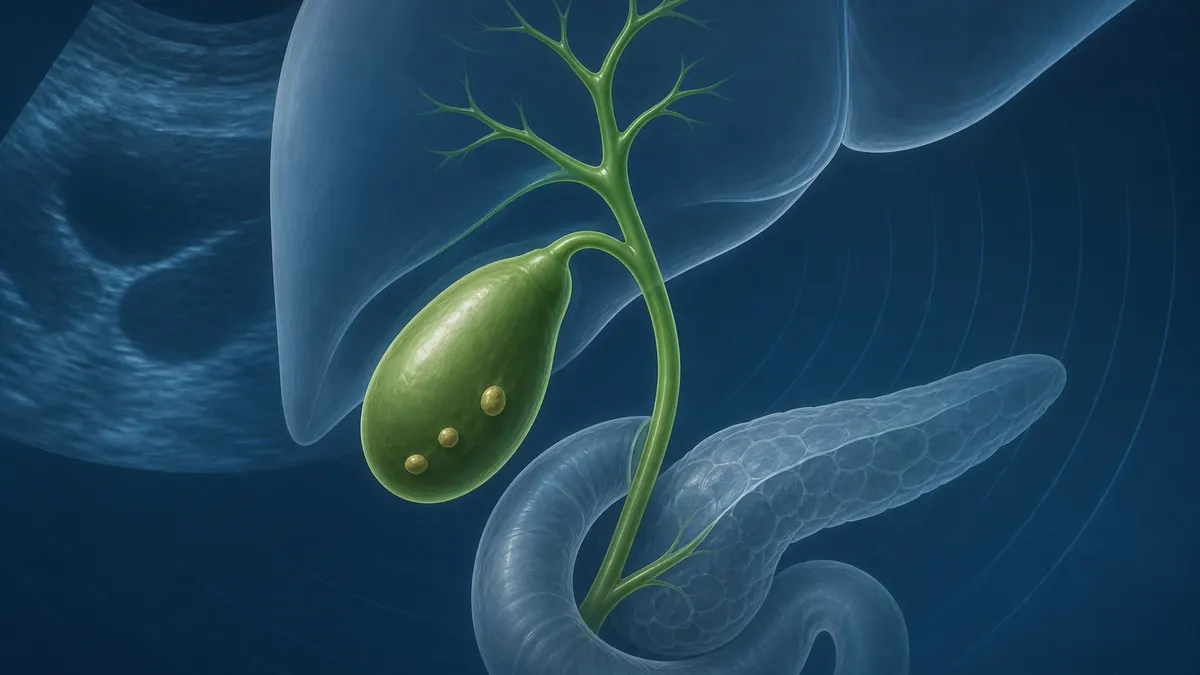
Gallbladder sludge, also known as biliary sludge or microlithiasis, is a thick, gel-like suspension of particulate matter that accumulates within the biliary tree. It consists primarily of microscopic cholesterol crystals, calcium bilirubinate granules, and mucin gel produced by the gallbladder mucosa. Rather than forming solid, discrete stones, this sediment remains a viscous fluid that settles at the bottom of the organ.
Anatomy and Function of the Gallbladder
Understanding where the gallbladder is located helps clarify how sludge affects digestion. The gallbladder is a small, pear-shaped sac situated in the upper right quadrant of the human abdomen, directly beneath the liver.
The main body of gallbladder tissue serves as a storage reservoir for bile, a digestive liquid produced continuously by the liver. When you consume foods containing fats, the gallbladder contracts, squeezing concentrated bile through the biliary ducts into the small intestine to aid fat digestion.
How Sludge Differs from Formed Gallstones
While both conditions involve precipitation within bile, sludge and stones represent different physical states. Gallstones are solid, hard concretions that cast a distinct acoustic shadow on diagnostic imaging. In contrast, sludge moves fluidly as your body changes position during an ultrasound exam.
On an abdominal ultrasound scan, sludge appears as a layer of low-level echoes that shift with gravity without acoustic shadowing. Although sludge is less solid than stones, it can obstruct narrow bile channels or gradually harden into true gallstones over time. Patients evaluating treatment options for persistent biliary issues can explore gallbladder stone surgery options to understand definitive surgical management.
What Causes Biliary Sludge to Form?
The primary underlying mechanism behind sludge formation is impaired gallbladder motility, often called biliary stasis. When the organ fails to contract fully or frequently, bile remains stagnant inside the lumen. Over hours or days, water is reabsorbed by the mucous lining, causing the remaining bile salts, cholesterol, and pigments to concentrate into a dense sediment.
Metabolic and Lifestyle Factors
Changes in bile chemistry directly influence how easily particles settle out of suspension. Key lifestyle and physiological factors include:
- Rapid Weight Loss: Losing weight rapidly through restrictive diets or bariatric procedures causes the liver to secrete excess cholesterol into bile, disturbing its chemical balance.
- Pregnancy: Elevated progesterone levels during pregnancy relax smooth muscle tissue throughout the body, reducing gallbladder contractions and promoting bile retention.
- High-Fat or Very Low-Fat Diets: Prolonged periods without dietary fat reduce the hormonal stimulus (cholecystokinin) that triggers gallbladder emptying.
Medical Conditions and Prolonged Fasting
Specific clinical scenarios severely alter normal liver gallbladder interactions and motility. Patients receiving total parenteral nutrition (IV feeding) lack digestive stimulation, leading to bile stasis within days.
Certain medications, including specific antibiotics like ceftriaxone and cholesterol-lowering agents, alter bile concentration and promote crystal formation. Underlying hepatic conditions can alter bile secretion; patients undergoing comprehensive liver evaluations, such as a FibroScan liver assessment, often review biliary tract performance alongside hepatic tissue health.
Symptoms of Gallbladder Sludge and Associated Complications
In many individuals, biliary sludge creates no noticeable discomfort and remains entirely asymptomatic. It is frequently discovered as an incidental finding during a routine abdominal ultrasound performed for unrelated medical reasons. In such cases, the sludge may resolve spontaneously without medical intervention if normal motility resumes.
Asymptomatic Sludge vs Active Biliary Symptoms
When sludge grows sufficiently dense or begins to exit the organ, it can obstruct the cystic duct or common bile duct, triggering active biliary symptoms. The most characteristic sign is biliary colic, marked by:
- Pain in the upper right abdomen or middle epigastric area, often radiating to the right shoulder blade.
- Episodic discomfort that develops 30 to 60 minutes after eating a heavy or fatty meal.
- A dull ache or sharp cramping that persists for 30 minutes to several hours before gradually subsiding.
- Accompanying nausea, bloating, or indigestion that mimics upper digestive distress such as gastroesophageal reflux. Patients presenting with complex upper GI symptoms may also undergo evaluation to rule out conditions requiring an anti-reflux procedure.
Complications: Cholecystitis and Pancreatitis
Thick sludge is not always harmless. If particulate matter physically blocks the narrow opening of the cystic duct, bile becomes trapped, causing acute inflammation of the gallbladder wall (cholecystitis).
Additionally, small particles of sludge can migrate down the common bile duct and transiently block the pancreatic duct orifice. This blockage can trigger acute biliary pancreatitis, a serious condition characterised by intense abdominal pain, elevated pancreatic enzymes, and systemic inflammation requiring urgent hospital care.
Red Flag Symptoms Requiring Emergency Care
While mild biliary colic usually subsides after a few hours, certain symptoms indicate acute inflammation, tissue necrosis, or severe ductal infection. Recognizing these red flags ensures you seek prompt medical evaluation before complications progress.
Contact emergency medical services or visit a hospital immediately if you experience:
- Severe, Unremitting Pain: Sharp or agonizing pain in the upper right abdomen that lasts longer than 4 to 6 hours without relief.
- High Fever and Chills: Body temperature rising above 38 °C (100.4 °F) accompanied by severe shivering, signaling potential cholecystitis or cholangitis (bile duct infection).
- Jaundice: Yellowing of the whites of your eyes (sclera) or skin, which indicates a block in the main bile duct.
- Dark Urine and Pale Stools: Dark tea-colored urine alongside clay-colored bowel movements, pointing toward biliary obstruction.
- Persistent Vomiting: Inability to keep liquids down, leading to dehydration and intense abdominal tenderness.
Patients experiencing sudden, acute abdominal emergencies can access specialised evaluation for urgent abdominal crises through an emergency gastrointestinal surgical evaluation.
Management Strategies: Conservative Monitoring vs Surgery
The clinical approach to gallbladder sludge depends on whether you have active symptoms, underlying risk factors, or signs of ductal obstruction. Treatment decisions balance non-invasive management against the risks of recurrent complications.
| Clinical Presentation | Typical Clinical Approach | Follow-Up Strategy |
|---|---|---|
| Asymptomatic Sludge | Watchful waiting with lifestyle adjustments | Repeat ultrasound in 6–12 months |
| Transient Sludge (Pregnancy/Fasting) | Observation and resolution of underlying trigger | Monitoring until delivery or diet resumption |
| Symptomatic Biliary Colic | Surgical consultation for cholecystectomy | Elective laparoscopic surgery |
| Acute Cholecystitis / Pancreatitis | Hospital admission and urgent surgical management | Early laparoscopic cholecystectomy |
When Is Watchful Waiting Appropriate?
If an ultrasound reveals sludge but you have never experienced abdominal pain, nausea, or digestive distress, immediate surgery is rarely indicated. In these instances, conservative monitoring is standard practice.
Your clinician may recommend a repeat ultrasound in 6 to 12 months to check whether the sludge has cleared, remained stable, or developed into solid gallstones. Lifestyle modifications—such as eating regular, balanced meals, avoiding severe caloric restriction, and maintaining gradual weight loss—help support regular gallbladder emptying.
Indications for Surgical Intervention
When biliary sludge causes repeated episodes of biliary colic, surgical consultation becomes necessary. Removing the gallbladder (laparoscopic cholecystectomy) is the standard treatment for symptomatic biliary disease.
Key indications for surgical evaluation include:
- Recurrent, documented episodes of upper right quadrant pain related to sludge.
- Presence of combined sludge and micro-gallstones.
- Prior episodes of sludge-induced pancreatitis or acute cholecystitis.
- High risk of biliary complications in patients with specific chronic health conditions.
Surgical management is also considered when patients present with concurrent right lower quadrant pain that requires ruling out appendiceal pathology; in such complex clinical settings, clinicians may evaluate the need for a laparoscopic appendicectomy alongside biliary diagnostics.
Life After Gallbladder Removal
A common concern among patients facing surgery is how their digestive system will function without a gallbladder. The organ stores bile, but it does not produce it. Following surgery, the liver continues to produce bile continuously, releasing it directly into the small intestine through the common bile duct.
Short-Term Post-Operative Adaptation
During the first few weeks after a cholecystectomy, your digestive tract adjusts to the steady trickle of bile rather than concentrated surges during meals. Some patients experience temporary bowel changes, such as loose stools or mild bloating after consuming high-fat foods.
To support comfortable healing in the immediate post-operative phase:
- Eat smaller, more frequent meals throughout the day rather than a few large meals.
- Limit fried, greasy, or high-fat foods during the first 2 to 4 weeks.
- Gradually reintroduce dietary fats into your routine as your body adapts.
- Maintain adequate dietary fibre intake to promote regular digestion.
Long-Term Digestive Expectations
Within a few months of surgery, the vast majority of patients return to a standard, unrestricted diet without ongoing pain or digestive disruption. The liver and small intestine adapt effectively, allowing normal nutrient absorption and processing of healthy fats. For a detailed guide on diet progression and post-surgical recovery, read the overview on life after gallbladder removal.
Sludge sits on the same spectrum as stones; the gallstones guide, do all gallstones need surgery and gallbladder polyps cover the related findings, and keyhole removal is part of Dr. Babu Elangovan's laparoscopic GI surgery work.
Consulting a Surgical Specialist
If you are managing persistent upper abdominal discomfort or have received an ultrasound report showing biliary sludge, expert medical evaluation provides clarity and safe care.
Dr. Elangovan, Surgical Gastroenterologist (MCh), sees patients at Mira Health Care, Adyar (Monday to Saturday, 4 to 7 PM), and also at Kauvery Hospital (Alwarpet), Capstone Clinic (T. Nagar) and Kumaran and THANC Hospitals (Kilpauk).
Dr. Elangovan consults across major clinical centres in Chennai, including Mira Health Care (Adyar), Kauvery Hospital (Alwarpet), Capstone Clinic (T. Nagar), Kumaran Hospital (Kilpauk), and THANC Hospital (Kilpauk).
To schedule a direct clinical evaluation or discuss your ultrasound results, contact Dr. Elangovan's direct appointment line at +91 94440 43478 or Book an appointment with Dr. Elangovan online.
Written & medically reviewed by