Can You Exercise With a Hernia? What Is Safe Before and After Surgery
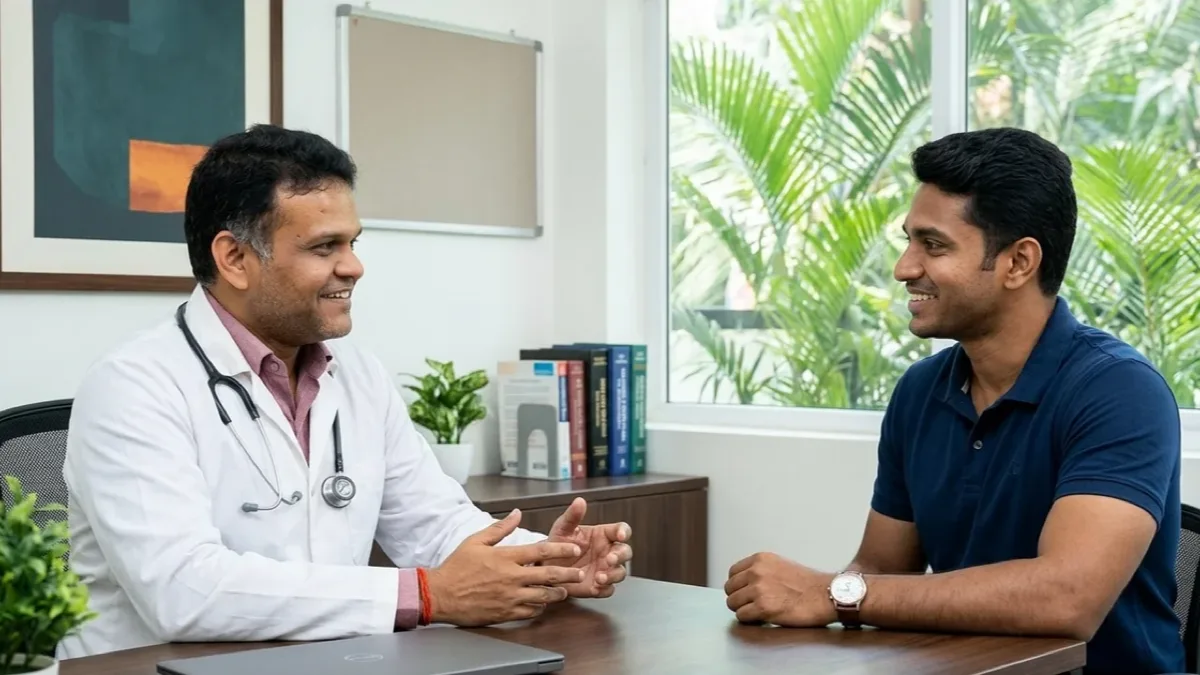
Need expert consultation? Book an appointment with Dr. Babu Elangovan.
Book AppointmentNavigating fitness routine adjustments after noticing a bulge or receiving a diagnosis can feel challenging. Many patients ask: can you exercise with a hernia, or will physical exertion make the condition worse? While staying active is vital for long-term health, understanding how physical strain impacts a weakened abdominal wall helps prevent painful complications and tissue trapping.
Can You Exercise with a Hernia? Safe Physical Activity vs Risks
Understanding your physical boundaries allows you to stay mobile without endangering your abdominal wall health. Light physical activity such as controlled walking is generally acceptable and encouraged for cardiovascular health and bowel motility. However, strenuous exercise, heavy weightlifting, and high-impact training significantly increase internal abdominal pressure. This pressure forces fatty tissue or intestine through the structural defect, causing the bulge to enlarge.
Physical exercise cannot strengthen or seal an existing anatomical tear in the fascia. An unrepaired hernia will not heal through targeted workouts, core strengthening routines, or physical therapy. While exercising carefully can maintain general fitness before treatment, definitive correction requires surgical closure of the defect. Reviewing your symptoms with a specialist ensures your current routine does not put you at risk for acute complications.
How Physical Strain Affects an Abdominal Wall Defect
An abdominal hernia represents a mechanical gap in the connective tissue or muscle layers. When you lift heavy weights or strain your torso, internal pressure pushes tissue directly into this opening. Over time, repeated strain widens the tissue tear, making the defect larger and progressively harder to manage.
The Difference Between Pre-Op Management and Post-Op Rehabilitation
Pre-operative activity management focuses strictly on minimising intra-abdominal strain to prevent tissue entrapment. In contrast, post-operative rehabilitation systematically rebuilds physical endurance and functional strength after the defect has been surgically repaired and reinforced with mesh. Patients planning for treatment can read about laparoscopic hernia surgery options and recovery to understand how modern repairs restore full physical capacity.
Why Intra-Abdominal Pressure Matters During Exercise
Intra-abdominal pressure rises whenever your core muscles contract forcefully against a closed airway or fixed spine. This hydraulic force exerts outward pressure against every square centimetre of the abdominal cavity wall. If a structural gap exists in the groin or belly wall, this pressure finds the path of least resistance and pushes internal organs outward.
Controlling how your body handles physical load determines whether an exercise is safe or harmful. Activities that demand sudden bursts of core power cause rapid spikes in pressure that strain the tissue edges. Learning to manage breath control and load distribution minimises the mechanical stress applied to the hernia opening.
Understanding the Valsalva Maneuver
The Valsalva maneuver occurs when you inhale deeply and hold your breath while bracing your torso during heavy physical exertion. People naturally use this maneuver during heavy squats, deadlifts, or when moving heavy furniture. Holding your breath traps high pressure inside your chest and abdomen, driving intestine or omentum forcibly into the hernia sac.
Types of Hernias Most Susceptible to Exercise Strain
Different types of hernias react differently to exercise stress:
- Inguinal Hernias: Located in the groin channel, these defects experience severe outward pressure during heavy leg exercises, sprinting, and standing overhead presses. Patients seeking details on groin defect management can explore inguinal hernia repair options.
- Femoral Hernias: Positioned just below the groin crease, these carry high risks of strangulation during rapid leg movements and bending.
- Umbilical Hernias: Occurring around the belly button, these expand during direct core flexion exercises like crunches or leg raises.
- Incisional Hernias: Located at surgical scar sites, these are vulnerable to rotational movements and heavy lifting. Patients managing scar-related defects can learn more about incisional and ventral hernia repair.
- Hiatal Hernias: Involving the upper stomach pushing through the diaphragm, these worsen with inverted poses, deep bending, or heavy lifting. Details on complex diaphragmatic issues are available under hiatal hernia surgical care.
Which Exercises Should You Avoid with an Unrepaired Hernia?
Eliminating high-risk movements protects your abdominal wall from progressive stretching and sudden tissue strangulation. Any exercise that creates intense core tension or requires holding your breath must be removed from your routine until surgical repair is complete.
High-intensity training and heavy resistance routines place unsustainable mechanical loads on weakened fascia. Identifying and avoiding these specific movements prevents sudden emergency complications during your workouts.
High-Risk Strength Training Movements
Heavy strength training exerts excessive force on the lower abdomen and groin. The following exercises should be avoided with an unrepaired hernia:
- Barbell Squats and Deadlifts: These demand extreme intra-abdominal bracing, driving tissue down into the groin or forward against the anterior wall.
- Heavy Leg Presses: Bending the hips deeply while pushing high weight compresses abdominal contents directly against hernia defects.
- Overhead Shoulder Presses: Standing overhead lifting causes automatic spinal arching and intense core bracing.
- Barbell Rows and Clean-and-Jerk Movements: Sudden explosive pulls generate high pressure spikes across the middle abdomen.
Core Exercises That Increase Hernia Bulge Size
Direct abdominal exercises isolate and squeeze the rectus abdominis muscles, directly forcing internal contents into structural defects. You should avoid:
- Standard sit-ups and full-range crunches.
- Hanging or lying leg raises and flutter kicks.
- Full forearm planks, high side planks, and push-ups.
- Abdominal wheel rollouts and heavy cable woodchoppers.
High-impact cardio such as aggressive jumping drills, high-intensity interval training (HIIT), sprinting, and contact sports also aggravate hernia symptoms through rapid jolting forces.
Safe Workouts and Modifications for Exercise with a Hernia
Modifying your exercise routine allows you to retain fitness and support cardiovascular health without stressing fragile tissue walls. The primary goal during pre-operative workouts is maintaining steady respiration and avoiding peak physical strain.
Selecting low-impact activities keeps your heart rate elevated safely while ensuring abdominal pressure remains low and predictable. Continuous, calm breathing during every movement protects the abdominal wall from excessive internal force.
Low-Impact Cardio Options
Low-impact cardiovascular activities provide excellent health benefits with minimal physical vibration or core strain. Recommended options include:
- Brisk Walking: Walking on flat terrain maintains circulation and aerobic health without placing mechanical stress on your abdomen.
- Stationary Cycling: Riding an upright or recumbent bike keeps weight off the groin while providing low-impact leg movement.
- Low-Resistance Elliptical Training: Smooth, continuous gliding motions preserve joint mobility and cardiovascular fitness without sudden impacts.
- Water Aerobics and Gentle Swimming: Buoyancy reduces gravitational pressure on the body, though dynamic flip turns and aggressive butterfly strokes must be avoided.
Safe Upper and Lower Body Modifications
Strength workouts can continue if loads remain light to moderate and movement technique is adjusted:
| Exercise Category | Unsafe Movement | Safe Modified Alternative |
|---|---|---|
| Lower Body | Heavy Barbell Squats | Seated Bodyweight Leg Extensions |
| Upper Body | Standing Overhead Barbell Press | Seated Light Dumbbell Overhead Press |
| Chest / Push | Heavy Flat Bench Press | Light Dumbbell Chest Press with Feet Flat |
| Back / Pull | Bent-Over Barbell Rows | Seated Cable Rows with Chest Support |
| Mobility | Extreme Spinal Extensions / Twists | Gentle Cat-Cow and Controlled Hip Stretches |
Always exhale during the exertion phase of any movement and inhale on the release phase. If you feel any localised pulling, burning, or an expanding bulge, stop the activity immediately.
Should You Wear a Hernia Belt or Truss While Working Out?
A hernia truss or support belt is an elastic garment designed to apply direct pressure against a reducible bulge. While these garments can provide temporary physical support and ease mild aching during standing or light activity, they do not repair the torn muscle.
Relying on a hernia belt to perform restricted or heavy exercises is dangerous. The external pressure of a belt cannot counteract high internal pressure generated by heavy lifting or intense core work. In some cases, tight compression belts can rub against sensitive skin, mask developing complications, or cause localised tissue inflammation.
Consult a surgical specialist before using supportive garments during physical activity. A belt should only serve as a temporary comfort measure during light daily movement while awaiting evaluation, never as a permit for heavy gym workouts.
Red Flag Symptoms: When to Stop Exercising and Seek Immediate Care
Physical activity can convert a manageable hernia into an incarcerated or strangulated defect. Immediate medical intervention is required if abdominal tissue becomes locked outside the muscle wall and loses its blood supply.
Incarceration vs Strangulation Risks
An incarcerated hernia occurs when internal tissue slips into the defect and becomes trapped, preventing it from sliding back into the abdomen.
A strangulated hernia occurs when trapped tissue experiences restricted blood supply. Deprived of oxygen, the trapped tissue can become necrotic within hours, leading to severe infection and life-threatening systemic illness.
Emergency Signs Requiring Urgent Medical Attention
Stop exercising and seek immediate emergency surgical care if you notice any of the following symptoms:
- Sudden, sharp, or unbearable pain at the hernia site during or after a workout.
- A bulge that becomes firm, tender, or visibly swollen and cannot be gently pushed back in while lying down.
- Discoloration over the bulge, such as a red, purple, or darkened appearance.
- Persistent nausea, bilious vomiting, severe bloating, or inability to pass gas or stool.
Returning to Exercise After Laparoscopic Hernia Repair
Surgical repair reinforces the weakened abdominal wall, allowing patients to safely return to full physical activity after proper healing. Laparoscopic keyhole surgery uses tiny incisions and synthetic mesh to secure the structural defect, offering faster recovery times than traditional open procedures.
Following a structured post-operative timeline ensures the synthetic mesh integrates thoroughly with surrounding tissue. Returning to heavy exercise too quickly increases the risk of recurrence and chronic pain.
Timeline: Week 1 to Week 6 Recovery Milestones
Recovery timelines vary based on defect size and individual health, but typical milestones include:
- Day 1 to Week 1: Short, frequent walks around the house
- Week 2: Light daily activities, desk work, gentle walking
- Weeks 3 to 4: Low-resistance stationary cycling, light stretching
- Weeks 4 to 6: Gradual return to gym workouts, moderate weightlifting
- Week 6+: Progression to full strength training and sports
- Week 1: Focus on short, frequent walks around your home to promote blood flow and aid bowel function. Avoid lifting objects heavier than 4 to 5 kilograms.
- Week 2: Resume desk work, light household tasks, and longer walks as discomfort subsides.
- Weeks 3 to 4: Reintroduce low-impact cardio such as stationary cycling or gentle elliptical work under medical guidance.
- Weeks 4 to 6: Gradually return to resistance training using light weights while maintaining strict breathing control.
- Beyond Week 6: Advanced strength training, running, and competitive sports can usually resume once cleared by your surgeon.
Patients planning their surgical recovery can review detailed post-operative guidance in this guide to recovery timelines after laparoscopic hernia surgery.
Gradual Progression Back to Gym Workouts
When returning to resistance training post-surgery, start well below the weights you used before surgery and build up gradually, as your surgeon advises. Focus on high-repetition sets with flawless form and steady breathing. Increase training volume gradually over several weeks, allowing your abdominal wall to adapt without pain or swelling.
Know the signs that need same-day care in when is a hernia an emergency. The types of hernia and how each is treated are covered in the hernia guide and Dr. Babu Elangovan's hernia surgery page.
Surgical Guidance and Hernia Evaluation in Chennai
Managing an abdominal wall defect requires personalized evaluation by a credentialed surgical gastroenterologist. Dr. Elangovan provides clinical assessments and keyhole repair procedures for primary, complex, and recurrent hernias across multiple locations in Chennai.
Consultation services and pre-operative evaluations are conducted across these locations:
- Mira Health Care: Adyar, Chennai
- Kauvery Hospital: Alwarpet, Chennai
- Capstone Clinic: T. Nagar, Chennai
- Kumaran Hospital: Kilpauk, Chennai
- THANC Hospital: Kilpauk, Chennai
Advanced keyhole laparoscopic repairs are scheduled across partner hospital facilities based on patient convenience, surgical complexity, and insurance coverage. Central appointment bookings and direct enquiries for all locations are managed through a single contact line at +91 94440 43478.
Dr. Elangovan, Surgical Gastroenterologist (MCh), sees patients at Mira Health Care, Adyar (Monday to Saturday, 4 to 7 PM), and also at Kauvery Hospital (Alwarpet), Capstone Clinic (T. Nagar) and Kumaran and THANC Hospitals (Kilpauk). Call or WhatsApp +91 94440 43478, or book an appointment online.
Written & medically reviewed by