Incisional & Ventral Hernia Repair in Chennai
- Consults across Chennai: Adyar · Alwarpet · T. Nagar · Kilpauk
- Evening OPD at Mira Health Care, Adyar: Mon – Sat, 4:00–7:00 PM
Incisional and ventral hernia repair in Chennai: hernias at old scars, CT planning, keyhole and open mesh, abdominal wall reconstruction and cost factors.
Medically reviewed by Dr. Babu Elangovan, MS · MCh (Surgical Gastro) · FMASLast reviewed
An incisional hernia develops through the scar of a previous abdominal operation. A ventral hernia is the broader term for any hernia through the front of the abdominal wall, including epigastric hernias above the navel. These are the most varied and often the most technically demanding hernias to repair well. Dr. Babu Elangovan, a surgical gastroenterologist in Chennai with F.M.A.S. training in minimal access surgery and Da Vinci robotic certification, repairs incisional and ventral hernias by laparoscopic and open technique, including abdominal wall reconstruction for large defects.
Table of Contents
- What incisional and ventral hernias are
- Symptoms and when to act
- Planning the repair
- Getting fit for surgery
- Repair techniques
- Risks and how they are reduced
- Cost of incisional hernia repair in Chennai
- Recovery
What incisional and ventral hernias are
Incisional hernia. Every abdominal operation, whether open gallbladder surgery, a caesarean section, a hysterectomy, bowel surgery or a laparoscopic port, leaves a repaired layer of muscle and fascia. If it fails to heal at full strength, it slowly separates and the abdominal contents bulge through. Midline scars are the most common site. Port-site hernias after keyhole surgery are a smaller version of the same problem.
Epigastric hernia. A small defect in the midline between the breastbone and navel, often containing only fat, but can be surprisingly painful.
Spigelian and lumbar hernias. Less common hernias through the side or back of the abdominal wall, often harder to diagnose without imaging.
Incisional hernias are frequently multiple: what looks like one bulge may be several defects along a scar, which is why imaging matters.
Symptoms and when to act
- A bulge at or near an old scar, larger on standing and coughing.
- Aching or dragging, worse at the end of the day.
- Skin over the bulge becoming thin, shiny or ulcerated in long-standing large hernias.
- Episodes of colicky pain, bloating or vomiting if bowel intermittently kinks inside the hernia.
Incisional hernias tend to enlarge over time. A modest hernia repaired early is generally a simpler operation with a better result than the same hernia repaired years later after it has doubled in size. Small, wide-necked, painless hernias in frail patients can sometimes be observed.
Go to emergency care if the bulge becomes hard and painful and will not go back, or you develop vomiting, bloating and cannot pass gas. Those signs are explained in when a hernia is an emergency.
Planning the repair
Good planning prevents most failures in incisional hernia surgery.
Examination identifies the scar, the bulge and the state of the skin.
CT scan of the abdominal wall is usually advised for anything beyond a small defect. It shows:
- The width and length of every defect.
- How much bowel lies outside the abdominal cavity, sometimes described as loss of domain.
- The quality of the muscles at the side of the abdomen, which decides whether muscle release techniques are possible.
- Any previous mesh and its position.
Previous operation notes are valuable, especially if mesh has been used before or the first operation involved bowel or stoma surgery. Bring whatever records you have.
Getting fit for surgery
Incisional hernias are often non-urgent, which allows time to improve the odds of a lasting repair. This preparation is part of the treatment, not a delay.
- Stop smoking, ideally at least four to six weeks before surgery. Smoking substantially increases wound infection and breakdown.
- Control blood sugar. A high HbA1c raises infection risk; the team may suggest getting it down before operating.
- Lose weight where needed. Obesity increases recurrence and wound complications.
- Treat chronic cough and constipation.
- Review medicines such as blood thinners and steroids.
Repair techniques
The aim of every modern repair is the same: close the defect where possible and reinforce a wide area of the wall with mesh, ideally placed behind the muscle rather than directly against bowel. How that is achieved varies.
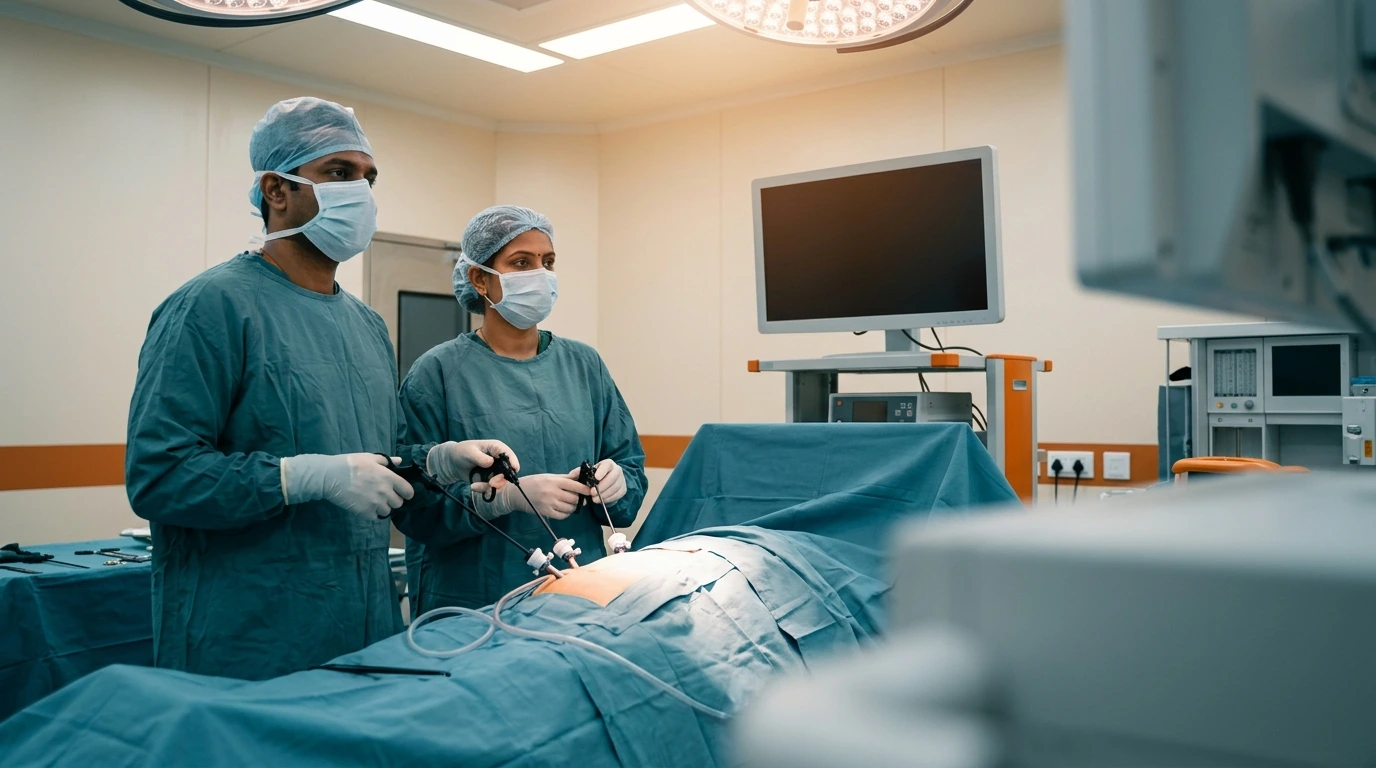
Laparoscopic repair. Through small ports away from the hernia, the contents are returned to the abdomen and adhesions freed. Depending on the technique, the defect is closed with stitches and the mesh positioned either inside the abdominal cavity, using a coated mesh designed to sit against bowel, or behind the muscle layer outside the cavity. Keyhole repair usually means smaller wounds and fewer wound infections, which matters in people with obesity or diabetes.
Robotic repair. The robotic platform allows precise suturing behind the muscles through small ports and can make mesh placement outside the abdominal cavity more achievable in selected larger hernias. It is used where it gives a real advantage, not routinely. The broader trade-offs are covered in robotic vs laparoscopic surgery.
Open sublay (retromuscular) repair. The scar is opened, the hernia sac dealt with, and a mesh placed in the layer behind the rectus muscles. This is a robust, well-established repair and suits hernias with damaged skin that needs excising.
Component separation and abdominal wall reconstruction. For large hernias where the muscle edges cannot be brought together, controlled release of one of the side muscle layers allows the rectus muscles to slide back towards the midline. This restores a functional abdominal wall and is combined with mesh reinforcement. It is a bigger operation with a longer stay.
If a hernia has already been repaired and has come back, the planning is different again; see recurrent hernia surgery. Smaller navel defects are covered in umbilical hernia surgery.
Risks and how they are reduced
- Seroma, a fluid collection where the hernia sac was. Common, usually absorbed; drains are used after larger repairs.
- Wound infection or breakdown, reduced by keyhole technique where possible, smoking cessation and diabetes control.
- Mesh infection, uncommon, but may need antibiotics or occasionally mesh removal.
- Bowel injury during release of adhesions, which is the reason careful dissection matters more than speed.
- Recurrence, higher in large and previously repaired hernias, obesity and smoking.
- Breathing strain after returning a large volume of bowel into the abdomen, which is anticipated in loss-of-domain hernias and managed with planning and monitoring.
- Persistent pain at fixation points in a minority of patients.
Cost of incisional hernia repair in Chennai
This is the hernia surgery where cost varies the most, because the operation can range from a short day-care repair to a several-day reconstruction. A written, itemised estimate follows imaging and assessment. The main factors:
- Defect size and number, which decide the operating time and mesh size.
- Mesh type. Coated meshes for placement inside the abdomen cost more than standard meshes.
- Laparoscopic, robotic or open technique, and whether component separation is needed.
- Length of stay, including any HDU monitoring after large repairs.
- Preparation, such as CT, cardiac or respiratory assessment.
Ask for the estimate to list surgeon, anaesthesia, theatre, consumables, mesh and room charges. Hernia repair is medically necessary surgery and is generally covered by private and corporate insurance; eligible patients may be covered under the Tamil Nadu CMCHIS at empanelled hospitals.
Recovery
Recovery depends on the size of the repair. For small and moderate laparoscopic repairs:
| Time after surgery | Usually fine | Hold off |
|---|---|---|
| First week | Walking several times a day, breathing exercises | Lifting, bending to pick up heavy things |
| Weeks 2–3 | Desk work, short drives | Lifting more than a few kilograms |
| Weeks 4–6 | Normal routine, longer walks | Gym loading, heavy work |
| After 6–8 weeks | Gradual return to full activity, once reviewed | — |
After open reconstruction, the timeline is longer and the team will guide you individually. An abdominal binder is often advised for comfort for the first few weeks. General hernia recovery advice, including wound care, is in the recovery after laparoscopic hernia surgery guide.
Consult Dr. Elangovan
Dr. Elangovan is a surgical gastroenterologist (MS, MCh Surgical Gastroenterology, FMAS) with over 20 years of experience and Da Vinci robotic surgical training, repairing incisional, ventral and complex abdominal wall hernias. The wider hernia service is described on the hernia surgery speciality page, and keyhole and robotic techniques on the robotic and minimal-access surgery page.
He consults at Mira Health Care, Adyar and Kauvery Hospital, Alwarpet, with other Chennai hospitals on the locations page; patients in central Chennai can also see him about a hernia near T. Nagar. Send your CT report and previous operation notes through the booking form or WhatsApp; Dr. Elangovan reviews them and the team confirms a slot.
To discuss a hernia at an old scar, book an appointment or call +91 94440 43478.
This page is general information, not medical advice. The choice of repair depends on individual assessment, and outcomes vary between patients and cannot be guaranteed. If a hernia becomes hard, painful and cannot be pushed back, or you are vomiting, seek emergency care immediately.
Frequently Asked Questions
Why did I get a hernia at my old operation scar?
During any abdominal operation the muscle layer is cut and stitched back together. If that layer does not heal at full strength, it can gradually separate and allow abdominal contents to push through. Wound infection after the first surgery, obesity, diabetes, smoking, steroid use, chronic cough and an early return to heavy work all raise the risk. It is not usually anyone's fault, and it can appear months or years after the original operation.
I had a caesarean section years ago. Can that cause a hernia?
Yes. Hernias can develop through a caesarean or other lower abdominal scar, though it is less common than with midline incisions. A bulge or discomfort near the scar, especially when coughing or lifting, is worth examining. Ultrasound or CT confirms whether there is a defect and how large it is.
Is a CT scan necessary before incisional hernia repair?
For anything other than a small, simple defect, a CT scan of the abdominal wall is very helpful. It shows the exact size and number of defects, how much of the abdominal contents lie outside the wall, the condition of the surrounding muscles, and old mesh if present. This decides whether keyhole repair is feasible and whether muscle release techniques will be needed.
Can a large incisional hernia be repaired by keyhole surgery?
Many can, but not all. Moderate defects are often well suited to laparoscopic repair with the mesh placed behind the muscles. Very large hernias, those where much of the bowel has lived outside the abdomen for years, and those with damaged or infected skin may be better repaired by an open operation, sometimes with component separation. The choice is made from imaging and examination, not by default.
Should I lose weight before incisional hernia surgery?
If your BMI is high and the hernia is not urgent, losing weight first meaningfully improves the chance of a durable repair and lowers wound complications. A target is agreed at consultation. For people with severe obesity, weight loss surgery before or combined with the hernia plan is sometimes discussed. Smoking cessation and good diabetes control are equally important.
How long is the hospital stay?
Small repairs may go home the same or next day. Larger laparoscopic repairs typically need two to three days, and open abdominal wall reconstruction for big hernias can need several days, with drains in place until fluid output settles.
Related procedures
Recurrent Hernia Surgery
Recurrent hernia surgery in Chennai: why hernias come back, choosing a fresh tissue plane, old mesh, redo repair risks and cost factors explained.
Learn moreUmbilical Hernia Surgery
Umbilical and paraumbilical hernia surgery in Chennai: when a navel bulge needs repair, stitch vs mesh, after pregnancy, with diastasis, recovery and cost.
Learn moreLaparoscopic Hernia Repair
Keyhole hernia repair in Chennai with Dr. Babu Elangovan: approximate cost, mesh safety, day-care discharge. Consult in Adyar, T. Nagar or Kilpauk.
Learn moreRelated reading
Hernia in Women: Types, Symptoms and Treatment
Unexplained groin, lower abdominal, or pelvic discomfort in women is frequently attributed to gynaecological issues, yet structural defects in the abdominal wall remain a…
Read the guideWhen is a Hernia an Emergency? Signs You Cannot Ignore
A hernia is a common abdominal wall condition that many individuals live with for months or even years. Because hernias often develop gradually and may cause only mild discomfort…
Read the guideRecovery After Laparoscopic Hernia Surgery: A Timeline Guide
Undergoing any surgical procedure can bring about a mix of relief and anxiety. If you are planning for or have recently undergone a minimally invasive hernia repair, understanding…
Read the guideRobotic vs Laparoscopic Surgery: What Is the Difference?
Patients facing abdominal, gastrointestinal, or hepatobiliary surgery often encounter terms like "minimal access surgery," "keyhole surgery," "laparoscopy," and "robotic surgery."…
Read the guideWhere to consult Dr. Babu Elangovan for Incisional & Ventral Hernia Repair
- T. Nagar
- Capstone Clinic · Tue & Thu, 2:00–4:00 PM
- Adyar
- Mira Health Care · Mon – Sat, 4:00–7:00 PM
- Kilpauk
- Kumaran Hospital · by prior appointment
- THANC Hospital · by prior appointment
One booking line for every location; timings can change, so please confirm when you book. All locations
Planning your care
Book a consultation with Dr. Babu Elangovan
Get an expert surgical opinion on incisional & ventral hernia repair — from diagnosis and planning through to recovery, with one consistent plan.