Robotic vs Laparoscopic Surgery: What Is the Difference?

Need expert consultation? Book an appointment with Dr. Babu Elangovan.
Book AppointmentPatients facing abdominal, gastrointestinal, or hepatobiliary surgery often encounter terms like "minimal access surgery," "keyhole surgery," "laparoscopy," and "robotic surgery." While all of these terms refer to techniques designed to avoid large, traditional open incisions, they represent different eras of technological evolution.
Understanding the differences between robotic-assisted and laparoscopic surgery is crucial for making informed decisions about your healthcare. Both approaches offer significant benefits over traditional open surgery, but they utilize distinct technologies, instruments, and surgical interfaces.
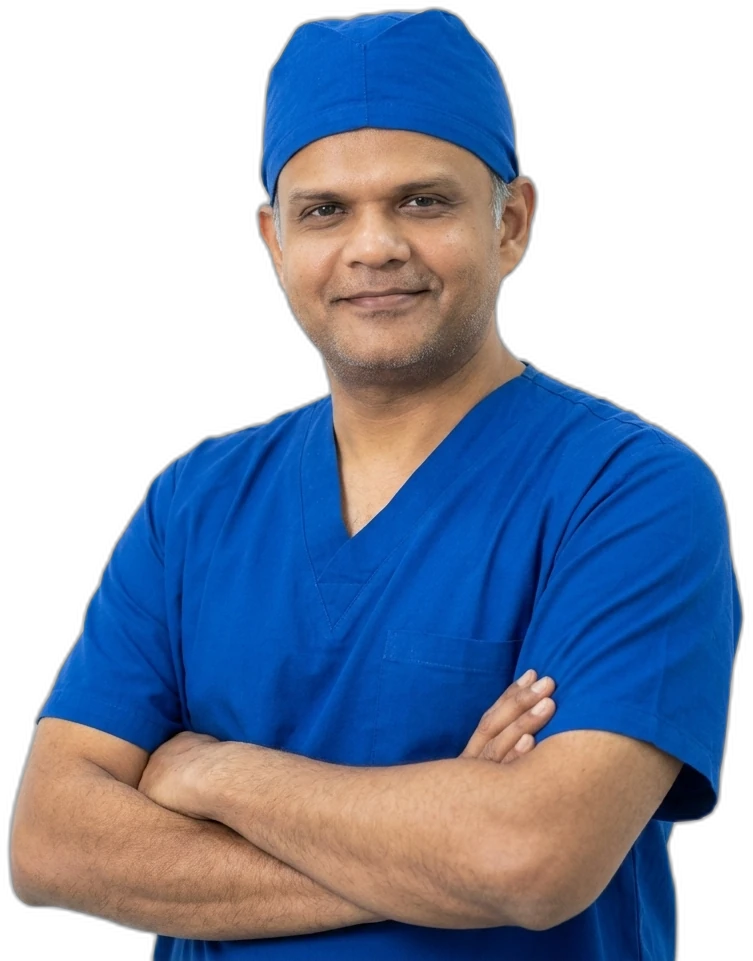
Dr. Babu Elangovan, a highly experienced Surgical Gastroenterologist and Liver Transplant Surgeon in Chennai, utilizes both laparoscopic and robotic platforms to deliver precise, patient-centric care. With over two decades of clinical experience and extensive training in the Da Vinci robotic system, Dr. Babu Elangovan tailors the surgical approach to each patient's unique anatomy and disease profile.
The Evolution of Minimal Access Surgery
For generations, abdominal surgery required large incisions to allow surgeons to see and work inside the body. While effective, these large incisions resulted in significant postoperative pain, prolonged hospital stays, and long recovery periods.
The introduction of laparoscopic surgery in the late 20th century transformed surgical care. By using small incisions, specialized cameras, and long, slender instruments, surgeons could perform complex procedures with minimal trauma to the abdominal wall.
In recent years, robotic-assisted surgery has emerged as the next technological milestone, addressing some of the inherent physical limitations of laparoscopy. Today, both techniques coexist as valuable tools in modern robotic and minimal-access surgery.
Understanding Laparoscopic Surgery: The Traditional Keyhole Approach
Laparoscopic surgery is often referred to as "traditional keyhole surgery." During a laparoscopic procedure, the surgeon makes a few small incisions (usually 0.5 to 1.5 centimeters) in the abdomen.
How Laparoscopy Works
- Insufflation: The abdomen is gently inflated with carbon dioxide gas to create a working space and allow clear visibility.
- The Laparoscope: A thin tube equipped with a high-definition camera and light source (the laparoscope) is inserted through one of the incisions. This projects a two-dimensional image of the internal organs onto an external monitor in the operating room.
- Manual Instruments: The surgeon inserts long, rigid instruments through the other small incisions (ports).
- Direct Manipulation: Standing at the patient's bedside, the surgeon manually manipulates these instruments while watching the external monitor to perform the surgery.
Laparoscopy has long been the standard of care for everyday procedures, such as gallbladder removal and basic hernia repairs. You can read more about these standard options under gallbladder and laparoscopic GI surgery.
Demystifying Robotic-Assisted Surgery: The Next Evolution
It is a common misconception that a robot performs the surgery independently. In reality, robotic-assisted surgery is entirely controlled by the operating surgeon. The robotic platform acts as an advanced extension of the surgeon's hands and eyes.
How Robotic Surgery Works
- The Surgeon Console: The surgeon sits comfortably at a computer console located in the operating room, a short distance from the patient.
- 3D High-Definition Visualization: The console features a specialized viewer that projects a highly magnified, three-dimensional, high-definition image of the surgical field. This provides depth perception that is not available on standard flat-screen laparoscopic monitors.
- The Patient Cart: Positioned over the patient, this cart holds the robotic arms. These arms hold the camera and specialized surgical instruments that are inserted through tiny incisions.
- Translating Movements: The surgeon uses hand-held master controllers and foot pedals at the console. The robotic system translates these natural hand, wrist, and finger movements in real-time into precise micro-movements of the instruments inside the patient's body.
The robotic platform, such as the Da Vinci system, features "wristed" instruments (EndoWrist technology) that bend and rotate with greater flexibility than the human hand, offering seven degrees of freedom.
Robotic vs Laparoscopic Surgery: What Is the Difference?
To help patients and caregivers understand the practical differences, we can compare these two surgical modalities across several key technical and operational parameters:
| Feature / Capability | Laparoscopic Surgery | Robotic-Assisted Surgery |
|---|---|---|
| Visual Field | 2D flat image on an external monitor; limited depth perception. | 3D high-definition, highly magnified image; excellent depth perception. |
| Instrument Movement | Rigid, straight instruments with no wrist action (limited angles). | Wristed instruments with 360-degree rotation and 7 degrees of freedom. |
| Tremor Filtration | Any minor hand tremor of the surgeon can be transmitted to the instrument tip. | Built-in software filters out natural hand tremors, ensuring steady movements. |
| Surgeon Ergonomics | Surgeon stands at the bedside, often in awkward physical positions for long hours. | Surgeon sits ergonomically at a console, reducing physical fatigue during long cases. |
| Camera Control | Camera is held and moved manually by an assistant, which can lead to drift or lens smudges. | The surgeon directly controls the stable robotic camera from the console. |
| Fulcrum Effect | Instruments move in the opposite direction of the surgeon's hand (counter-intuitive). | Instruments move in the exact direction of the surgeon's hand (intuitive mapping). |
| Ideal Use Cases | Standard, straightforward procedures (e.g., simple gallstones, uncomplicated hernias). | Complex, deep-seated, or highly precise reconstructions (e.g., cancer resections, HPB surgery). |
Clinical Applications in GI, Liver, and HPB Surgery
The choice between laparoscopic and robotic approaches often depends on the complexity of the organ system involved. Dr. Babu Elangovan evaluates each patient's specific condition to determine the most appropriate technique.
1. GI Cancer Surgery
Surgical treatment for cancers of the esophagus, stomach, colon, and rectum requires precise dissection of tumor tissues and meticulous clearance of surrounding lymph nodes.
- The Robotic Advantage: In rectal cancer surgery, the surgeon must operate deep within the narrow, bony pelvis. The robotic system's 3D visualization and wristed instruments make it easier to navigate this tight space, preserving delicate nerves responsible for bladder and sexual function.
- The Laparoscopic Approach: Laparoscopic techniques remain highly effective for standard colon resections, offering excellent recovery profiles for many patients.
For more details on oncological protocols, visit our dedicated page on GI cancer surgery.
2. Hepato-Pancreato-Biliary (HPB) Surgery
Surgeries involving the liver, pancreas, and bile ducts are among the most complex in surgical gastroenterology due to the dense network of major blood vessels in these areas.
- Robotic Precision: Complex procedures like a Whipple’s procedure (pancreaticoduodenectomy) or major liver resections require micro-suturing to reconstruct delicate bile ducts and blood vessels. The high-definition magnification and tremor-free movement of the robotic platform are highly advantageous for these intricate reconstructions.
- Laparoscopic Applications: Laparoscopy is widely used for simpler liver cyst aspirations or un-reconstructed liver resections.
To learn more about these specialized treatments, read about HPB surgery.
3. Hernia and Everyday GI Procedures
Both laparoscopic and robotic techniques have revolutionized hernia repairs.
- Hernia Surgery: Whether treating an inguinal, umbilical, or complex incisional hernia, minimal-access approaches allow the surgeon to place a reinforcing mesh behind the abdominal wall with minimal tissue disruption. Robotic platforms are particularly useful for complex abdominal wall reconstructions where muscles need to be precisely separated and sutured back together.
Patient Benefits of Minimal Access Techniques
Regardless of whether a laparoscopic or robotic approach is chosen, minimal-access surgery offers clear advantages over traditional open surgery:
- Reduced Postoperative Pain: Smaller incisions mean less trauma to muscles, nerves, and skin, reducing the need for strong pain medications.
- Minimal Blood Loss: Highly magnified visualization allows the surgeon to identify and seal tiny blood vessels precisely, minimizing blood loss during the procedure.
- Shorter Hospital Stay: Patients undergoing keyhole or robotic surgeries are often able to go home much sooner than those who have open surgery.
- Faster Return to Normal Activities: With smaller wounds, the body heals more rapidly, allowing patients to return to work, family life, and light exercise sooner.
- Lower Risk of Wound Complications: Small keyhole incisions have a significantly lower rate of infection and postoperative hernia formation compared to long open incisions.
If you are experiencing symptoms that may require surgical evaluation, early assessment matters. Request a consultation with Dr. Babu Elangovan at one of his Chennai consulting locations.
How a Surgeon Chooses the Best Approach for You
There is no one-size-fits-all answer to whether robotic or laparoscopic surgery is "better." A skilled surgeon like Dr. Babu Elangovan considers multiple factors before recommending a surgical plan:
- The Specific Disease and Stage: A small, localized colon tumor may be perfectly suited for laparoscopic resection, while a deep rectal tumor or a complex pancreatic mass might benefit from the precision of a robotic approach.
- Patient Anatomy and BMI: Patients with a higher Body Mass Index (BMI) or complex internal anatomy may benefit from the superior visualization and reach of robotic instruments.
- Previous Abdominal Surgeries: Past surgeries can leave behind scar tissue (adhesions). The surgeon must assess which approach is safest for navigating these adhesions.
- Overall Health Status: The patient's heart and lung function are evaluated to ensure they can safely tolerate the carbon dioxide inflation used in minimal-access surgery.
What to Expect During Your Recovery
Recovery from minimal-access surgery is typically smoother than recovery from open surgery, but it still requires careful management and adherence to medical guidance.
In the Hospital
Immediately after surgery, you will be monitored in the recovery area. Because incisions are small, most patients are encouraged to sit up and walk within a few hours of waking up. Mobilization helps prevent complications like blood clots in the legs and helps restart bowel function.
Transitioning to Home
- Pain Management: Pain is usually mild to moderate and can be managed with oral medications.
- Dietary Progression: You will typically start with clear liquids and gradually progress to soft and solid foods as tolerated and advised by your surgical team.
- Wound Care: Keyhole incisions are usually closed with absorbable sutures and covered with waterproof dressings, allowing you to shower safely.
Long-Term Follow-up
Under Dr. Babu Elangovan's single-surgeon care model, you are cared for by the same surgeon from your first consultation through the operation and all postoperative follow-up visits. This continuity of care ensures that any recovery concerns are addressed promptly by the specialist who knows your case best.
Consulting Dr. Babu Elangovan in Chennai
Dr. Babu Elangovan provides comprehensive surgical care across several convenient locations in Chennai. His practice is built on a single-surgeon model, ensuring patients receive consistent, personalized attention at every stage of their treatment.
Consulting Locations & Clinics
- Mira Health Care (Adyar): Primary consulting clinic
- Kauvery Hospital (Alwarpet): Leading tertiary care hospital
- Capstone Clinic (T. Nagar): Convenient central Chennai consultation
- Kumaran Hospital (Kilpauk): Trusted healthcare facility
- THANC Hospital (Kilpauk): Specialized care center
For outstation patients living across Tamil Nadu, South India, or internationally, remote video second opinions can be arranged to review diagnostic scans and discuss treatment options before traveling to Chennai.
Have questions about an upcoming surgery or need a second opinion? Request a consultation to discuss your options.
Summary of Key Differences
Choosing between laparoscopic and robotic surgery is a decision made in partnership with your surgeon. While laparoscopy remains an excellent, cost-effective standard for many common procedures, robotic-assisted surgery offers enhanced precision and control for highly complex reconstructions.
The most critical factor in any surgical outcome is not just the machine used, but the skill, experience, and judgment of the surgeon operating it.
For personalized advice and expert care, consult Dr. Babu Elangovan — Surgical Gastroenterologist & Liver Transplant Surgeon, Chennai. Book an appointment at one of our consulting locations.
References
- Robotic vs Laparoscopic Surgery Outcomes. Journal of Gastrointestinal Surgery, 2022.
- Minimal Access Surgical Techniques in Oncology. Annals of Surgery, 2023.
- European Association for Endoscopic Surgery (EAES) clinical consensus guidelines on robotic surgery. Surgical Endoscopy, 2021.
- Comparison of perioperative outcomes in robotic versus laparoscopic hepatectomy. HPB, 2023.
- Society of American Gastrointestinal and Endoscopic Surgeons (SAGES) guidelines on laparoscopic and robotic hernia repair. Surgical Endoscopy, 2022.
Authored by