Robotic surgery is an advanced form of keyhole surgery: the surgeon operates through small incisions using a robotic system that offers magnified 3D vision and precise instrument control. For suitable GI and cancer operations, it can mean less pain and a quicker recovery.
Considering Robotic Surgery for Your GI Condition?
If you have been advised to undergo surgery for a gastrointestinal (GI) condition, you may be exploring the most advanced surgical options available. Robotic-assisted surgery represents a significant step forward in minimally invasive GI surgery. It is a highly precise surgical technique that allows surgeons to perform complex procedures through tiny incisions.
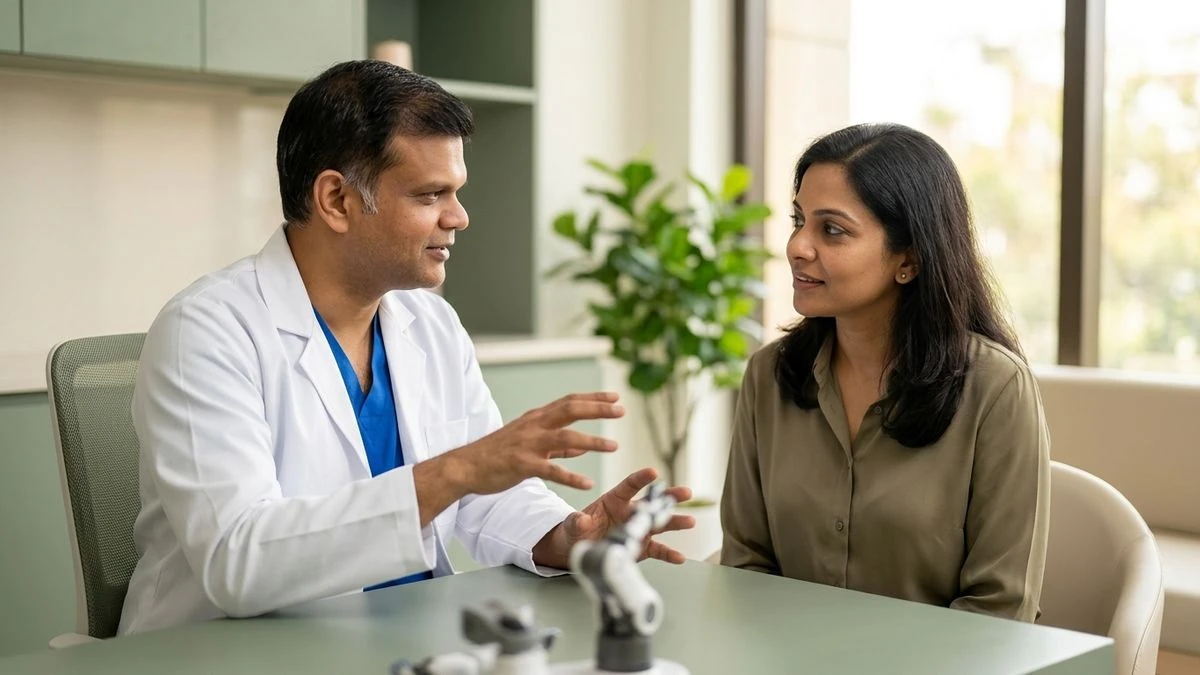
Dr. Babu Elangovan is Da Vinci robotic-surgery trained and utilizes this technology to improve patient outcomes. It is important to understand that the robotic system does not perform the surgery independently. Instead, it acts as a highly sophisticated extension of the surgeon's own hands, translating their movements into microscopic, high-precision actions inside the abdomen.
How Da Vinci Surgery Chennai Differs from Laparoscopy
While both laparoscopic and robotic surgeries are minimally invasive techniques that use small incisions, the Da Vinci system offers several distinct technological advantages that enhance surgical performance, especially in deep or narrow anatomical areas.
3D High-Definition Vision: Standard laparoscopy provides a two-dimensional view, whereas the robotic system offers a magnified, three-dimensional view of the surgical field, allowing for excellent depth perception and tissue identification.
Wristed Instruments: Robotic instruments feature Endowrist technology, which provides a greater range of motion than the human hand, allowing the surgeon to operate with high dexterity in tight spaces.
Tremor Filtration: The robotic console filters out any natural hand tremors, ensuring that every movement of the surgical instruments is perfectly stable and controlled.
Ergonomic Control: The surgeon operates from a comfortable seated console, reducing physical fatigue during long and complex procedures, which supports sustained focus.
Common Robotic GI Procedures Performed
Robotic-assisted surgery is not necessary for every patient, but it offers significant advantages for specific complex abdominal and gastrointestinal procedures.
Robotic Hernia Surgery: Highly beneficial for complex abdominal wall reconstructions, inguinal hernias, and hiatus hernias, allowing for precise placement and suturing of surgical mesh.
Robotic Colorectal Surgery: Excellent for treating rectal and colon cancers, where navigating the narrow pelvic cavity requires extreme precision to protect surrounding nerves and blood vessels.
Anti-Reflux Surgery: Used to treat severe gastro-oesophageal reflux disease (GERD) by precisely repairing the diaphragmatic hiatus and wrapping the stomach to prevent acid reflux.
Selected HPB Surgery: Useful in specific hepato-pancreato-biliary (HPB) procedures involving the liver, pancreas, or bile ducts, where delicate dissection is paramount.
What Happens During a Robotic GI Operation?
Understanding the step-by-step process of a robotic procedure can help ease anxiety and prepare you for your upcoming surgery.
Anaesthesia: The patient is placed under general anaesthesia to ensure they are completely asleep and pain-free throughout the operation.
Port Placement: The surgeon makes a few small incisions, usually less than a centimetre in size, to insert the robotic camera and specialized instruments.
Docking the Robot: The Da Vinci robotic arms are positioned and secured over the patient, and the instruments are gently guided into the abdominal cavity.
Console Operation: Dr. Babu Elangovan sits at the master console a few feet away from the patient, viewing the highly magnified 3D image and manipulating the instruments in real-time.
Precision Resection: The diseased tissue is carefully dissected and removed, or the anatomical defect is repaired, with minimal disruption to adjacent healthy organs.
Closure: The robotic instruments are withdrawn, and the tiny skin incisions are closed with dissolvable sutures and covered with small dressings.
Recovery, Diet, and What to Expect After Surgery
Because robotic surgery involves smaller incisions and less tissue trauma, the recovery period is typically shorter and more comfortable than traditional open surgery.
Hospital Stay: Most patients require only a brief hospital stay, often returning home within one to three days depending on the specific procedure performed.
Pain Management: Post-operative pain is generally mild to moderate and is well-controlled with standard oral medications, reducing the need for strong painkillers.
Dietary Progression: Patients usually start with clear liquids shortly after waking up, gradually progressing to soft foods and then a normal balanced diet as bowel function returns.
Activity and Work: Light walking is encouraged on the very first day to promote circulation. Most patients can return to desk jobs within one to two weeks, though heavy lifting must be avoided for six weeks.
Is Robotic GI Surgery the Right Option for You?
While robotic surgery offers numerous benefits, it is not universally superior or suitable for every individual. The decision to use the Da Vinci system depends on the specific disease, your overall medical health, any previous abdominal surgeries you have had, and your unique anatomical considerations.
Dr. Babu Elangovan provides comprehensive consultations for patients seeking advanced surgical care. While based in Chennai, the practice regularly welcomes patients traveling from across Tamil Nadu and wider South India for specialised robotic procedures. Remote video second opinions are readily available for outstation and international patients looking to discuss their surgical options.
What to expect
1Suitability assessment
2Robotic (keyhole) procedure
3Precision dissection & reconstruction
4Early mobilisation
5Recovery & follow-up
Robotic GI surgery — watch & learn
GI & Liver Health Awareness
A general awareness video on gastrointestinal and liver health.
Da Vinci robotic surgery is an advanced form of minimally invasive GI surgery. The surgeon controls robotic arms equipped with specialized instruments from a console, providing high-definition 3D vision and exceptional precision in tight anatomical spaces.
How much does Da Vinci robotic surgery cost in Chennai?
The Da Vinci robotic surgery cost in Chennai depends on the specific procedure, the hospital chosen, and the complexity of the case. Many insurance policies cover robotic-assisted surgeries for approved indications. Our administrative team helps patients navigate insurance pre-authorisations and provides detailed cost estimates during consultation.
What are the main benefits of robotic surgery over open surgery?
Robotic surgery offers several benefits over traditional open surgery, including smaller incisions, significantly less post-operative pain, reduced blood loss, a lower risk of infection, and a faster return to daily activities.
Is the robot performing the surgery on its own?
No. The robotic system cannot make decisions or perform maneuvers on its own. Every movement is directly and continuously controlled in real-time by Dr. Babu Elangovan, who is fully trained in robotic-assisted surgery.
What is the typical recovery time after robotic hernia surgery?
Most patients undergoing robotic hernia surgery can walk on the same day and return home within twenty-four to forty-eight hours. Normal light activities can usually be resumed within one to two weeks, though heavy lifting should be avoided for six weeks.
Which GI cancers can be treated using robotic surgery?
Robotic-assisted surgery is highly effective for colorectal cancers, stomach cancers, and certain oesophageal conditions. The high-definition 3D visualization is particularly useful for precise lymph node dissection and navigating the narrow pelvic cavity during rectal cancer surgery.
How soon can I get an appointment or second opinion?
You can schedule an in-person consultation at our Chennai clinics or request a remote video second opinion within twenty-four to forty-eight hours. Our team ensures prompt scheduling to address your surgical concerns without delay.
Robotic GI surgery in Chennai
Dr. Babu Elangovan performs robotic-assisted gastrointestinal surgeries at leading Chennai hospitals, including Kauvery Hospital in Alwarpet, Kumaran Hospital and THANC Hospital in Kilpauk. Consultations are also available at Mira Health Care in Adyar and Capstone Clinics in Nungambakkam.
Discuss robotic gi surgery
Request a consultation and choose your preferred hospital. Enquiries reach Dr. Babu’s team and you are directed to the most suitable consulting location.