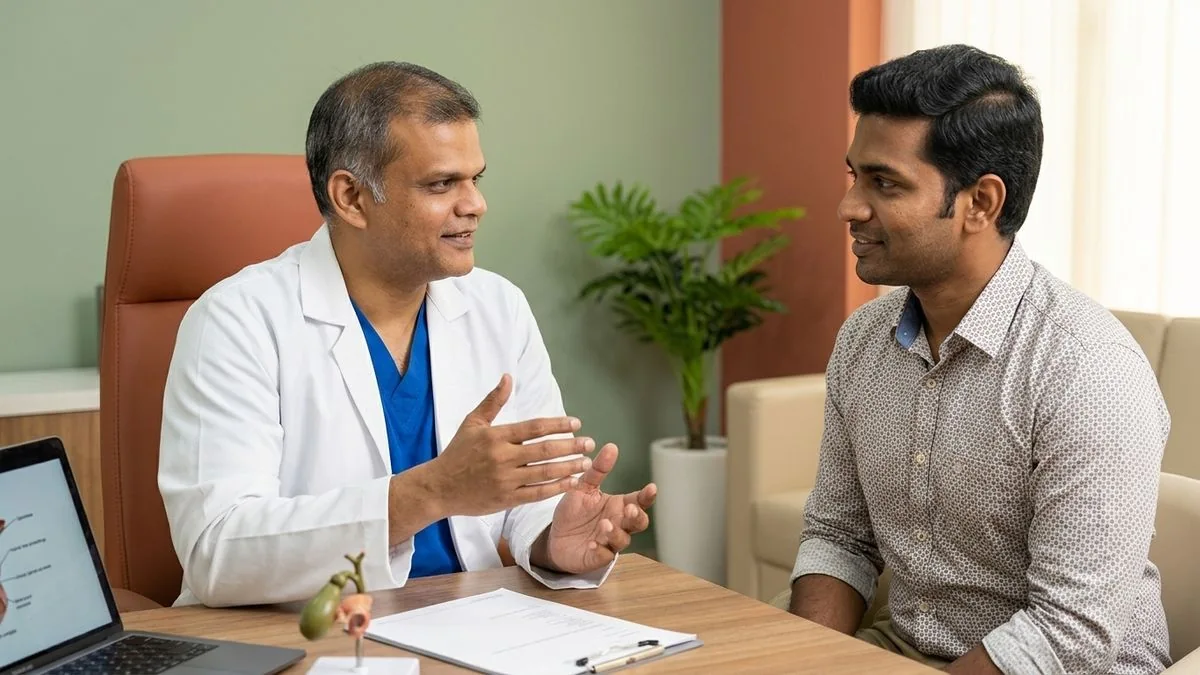
Laparoscopic cholecystectomy removes a diseased gallbladder through a few small (keyhole) incisions. It is the established treatment for symptomatic gallstones, with most patients going home within a day and returning to normal activity quickly.
Have You Been Advised to Have Your Gallbladder Removed?
If you are experiencing recurrent upper abdominal pain, bloating, or indigestion after meals, you may have symptomatic gallstones. The gallbladder is a small organ that stores bile, a digestive fluid. When gallstones block the flow of bile, they cause painful episodes known as biliary colic.
While some gallstones remain silent, symptomatic stones require surgical attention. Leaving them untreated can lead to complications such as acute inflammation, jaundice, or pancreatitis. Dr. Babu Elangovan offers expert evaluation and keyhole gallbladder surgery to help you find lasting relief.
What is Laparoscopic Cholecystectomy?
Laparoscopic cholecystectomy is the clinical term for keyhole gallbladder surgery. Unlike traditional open surgery, this modern approach allows the surgeon to remove the gallbladder through a few tiny incisions in the abdomen.
This minimally invasive technique has become the standard of care for gallstone removal. It offers patients several significant benefits compared to older surgical methods.
Reduced Pain: Smaller incisions mean less muscle disruption and minimal postoperative discomfort.
Faster Recovery: Most patients can return to their daily routines much sooner.
Shorter Hospital Stay: The procedure is often performed as a day-care or short-stay surgery.
Understanding the surgical steps can help ease any anxiety you may have about the procedure. Dr. Babu Elangovan performs this surgery under general anaesthesia using advanced laparoscopic instruments.
The operation typically involves the following structured steps:
Anesthesia: You will be given general anaesthesia so that you sleep comfortably and painlessly throughout the procedure.
Incisions: The surgeon makes three to four tiny keyhole incisions in your abdomen.
Insufflation: Carbon dioxide gas is gently introduced to inflate the abdomen, giving the surgeon a clear view of the organs.
Laparoscope Insertion: A thin tube with a camera or laparoscope is inserted, transmitting high-definition images to a monitor.
Gallbladder Removal: Using specialized instruments, the surgeon carefully detaches the gallbladder from the liver and bile ducts, then removes it through one of the incisions.
Bile Duct Check: If there is a suspicion of stones in the common bile duct, an intraoperative cholangiogram or subsequent endoscopic retrograde cholangiopancreatography ERCP may be planned to ensure clear pathways.
Closure: The small incisions are closed with dissolvable sutures or surgical tape, and dressings are applied.
Recovery, Diet, and Life After Gallbladder Removal
Recovery after keyhole gallbladder surgery is generally rapid. Most patients are able to walk around on the same day as the surgery and can go home within twenty-four to forty-eight hours.
Your body adapts remarkably well to life without a gallbladder. The liver continues to produce bile, which now flows directly into the small intestine to aid digestion.
Post-Surgery Diet: Start with light, non-greasy meals for the first few days. Gradually reintroduce normal foods as tolerated, avoiding extremely fatty or fried items initially.
Physical Activity: Avoid heavy lifting or strenuous exercise for about two to three weeks, though gentle walking is highly encouraged.
Return to Work: Most individuals can return to desk jobs within a week, depending on their comfort levels and the nature of their work.
Why Choose Dr. Babu Elangovan for Your Surgery in Chennai?
When undergoing abdominal surgery, choosing a highly qualified specialist is essential for a safe outcome. Dr. Babu Elangovan is a dedicated surgical gastroenterologist and liver transplant surgeon with over 20 years of clinical experience.
His extensive training in hepato-pancreato-biliary HPB surgery and advanced robotic procedures ensures that even complex gallbladder cases are managed with precision. He personally guides patients through every stage of care, from the initial diagnostic workup to postoperative recovery.
Based in Chennai, his practice serves patients seeking reliable solutions for gallstones and complex gastrointestinal GI conditions. Patients travel from across Tamil Nadu and wider South India to consult with him, and remote video second opinions are warmly welcomed for outstation and international patients.
What to expect
1Assessment & ultrasound
2Keyhole (laparoscopic) removal
3Bile-duct stone clearance if needed
4Day-care / short-stay recovery
5Follow-up
Laparoscopic gallbladder removal — watch & learn
GI & Liver Health Awareness
A general awareness video on gastrointestinal and liver health.
What happens to digestion after gallbladder removal?
After surgery, your liver continues to produce bile, which flows directly into your small intestine instead of being stored. Most patients experience normal digestion without any long-term issues, though some may notice temporary mild changes in bowel habits as the digestive system adapts.
Who is a candidate for laparoscopic gallbladder removal?
Anyone experiencing symptoms from gallstones, such as severe abdominal pain, nausea, or bloating, is a candidate. It is also recommended for patients with gallbladder inflammation, polyps, or those who have recovered from gallstone-induced pancreatitis to prevent future episodes.
Can gallstones be treated without surgery?
While medications can sometimes dissolve certain types of stones, they are rarely effective long-term, and stones frequently recur once treatment stops. Surgical removal of the gallbladder remains the only definitive and reliable treatment for symptomatic gallstones.
What is the recovery time after keyhole gallbladder surgery?
Most patients can return home within a day or two after surgery. You can expect to resume light daily activities and desk work within five to seven days. Complete recovery and a return to strenuous exercise or heavy lifting typically take about two to three weeks.
How much does gallbladder operation cost Chennai?
The cost of gallbladder removal surgery in Chennai depends on several factors, including the choice of hospital, room category, and whether laparoscopic or robotic techniques are used. Most health insurance policies cover this procedure, and our team assists with pre-authorization and documentation.
Are there any risks associated with laparoscopic cholecystectomy?
Laparoscopic cholecystectomy is a very safe and common procedure. However, as with any surgery, potential risks include infection, bleeding, temporary bile leaks, or injury to the bile duct. Dr. Babu Elangovan takes meticulous precautions to minimize these risks during the operation.
How soon can I get an appointment or second opinion?
You can schedule an in-person consultation or a remote video second opinion with Dr. Babu Elangovan quickly. Our team coordinates appointments across our Chennai locations, including Mira Health Care and Kauvery Hospital, to ensure you receive timely care.
Laparoscopic gallbladder removal in Chennai
Dr. Babu Elangovan provides specialized surgical care across Chennai, consulting at Mira Health Care in Adyar, Kauvery Hospital in Alwarpet, Capstone Clinics in Nungambakkam, and Kumaran Hospital and THANC Hospital in Kilpauk.
Discuss laparoscopic gallbladder removal
Request a consultation and choose your preferred hospital. Enquiries reach Dr. Babu’s team and you are directed to the most suitable consulting location.