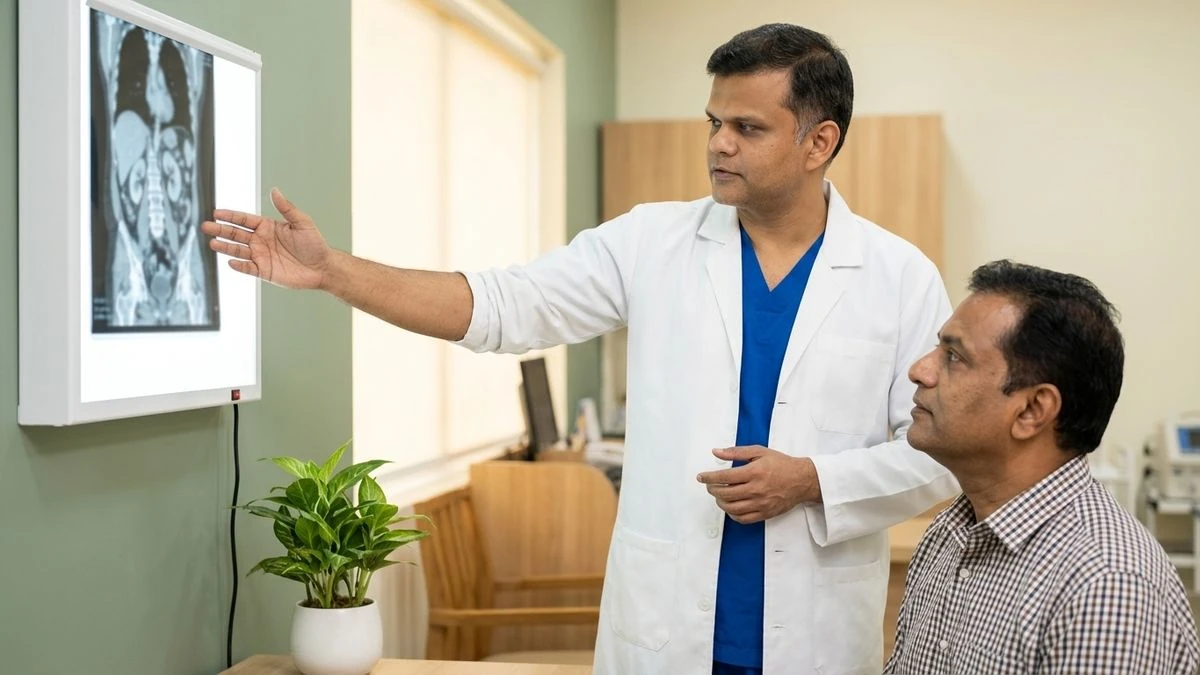
Led by Dr. Babu Elangovan · part of HPB Surgery care
Hepato-pancreato-biliary (HPB) surgery treats disease of the liver, pancreas and bile ducts — from benign conditions to cancer. It includes liver resection, the Whipple’s procedure (pancreaticoduodenectomy) and bile-duct surgery, all requiring meticulous, super-specialty planning.
Facing a Complex Liver, Pancreas, or Bile Duct Diagnosis?
A diagnosis involving the liver, pancreas, or bile ducts can feel overwhelming. These organs perform vital functions for digestion, metabolism, and detoxification. When tumours, cysts, or severe blockages develop, specialized hepato-pancreato-biliary (HPB) surgery is often the most effective path forward.
While Dr. Babu Elangovan manages common gastrointestinal (GI) conditions like gastro-oesophageal reflux disease (GERD) and non-alcoholic fatty liver disease (NAFLD), complex HPB cases require highly specialized surgical planning. These operations demand precise techniques to protect major blood vessels and maintain normal digestive flow.
Understanding the Whipple Procedure for Pancreatic Tumours
The Whipple procedure, also known as a pancreaticoduodenectomy, is a major operation performed to treat tumours and other disorders of the pancreas, duodenum, and bile duct. This complex surgery is divided into two main phases: removal and reconstruction.
Removal stage: The surgeon removes the head of the pancreas, the gallbladder, the duodenum, a portion of the bile duct, and nearby lymph nodes.
Reconstruction stage: The surgeon carefully reconnects the remaining pancreas, bile duct, and stomach to the small intestine to allow food and digestive enzymes to flow normally.
Depending on the location and size of the tumour, this procedure may be performed using traditional open surgery or minimal-access laparoscopic techniques.
What to Expect During a Liver Resection
A liver resection involves removing a diseased portion of the liver, such as a benign tumour, cyst, or cancerous lesion. Because the liver has an extraordinary ability to regenerate, surgeons can safely remove a significant portion of the organ.
Pre-operative mapping: Advanced imaging is used to visualize the liver blood vessels and plan the precise boundaries of the resection.
Parenchymal division: The surgeon uses specialized instruments to carefully divide the liver tissue while minimizing blood loss.
Regeneration phase: Over the weeks following surgery, the remaining healthy liver tissue grows to restore normal liver volume and function.
Bile Duct Reconstruction and Repair Options
Bile duct surgery is performed to treat blockages, strictures, or tumours within the biliary system. Blockages prevent bile from draining from the liver to the small intestine, leading to jaundice and infection.
Bilio-enteric reconstruction: The surgeon creates a new pathway connecting the bile ducts directly to the small intestine to restore drainage.
Bile duct exploration: This procedure is used to locate and remove stubborn stones or clear blockages within the ducts.
Diagnostic coordination: In many cases, diagnostic tools like endoscopic retrograde cholangiopancreatography (ERCP) are used beforehand to map the biliary anatomy.
Recovery, Diet, and Life After HPB Surgery
Recovery from major abdominal surgery requires patience and close adherence to post-operative guidelines. Because these organs are central to digestion, your diet and daily routine will change temporarily.
Hospital stay: Most patients remain in the hospital for several days to ensure proper pain management, wound healing, and digestive recovery.
Dietary transition: You will begin with clear liquids, gradually progressing to soft foods and small, frequent meals to avoid overloading the digestive system.
Activity restriction: While early walking is encouraged to prevent blood clots, heavy lifting and strenuous exercise must be avoided for several weeks.
Specialist Hepato-Pancreato-Biliary Care in Chennai
Complex surgeries of the liver, pancreas, and bile ducts require a high level of surgical expertise. Dr. Babu Elangovan brings over 20 years of clinical and operative experience to every procedure. Having been involved in 230+ liver transplants, including living-donor liver transplant (LDLT) and deceased-donor liver transplant (DDLT), he applies advanced hepatobiliary techniques to ensure patient safety.
Patients travel to our Chennai practice from across Tamil Nadu and wider South India to access specialized gastrointestinal and HPB surgical care. Outstation patients and those seeking a remote second opinion are warmly welcomed for video consultations.
What to expect
1Specialist imaging & assessment
2Tumour-board / multidisciplinary planning
3Liver / pancreatic / bile-duct resection
4Reconstruction where needed
5Recovery & follow-up
HPB surgery — watch & learn
GI & Liver Health Awareness
A general awareness video on gastrointestinal and liver health.
HPB surgery refers to surgical procedures performed to treat diseases of the liver, pancreas, gallbladder, and bile ducts. These complex operations require specialized training due to the intricate network of blood vessels and organs involved.
Who is a candidate for a liver resection?
A liver resection is recommended for patients with benign or malignant liver tumours, cysts, or localized infections. The remaining portion of the liver must be healthy enough to regenerate and support normal body function after the diseased part is removed.
What is the recovery time after a Whipple procedure?
Most patients spend one to two weeks in the hospital. Full recovery at home typically takes six to eight weeks. During this time, patients gradually regain their strength and transition back to a normal diet under close medical supervision.
How is a bile duct blockage treated?
Treatment depends on the cause of the blockage. Options include endoscopic retrograde cholangiopancreatography (ERCP) to place a stent, or surgical bile duct reconstruction to bypass the obstruction and restore normal bile flow to the digestive tract.
How much does a Whipple procedure and liver resection cost in Chennai?
The cost of HPB surgery in Chennai depends on the specific procedure, hospital stay duration, choice of open or minimal-access approach, and any underlying health conditions. Most major insurance plans cover these medically necessary surgeries, and our team assists with the pre-authorization process.
Can HPB surgeries be performed laparoscopically?
Yes, certain liver resections, distal pancreatectomies, and gallbladder surgeries can be performed using laparoscopic or minimal-access techniques. Dr. Babu Elangovan evaluates each patient to determine if a keyhole or open approach is safer and more effective.
How soon can I get an appointment or second opinion with Dr. Babu Elangovan?
Appointments can be scheduled quickly at any of our five Chennai consulting locations, including Mira Health Care and Kauvery Hospital. Outstation and international patients can easily book a remote video consultation for a timely second opinion.
HPB surgery in Chennai
Dr. Babu Elangovan provides specialized hepato-pancreato-biliary (HPB) care across Chennai, consulting at Mira Health Care in Adyar, Kauvery Hospital in Alwarpet, Capstone Clinics in Nungambakkam, and Kumaran Hospital and THANC Hospital in Kilpauk.
Discuss hpb surgery
Request a consultation and choose your preferred hospital. Enquiries reach Dr. Babu’s team and you are directed to the most suitable consulting location.