Led by Dr. Babu Elangovan · part of GI Endoscopy care
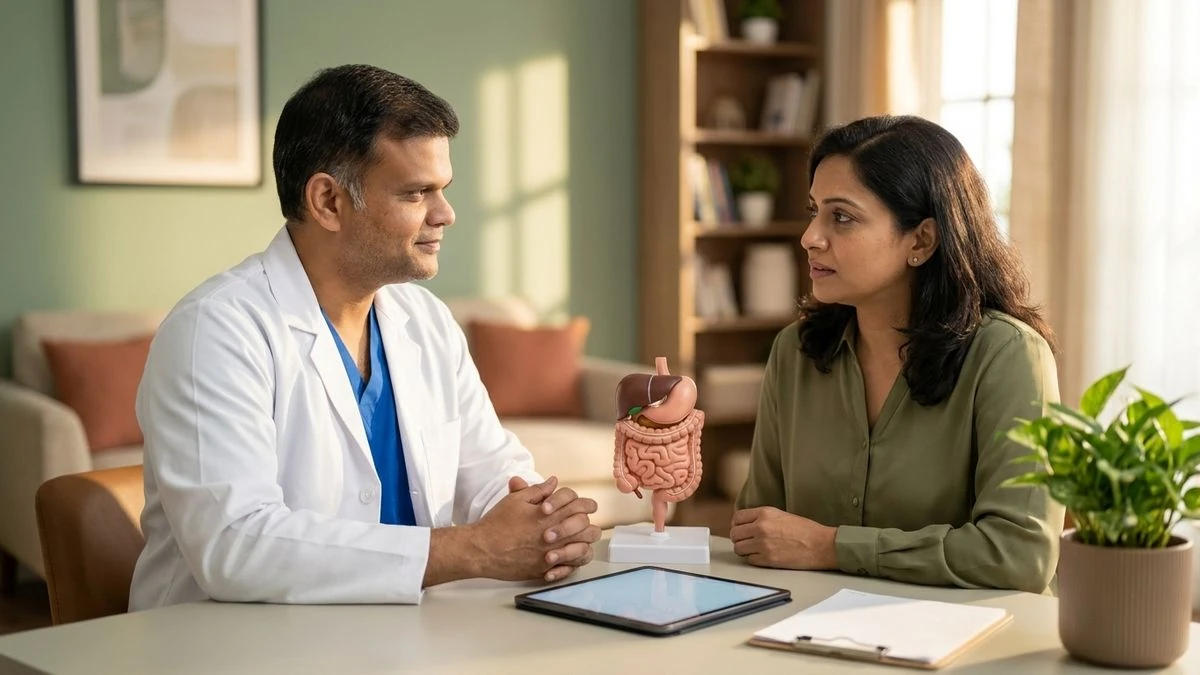
GI endoscopy uses a thin flexible camera to look directly inside the digestive tract. Upper GI endoscopy (gastroscopy) examines the food pipe, stomach and duodenum, while colonoscopy examines the large bowel — for diagnosis, biopsy, cancer screening and treatment such as polyp removal.
Persistent heartburn, difficulty swallowing, chronic abdominal pain, or unexplained changes in bowel habits can be deeply concerning. These symptoms often indicate an underlying issue within your gastrointestinal GI tract. An upper GI endoscopy gastroscopy or a lower GI endoscopy colonoscopy allows us to look directly inside your digestive system to find the precise cause of your discomfort.
Rather than relying on vague assumptions, these visual examinations provide direct and highly accurate answers. They help identify conditions like gastro-oesophageal reflux disease GERD, stomach ulcers, inflammatory bowel disease, or early-stage colorectal cancers, ensuring you receive the correct treatment plan.
Understanding Gastroscopy and Colonoscopy Procedures
Both procedures are minimally invasive and designed to examine the inner lining of your digestive tract using a thin, flexible tube with a camera and light at its tip.
Gastroscopy Process: This procedure focuses on the upper GI tract. The endoscope is gently passed through your mouth and down into your oesophagus, stomach, and the first part of your small intestine duodenum. It helps evaluate symptoms like persistent nausea, difficulty swallowing, or upper abdominal pain.
Colonoscopy Process: This procedure evaluates the lower GI tract. The colonoscope is inserted through the rectum and guided through the entire length of your large intestine colon. It is primarily used to investigate chronic diarrhoea, rectal bleeding, unexplained weight loss, or as a vital screening tool for colon cancer.
Sedation: To make the experience completely comfortable, both procedures are typically performed under light sedation. You will feel relaxed and drowsy, and most patients do not feel any discomfort or remember the procedure afterward.
How to Prepare for Your Endoscopy
Proper preparation is essential to ensure a clear view of your digestive tract, allowing for an accurate diagnosis and reducing the need to repeat the procedure.
Upper Endoscopy Prep: You will need to fast, consuming no food or liquids for at least six to eight hours before the procedure to ensure your stomach is completely empty.
Colonoscopy Prep: This requires a thorough bowel cleansing. You will be prescribed a specific liquid laxative solution to consume the day before, along with a clear liquid diet, to clear all waste from your colon.
Medication Review: It is crucial to inform us about all medications you take, especially blood thinners, diabetes medications, or blood pressure drugs, as some may need to be adjusted temporarily.
Therapeutic Endoscopy: Treatment Without Surgery
An endoscopy is not just a diagnostic tool; it is also a powerful platform for therapeutic endoscopy, allowing us to treat several gastrointestinal conditions immediately during the same session.
Biopsy Collection: If abnormal tissue or inflammation is spotted, tiny instruments are passed through the scope to take a small tissue sample for laboratory analysis.
Polyp Removal: During a colonoscopy, we can perform a polypectomy to safely remove colon polyps, which are small growths that could potentially develop into cancer over time.
Stricture Dilatation: If you have a narrowed path in your oesophagus or bowel, specialized balloons can be passed through the scope to gently widen the area.
Bleeding Control: Active bleeding from ulcers or abnormal blood vessels can be stopped instantly using heat probes, clips, or specialized medication injections.
What to Expect During Recovery and at Home
Recovery from a diagnostic or therapeutic endoscopy is rapid, with most patients returning to their normal routine within a day or two.
Immediate Post-Procedure Stay: You will rest in a recovery room for one to two hours while the sedative wears off. You will need a family member or friend to drive you home.
Dietary Guidelines: You can usually resume eating a light, soft diet shortly after the procedure, gradually returning to your normal diet the following day.
Mild Side Effects: You may experience a mild sore throat after a gastroscopy, or slight bloating and gas after a colonoscopy. These symptoms are normal and typically resolve within a few hours.
Return to Work: Most patients are fully capable of returning to work and resuming light daily activities the day after the procedure.
Consulting a Specialist for Endoscopy in Chennai
When undergoing a diagnostic or therapeutic procedure, having it performed by an experienced surgical gastroenterologist ensures both safety and clinical precision. Dr. Babu Elangovan brings over 20 years of clinical and operative experience, providing comprehensive care from the initial diagnostic consultation through to any necessary treatment or follow-up.
Our practice is dedicated to delivering patient-centric, compassionate care in a safe clinical environment. Patients travel to our Chennai practice from across Tamil Nadu and wider South India to receive expert gastrointestinal care, and we warmly welcome outstation patients seeking remote video second opinions.
What to expect
1Assessment & preparation
2Upper or lower GI endoscopy
3Biopsy / polypectomy as needed
4Therapeutic steps where indicated
5Results & plan
GI endoscopy — watch & learn
GI & Liver Health Awareness
A general awareness video on gastrointestinal and liver health.
What is the difference between a gastroscopy and a colonoscopy?
A gastroscopy examines the upper digestive tract, including the oesophagus, stomach, and duodenum, by inserting a thin scope through the mouth. A colonoscopy examines the lower digestive tract, specifically the large intestine and rectum, by inserting a scope through the anus. Both procedures help diagnose and treat digestive issues.
How is an upper GI endoscopy performed?
An upper GI endoscopy is performed while you lie comfortably on your side under light sedation. A thin, flexible tube with a camera is gently guided through your mouth and down into your stomach. Dr. Babu Elangovan examines the lining, takes biopsies if needed, and completes the procedure in about fifteen minutes.
What are the main reasons for undergoing a colonoscopy?
A colonoscopy is recommended to investigate symptoms like chronic diarrhoea, rectal bleeding, unexplained weight loss, or persistent abdominal pain. It is also widely used as a preventive screening tool to detect and remove precancerous polyps in individuals aged 45 and older.
How much does a gastroscopy and colonoscopy cost in Chennai?
The gastroscopy and colonoscopy cost in Chennai depends on several factors, including whether the procedure is diagnostic or therapeutic, the type of sedation used, and the specific hospital facility. Many insurance providers cover these diagnostic procedures. Our team helps verify your insurance benefits and provides a clear cost estimate.
What is the recovery timeline after an endoscopy?
Recovery is very quick. You will rest in the recovery room for about an hour until the sedation wears off. You can go home the same day but must avoid driving. Most patients resume a light diet immediately and return to normal work and activities the next day.
Is a gastroscopy or colonoscopy painful?
The procedures are not painful. We perform them under light sedation, which keeps you relaxed, comfortable, and often asleep throughout. You may feel a mild sore throat after a gastroscopy or some temporary bloating and gas after a colonoscopy, which resolves quickly.
Are there alternatives to having an endoscopy?
Alternatives include imaging tests like CT scans, barium swallows, or stool tests. However, these tests only provide images and cannot take tissue biopsies or remove polyps. An endoscopy remains the gold standard because it allows for direct visualization and immediate therapeutic treatment.
How soon can I get an appointment or second opinion?
You can schedule a consultation with Dr. Babu Elangovan at our Chennai clinics, including Mira Health Care or Kauvery Hospital, within a few days. For outstation patients or those seeking a second opinion, we offer prompt remote video consultations to review your case and plan your care.
GI endoscopy in Chennai
Dr. Babu Elangovan provides advanced endoscopy services across Chennai, consulting at Mira Health Care in Adyar, Kauvery Hospital in Alwarpet, Capstone Clinics in Nungambakkam, and Kumaran Hospital and THANC Hospital in Kilpauk.
Discuss gi endoscopy
Request a consultation and choose your preferred hospital. Enquiries reach Dr. Babu’s team and you are directed to the most suitable consulting location.