Muscle Loss in Liver Disease: Why Your Surgeon Checks It Before a Transplant
Need expert consultation? Book an appointment with Dr. Babu Elangovan.
Book AppointmentMuscle Loss in Liver Disease: Why Your Surgeon Checks It Before a Transplant
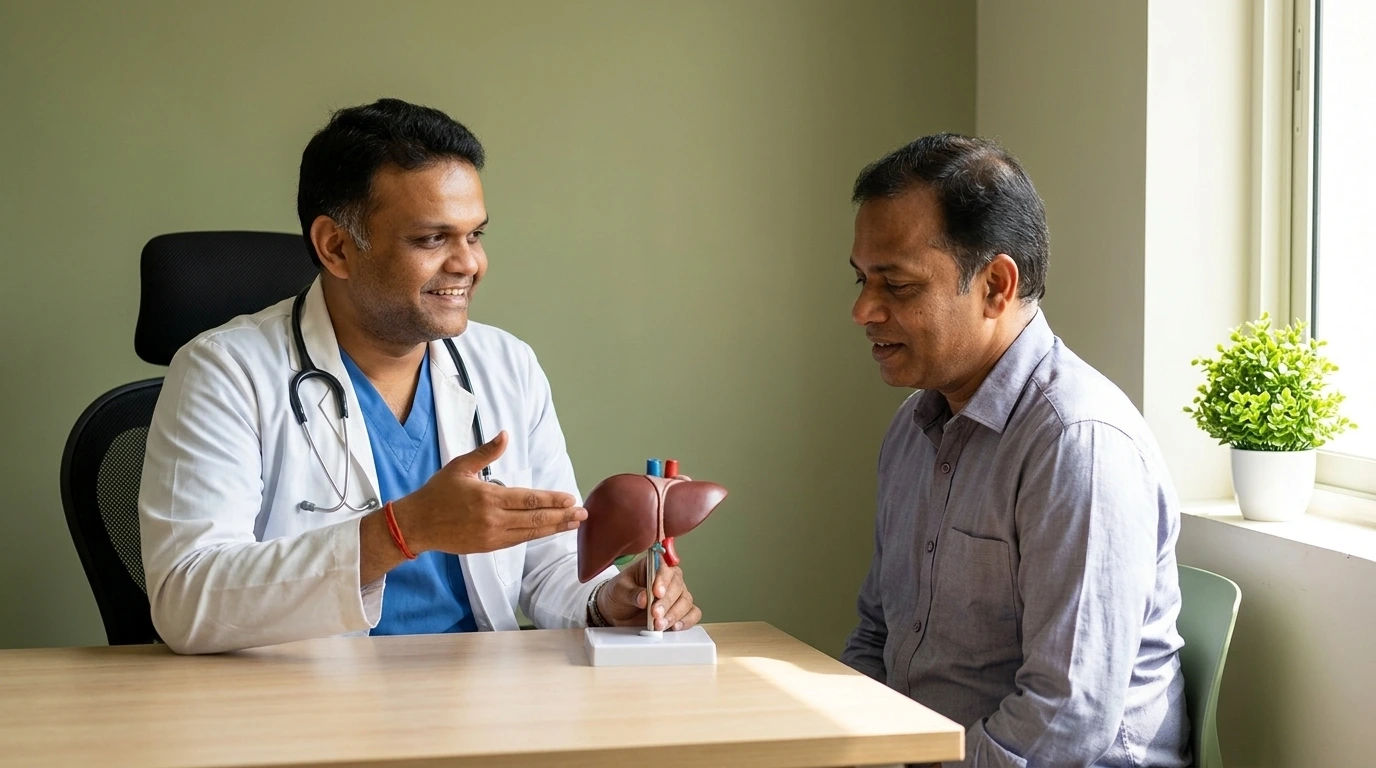
When families come to discuss a transplant, they arrive with the liver numbers — bilirubin, INR, creatinine, MELD score. Reasonably so. But one of the first things I look at is the patient's arms, thighs and grip strength, and that often surprises people.
Muscle mass independently predicts how well someone tolerates major surgery and how they recover from it. In liver disease, muscle loss is not a cosmetic side-issue — it is an active metabolic process, and it is part of what determines whether a transplant goes well.
Why muscle, when the problem is the liver?
A liver transplant is one of the most physically demanding operations in surgery: long, with major fluid shifts and significant stress on the heart, lungs and metabolism. Afterwards, the body needs to heal a large wound, fight off infection under immunosuppression, and support a graft that is regenerating.
All of that runs on amino acids, and skeletal muscle is where the body stores them. Muscle is not just for movement — it is the reserve tank. A patient with reasonable muscle has something to draw on. A severely depleted patient does not, and it shows up as slower weaning off the ventilator, poorer wound healing, more infection, and a longer road back to walking.
This is why transplant assessment includes frailty measures alongside blood tests. Blood chemistry describes the liver. Muscle describes the patient.
Why cirrhosis destroys muscle
The liver is the body's glucose battery. After eating, it stores glucose as glycogen; between meals and overnight, it releases it back.
A cirrhotic liver, largely replaced by scar tissue, stores very little glycogen. So the reserve runs out within a few hours of the last meal — and the body turns to the next available fuel, which is muscle protein, broken down and converted to glucose.
This is the key idea worth taking away: an ordinary overnight fast in advanced cirrhosis is metabolically far closer to prolonged starvation than it is to a healthy person's night's sleep. Every night without a buffer, muscle is consumed.
Several other mechanisms compound it:
- Impaired protein synthesis. Even with adequate protein intake, the damaged liver struggles to produce the carrier proteins and growth factors needed to build muscle. The balance tips toward breakdown.
- Ammonia. When the liver cannot clear ammonia, skeletal muscle takes over some of that detoxification. It protects the brain, but it drains the muscle's own amino acid pool and impairs its energy production. Raised ammonia also increases myostatin, which actively suppresses muscle growth.
- Chronic inflammation, which interferes with the pathways that build muscle protein.
- Poor appetite and early fullness — ascites presses on the stomach, so patients feel full after very little, and daily intake falls well short.
Why it gets missed
Families watch the scale. That is the problem.
Portal hypertension causes fluid retention — ascites in the abdomen, oedema in the legs — which can add many kilograms. So the arithmetic works out like this: eight kilograms of muscle lost, ten kilograms of fluid gained, and the scale shows a two-kilogram gain.
The patient looks fuller. The number is reassuring. And profound muscle loss is happening underneath.
It is further hidden when someone carries body fat — a thin, weak, fat-infiltrated muscle under a normal-looking body habitus. This is common where the liver disease came from metabolic fatty liver rather than alcohol; the progression of that condition is covered in fatty liver disease: when does it become serious.
Weight is simply the wrong instrument here.
What we measure instead
- CT muscle area at the L3 vertebra. Most patients being assessed have already had abdominal CT scans. Measuring the cross-sectional muscle area at the third lumbar vertebra gives a fluid-independent measure of true muscle mass — arguably the most reliable single number available.
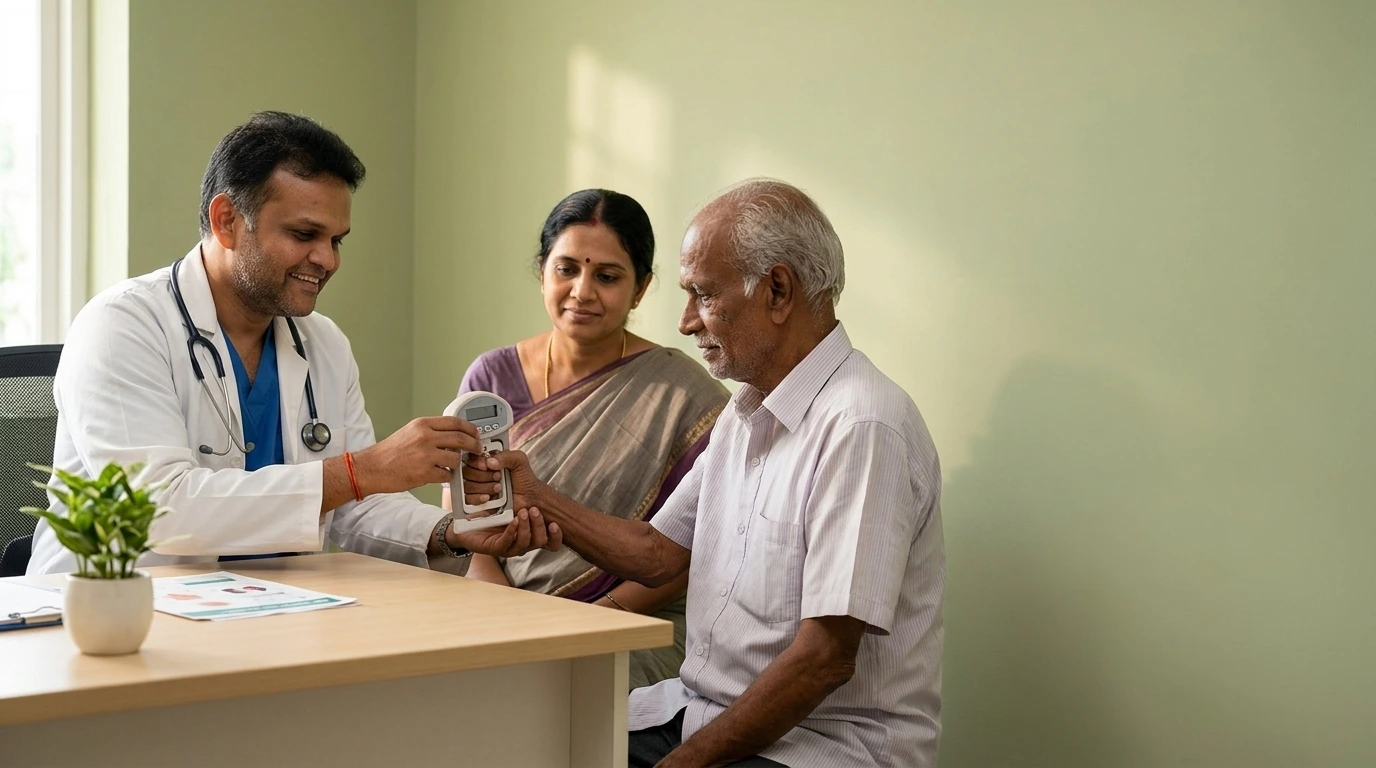
- Hand-grip strength, with a dynamometer. Quick, objective, and a sensitive marker of frailty. It measures function rather than bulk, which matters just as much.
- Sit-to-stand test — standing from a chair five times without using the arms, timed.
- Gait speed — walking a short measured distance at normal pace.
The last two take under a minute and tell us a great deal about how someone will cope with surgery.
What can actually be done
This is the part worth acting on, and most of it is achievable at home.
The late-evening snack. Start here. A small snack shortly before bed containing slow-release carbohydrate and some protein — ragi or oats porridge, dalia, curd, paneer, an egg white — shortens the overnight fast that drives the nightly muscle breakdown. It is the single highest-yield nutritional intervention in cirrhosis, and it is cheap and simple.
Adequate protein, spread through the day. Not restricted. The old advice to restrict protein in liver disease is outdated and harmful, and it persists widely in India. Restricting protein does not prevent encephalopathy — it accelerates muscle loss, and because muscle helps clear ammonia, losing it can make encephalopathy more likely. If someone has told you to cut protein, please raise it with your treating team rather than acting on it. Your specific target should be set individually.
Treat the underlying cause. Nothing else works as well. Antivirals for hepatitis B or C. Metabolic management for MASH. And in alcohol-related disease, stopping alcohol — which is directly toxic to muscle as well as liver, so it damages both. See alcohol and your liver.
Manage ascites and encephalopathy, which drive poor intake and further breakdown.
Gentle resistance work and walking, as tolerated and as cleared by your team. Walking alone is not quite enough to preserve muscle; some resistance stimulus matters. But this needs individual clearance — patients with large varices or tense ascites must avoid heavy straining.
The hopeful part
Sarcopenia in liver disease is partly reversible. Muscle can be improved with the right nutrition and activity, and doing it deliberately before an operation — prehabilitation — measurably improves how patients come through surgery.
That is why I raise it early rather than at the point of listing. It is one of the few things in advanced liver disease where patient and family effort directly changes the outcome. Warning signs that disease is progressing are covered in warning signs of cirrhosis you should not ignore, and what assessment involves in what happens during liver transplant evaluation.
For the transplant service itself, see liver transplant and the living donor liver transplant guide.
If you are caring for someone with cirrhosis
Bring recent scans, blood reports and a few days' record of what they are actually eating. Those three things tell us more at a first consultation than almost anything else.
To arrange assessment, book an appointment or call +91 99626 60009.
This article is general information, not medical advice. Nutrition and exercise plans in cirrhosis must be individualised with your treating team — particularly where there is encephalopathy, large varices or fluid overload — and are not a substitute for clinical care.
Authored by