Fatty Liver Disease: When Does It Become Serious?

Need expert consultation? Book an appointment with Dr. Babu Elangovan.
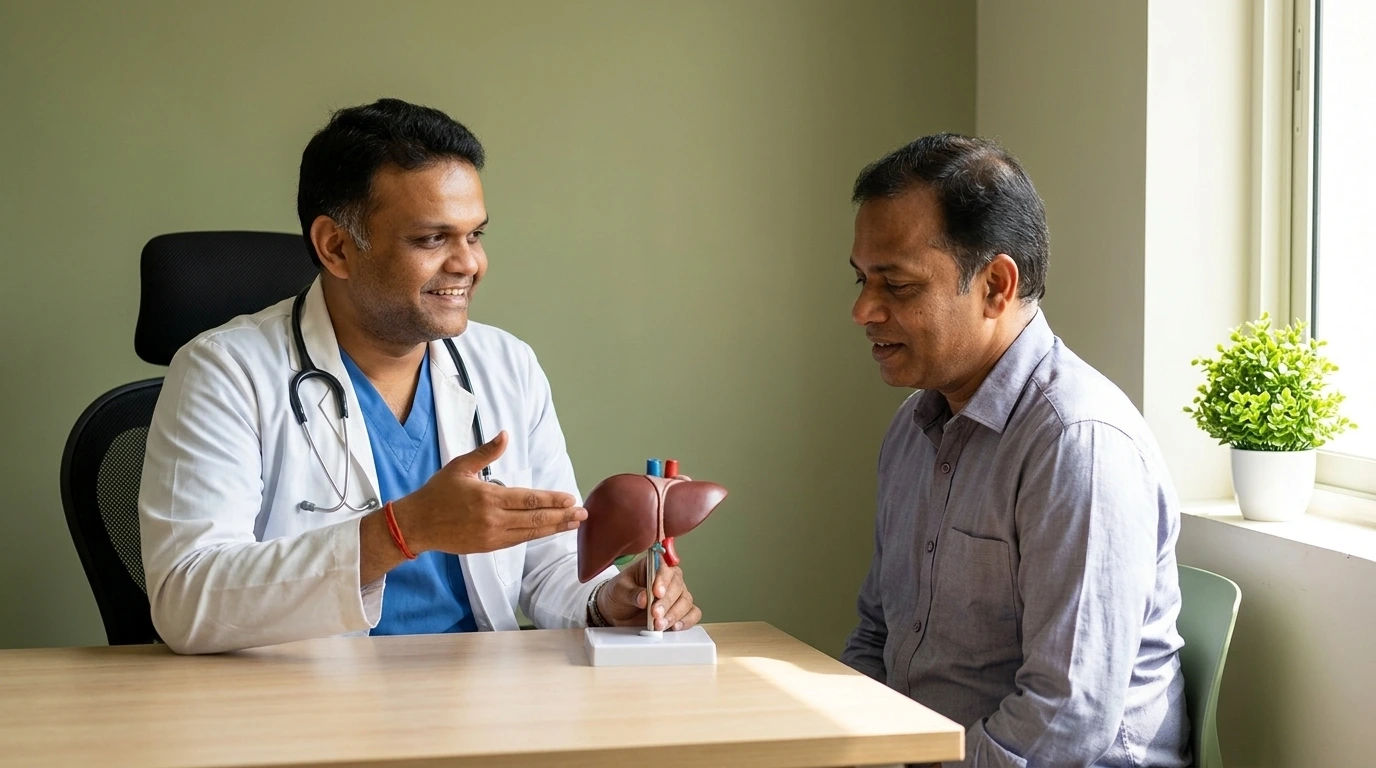
Book AppointmentFatty liver disease has become one of the most common health concerns globally and across India. Because the liver is a highly resilient organ, it rarely complains in the early stages of fat accumulation. Many individuals only discover they have a fatty liver during a routine abdominal ultrasound or a general health checkup.
This silent nature of the condition leads to a critical question that patients frequently ask: fatty liver disease when does it become serious?
Understanding the transition from a benign, reversible accumulation of fat to a progressive, life-threatening inflammatory condition is essential. Early intervention can halt or even reverse liver damage, while delaying care can lead to irreversible liver failure or liver cancer.
As a dedicated specialist in liver transplantation and hepato-pancreato-biliary (HPB) surgery, Dr. Babu Elangovan provides comprehensive guidance on recognizing the tipping points of fatty liver disease, protecting liver function, and understanding when surgical intervention becomes necessary.
The Spectrum of Fatty Liver Disease: From Simple Fat to Scarring
To understand when fatty liver disease becomes serious, it is helpful to look at it not as a single diagnosis, but as a progressive spectrum. Medically, fatty liver disease unrelated to alcohol consumption is historically termed Non-Alcoholic Fatty Liver Disease (NAFLD), recently updated by international societies to Metabolic Dysfunction-Associated Steatotic Liver Disease (MASLD).
The disease progresses through four distinct phases, each representing an increasing level of clinical severity.
1. Simple Steatosis (NAFLD / MASLD)
This is the initial stage where excess fat accumulates in more than 5% of liver cells. At this point, the fat buildup is simple and has not yet triggered significant inflammation or cellular injury. For most individuals, simple steatosis is completely silent, causing no physical symptoms, and is highly reversible with dietary and lifestyle modifications.
2. Non-Alcoholic Steatohepatitis (NASH / MASH)
This is the first major tipping point where the condition becomes serious. When the liver is overwhelmed by fat, it triggers oxidative stress and metabolic inflammation. The liver cells begin to swell and sustain damage (a process called ballooning). NASH is a progressive disease that actively injures liver tissue every day.
3. Fibrosis
In response to the chronic inflammation of NASH, the liver attempts to heal itself. This healing process involves laying down tough, fibrous scar tissue. As healthy liver tissue is gradually replaced by scar tissue, the liver's blood flow becomes restricted, and its overall functional capacity begins to decline.
4. Cirrhosis
Cirrhosis is the advanced, late stage of progressive liver scarring. At this stage, the liver is severely scarred, shrunken, and nodular. The extensive scar tissue blocks the normal flow of blood through the liver, leading to high pressure in the portal vein (portal hypertension) and eventual liver failure. Cirrhosis is a life-threatening condition that significantly increases the risk of liver cancer (hepatocellular carcinoma).
When Does Fatty Liver Disease Become Serious?
Fatty liver disease transitions from a manageable lifestyle concern to a serious, progressive medical condition at very specific clinical milestones. Recognizing these milestones allows patients and clinicians to escalate care before irreversible damage occurs.
The Shift from NAFLD to NASH
The true threshold of danger is the transition from simple fatty liver (NAFLD) to NASH. While simple fatty liver rarely leads to liver-related mortality, NASH is an aggressive driver of progressive fibrosis. If you have been diagnosed with NASH, your liver is actively undergoing cellular death and inflammatory damage.
The Development of Advanced Fibrosis (Stage 3)
Once scarring reaches Stage 3 (bridging fibrosis), the structural architecture of the liver is compromised. At this point, the liver is losing its ability to regenerate efficiently. Studies indicate that the stage of fibrosis is the single most important predictor of long-term survival and liver-related complications in patients with fatty liver disease.
The Onset of Metabolic Comorbidities
Fatty liver disease does not exist in a vacuum. It is deeply intertwined with metabolic syndrome. The condition becomes significantly more serious if you also have:
- Poorly controlled Type 2 diabetes
- Severe obesity
- Persistent hypertension
- Dyslipidemia (abnormal cholesterol or triglyceride levels)
Diabetes, in particular, acts as an accelerant, causing fatty liver disease to progress to cirrhosis and liver failure at a much faster rate.
Comparing the Stages of Fatty Liver Progression
The table below outlines the progression of fatty liver disease, helping patients understand when the condition transitions from a reversible state to a critical health concern.
| Stage | Pathological State | Symptoms | Reversibility | Clinical Action Required |
|---|---|---|---|---|
| Stage 1: Simple Steatosis | Excess fat accumulation in hepatocyte cells; no active inflammation. | Typically none; occasionally mild fatigue or right upper abdomen discomfort. | Highly reversible with diet, exercise, and weight management. | Routine monitoring, lifestyle modifications, and metabolic control. |
| Stage 2: NASH | Fat accumulation accompanied by active inflammation and liver cell injury. | Fatigue, mild abdominal discomfort, but often completely asymptomatic. | Reversible with targeted lifestyle intervention and medical management. | Active clinical management to prevent progression to scarring. |
| Stage 3: Fibrosis | Chronic inflammation leads to persistent scarring of liver tissue. | Persistent fatigue, weakness, or vague abdominal symptoms. | Partially reversible; progression can be halted with aggressive therapy. | Specialist hepatology/HPB consultation, close monitoring, and lifestyle changes. |
| Stage 4: Cirrhosis | Extensive, irreversible scarring; distorted liver structure and blood flow. | Jaundice, abdominal swelling (ascites), easy bruising, confusion, muscle wasting. | Irreversible; management focuses on controlling complications. | Intensive medical care, surgical portal decompression, or liver transplantation. |
Red Flag Symptoms: When is Fatty Liver an Emergency?
Because early-stage fatty liver is silent, patients must remain highly vigilant about "red flag" symptoms. The development of any of the following symptoms indicates that the disease has progressed to an advanced, decompensated stage, requiring urgent medical evaluation by a liver specialist.
1. Jaundice (Yellowing of Eyes and Skin)
When the liver is severely damaged, it loses its ability to process bilirubin, a yellowish pigment formed during the normal breakdown of red blood cells. Bilirubin builds up in the blood, causing the skin and the whites of the eyes to take on a distinct yellow tint.
2. Ascites and Peripheral Edema
As liver scarring restricts blood flow, pressure builds up in the portal venous system (portal hypertension). This high pressure, combined with a decline in the liver's production of blood proteins like albumin, forces fluid to leak into the abdominal cavity (ascites) and cause swelling in the legs and ankles (edema).
3. Hepatic Encephalopathy (Cognitive Decline)
A healthy liver filters out toxins, such as ammonia, from the bloodstream. When liver function is severely compromised, these toxins bypass the liver, enter the general circulation, and reach the brain. This can result in confusion, forgetfulness, severe mood swings, slurred speech, and extreme drowsiness.
4. Variceal Bleeding (Vomiting Blood or Dark Stools)
Portal hypertension forces blood to find alternative pathways back to the heart. It flows through fragile, thin-walled veins in the esophagus and stomach. Under high pressure, these veins (varices) can rupture, leading to life-threatening internal bleeding. This presents as vomiting blood or passing dark, tarry stools.
5. Easy Bruising and Bleeding
The liver is responsible for synthesizing crucial clotting factors that help the blood clot. A failing liver cannot produce sufficient quantities of these proteins, making patients highly susceptible to frequent nosebleeds, bleeding gums, and extensive bruising from minor impacts.
Diagnostic Pathways: How Liver Specialists Assess Severity
If you have been diagnosed with a fatty liver, determining exactly where you stand on the disease spectrum is the first priority. In Chennai, Dr. Babu Elangovan utilizes a structured, non-invasive diagnostic pathway to evaluate liver health without immediately resorting to painful procedures.
Advanced Blood Panels
Routine liver function tests (LFTs) can sometimes return normal results even in patients with progressive NASH — a limitation explained further in how to read your liver function test (LFT). Therefore, specialized scoring systems like the FIB-4 (Fibrosis-4) index and NAFLD Fibrosis Score are calculated using standard blood markers (AST, ALT, platelets, and age) to estimate the likelihood of advanced scarring.
Transient Elastography (FibroScan)
A FibroScan is a specialized, painless ultrasound-based technology that measures the stiffness of the liver. Because scar tissue is stiffer than healthy tissue, the FibroScan provides an accurate, immediate numerical reading of liver stiffness (expressed in kilopascals) and quantifies the exact amount of fat accumulation. This has largely replaced the need for invasive liver biopsies in routine clinical practice.
Magnetic Resonance Elastography (MRE)
For highly precise mapping of liver fat and scarring, an MRE combines MRI imaging with low-frequency shear waves to create a visual map of liver stiffness across the entire organ.
Liver Biopsy
While less common today, a liver biopsy remains the gold standard for diagnosing NASH and staging fibrosis when non-invasive tests yield conflicting results. A tiny tissue sample is retrieved using a thin needle and examined under a microscope to evaluate cell swelling, inflammation, and scar distribution.
Treatment and Management: Reversing the Damage
The approach to managing fatty liver disease depends entirely on its stage. When identified early, the liver has an extraordinary capacity to regenerate and heal.
Lifestyle Modifications: The First Line of Defense
For patients with simple steatosis or early-stage NASH, targeted lifestyle changes are the most effective therapy:
- Gradual Weight Loss: Losing 7% to 10% of overall body weight is the clinical benchmark for reversing liver inflammation and reducing fat buildup. Weight loss must be gradual (about 0.5 to 1 kg per week), as rapid weight loss can paradoxically worsen liver inflammation.
- Nutritional Adjustments: Emphasizing a Mediterranean-style diet rich in vegetables, lean proteins, whole grains, and healthy fats (like olive oil) while strictly avoiding refined carbohydrates, sugary beverages, and trans fats.
- Regular Physical Activity: Engaging in at least 150 minutes of moderate-intensity aerobic exercise or resistance training per week helps improve insulin sensitivity and reduce hepatic fat, independent of weight loss.
Managing Metabolic Comorbidities
Controlling underlying metabolic conditions is vital to halt liver disease progression. This involves optimizing blood sugar levels in diabetic patients and managing cholesterol and blood pressure with appropriate medications.
Bariatric Surgery for Severe Obesity
For patients struggling with severe obesity and progressive NASH who have not achieved success with lifestyle modifications, metabolic or bariatric surgery can be a highly effective option. Dr. Babu Elangovan, who is extensively trained in bariatric & metabolic surgery, evaluates eligible patients to help them achieve sustained weight loss, which has been shown to resolve NASH and improve moderate fibrosis in a high percentage of cases.
When is Surgery or a Liver Transplant Required?
When fatty liver disease progresses to decompensated cirrhosis, the liver's damage becomes irreversible. At this stage, lifestyle changes alone cannot restore liver function, and medical management focuses on treating complications like ascites or portal hypertension.
When the liver can no longer perform its essential metabolic and filtering functions, liver transplantation becomes the only viable, definitive treatment.
Who is a Candidate for a Liver Transplant?
A liver transplant is considered for patients who have:
- Decompensated cirrhosis with life-threatening complications (such as recurrent variceal bleeding, refractory ascites, or severe encephalopathy)
- A high MELD (Model for End-Stage Liver Disease) score, which objectively measures the severity of liver dysfunction
- Early-stage hepatocellular carcinoma (liver cancer) arising from cirrhosis
The Transplant Evaluation Process
Undergoing a liver transplant is a major clinical undertaking. Dr. Babu Elangovan, with his extensive experience in over 230 liver transplants, guides patients through every step of this rigorous process.
The evaluation involves:
- Comprehensive Medical Assessment: Evaluating the patient’s cardiac, pulmonary, and renal health to ensure they can safely undergo major surgery.
- Donor Options: Determining whether the patient will undergo a living-donor transplant (where a healthy family member donates a portion of their liver) or a deceased-donor transplant (waiting on the state registry for an organ from a deceased donor). You can read more about these options in our detailed guide on living vs deceased-donor liver transplant.
- Surgical Execution: Performing the complex donor and recipient surgeries with meticulous care to ensure optimal vascular connections and organ function.
- Lifelong Follow-up: Providing dedicated post-operative care, managing immunosuppression medications, and monitoring liver function over the long term.
If you are experiencing symptoms of advanced liver dysfunction, early assessment matters. Request a consultation with Dr. Babu Elangovan at his Chennai consulting locations.
Why Choose Dr. Babu Elangovan for Liver Care in Chennai?
When dealing with a complex and potentially progressive condition like fatty liver disease, the expertise and continuity of your surgical and medical care are paramount.
Dr. Babu Elangovan is a highly respected Surgical Gastroenterologist and Liver Transplant Surgeon in Chennai, offering patients a unique single-surgeon care model.
- Extensive Super-Specialty Training: Dr. Babu Elangovan holds an MCh in Surgical Gastroenterology, a premier super-specialty qualification in India. He was awarded the prestigious Prof. Dr. Sambamdam Gold Medal for ranking first in his class at SRMC.
- Over Two Decades of Clinical Excellence: With more than 20 years of academic, clinical, and operative experience, he has been an integral part of over 230 liver transplant surgeries (encompassing both donor and recipient procedures).
- The Single-Surgeon Advantage: Unlike fragmented hospital team models, Dr. Babu Elangovan personally manages your care from your very first consultation, through diagnostic evaluation, complex surgery (if required), and throughout your long-term recovery and follow-up.
- Advanced Minimally Invasive Expertise: Trained in Da Vinci robotic surgery and advanced laparoscopic techniques, he prioritizes minimal-access approaches for HPB and GI surgeries whenever clinically appropriate, promoting faster recovery and less post-operative pain.
- Accessible Chennai Locations: Patients can consult with Dr. Babu Elangovan at premier healthcare institutions across Chennai, including Mira Health Care (Adyar), Kauvery Hospital (Alwarpet), Capstone Clinic (T. Nagar), Kumaran Hospital (Kilpauk), and THANC Hospital (Kilpauk).
Taking the Next Step: Protecting Your Liver Health
Fatty liver disease is a silent condition, but it does not have to be a progressive one. Recognizing when the disease becomes serious—transitioning from simple fat accumulation to active inflammation and scarring—is your opportunity to take control of your health. Whether you need a detailed FibroScan evaluation, expert management of metabolic risk factors, or a comprehensive consultation for advanced liver disease and transplantation, expert care is available.
Practical next reading: can fatty liver disease be completely reversed, best foods for liver health and foods that worsen fatty liver disease. For personalized advice and expert care, consult Dr. Babu Elangovan — Surgical Gastroenterologist & Liver Transplant Surgeon, Chennai. Book an appointment.
References
- Chalasani, Naga, et al. "The Diagnosis and Management of Nonalcoholic Fatty Liver Disease: Practice Guidance from the American Association for the Study of Liver Diseases." Hepatology, 2018. https://doi.org/10.1002/hep.29367
- Rinella, Mary E., et al. "A Multi-society Delphi Consensus Statement on New Nomenclature for Steatotic Liver Disease." Journal of Hepatology, 2023. https://doi.org/10.1016/j.jhep.2023.06.003
- Younossi, Zobair M., et al. "Global Epidemiology of Nonalcoholic Fatty Liver Disease—Meta-Analytic Assessment of Prevalence, Incidence, and Outcomes." Hepatology, 2016. https://doi.org/10.1002/hep.28431
- European Association for the Study of the Liver (EASL). "EASL-EASD-EASO Clinical Practice Guidelines for the Management of Nonalcoholic Fatty Liver Disease." Journal of Hepatology, 2016. https://doi.org/10.1016/j.jhep.2015.11.004
- Dulai, Paul S., et al. "Association Between Fibrosis Stage and Outcomes of Patients With Non-Alcoholic Fatty Liver Disease: A Systematic Review and Meta-Analysis." Hepatology, 2017. https://doi.org/10.1002/hep.28930
Authored by