Living Donor vs Deceased Donor Liver Transplant: What to Know
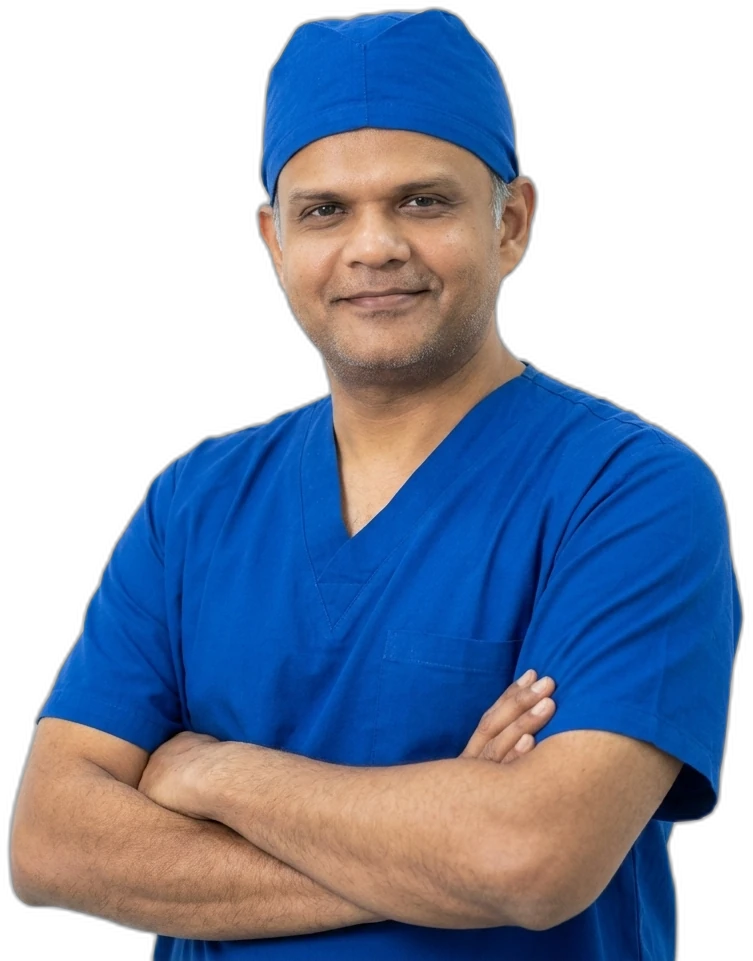
Need expert consultation? Book an appointment with Dr. Babu Elangovan.
Book AppointmentWhen a patient is diagnosed with end-stage liver disease, decompensated cirrhosis, or acute liver failure, a liver transplant often becomes the only viable path to restoring health and longevity. Once the decision to undergo a transplant is made, patients and their families face a critical question: should they pursue a living donor liver transplant or wait for a deceased donor liver transplant?
Understanding the clinical, logistical, and immunological differences between these two pathways is essential for making informed decisions. Dr. Babu Elangovan, a highly regarded Surgical Gastroenterologist and Liver Transplant Surgeon in Chennai, provides comprehensive care through both routes. Drawing upon his 20+ years of clinical experience and involvement in 230+ liver transplants, Dr. Babu Elangovan guides families through the medical, legal, and surgical complexities of liver transplantation.
Understanding Liver Transplantation
The liver is a powerhouse organ responsible for filtering toxins, processing nutrients, producing bile, and manufacturing essential proteins for blood clotting. When chronic diseases like hepatitis, non-alcoholic fatty liver disease (now termed metabolic dysfunction-associated steatohepatitis or MASH), or alcohol-induced liver injury cause irreversible scarring (cirrhosis), the liver gradually loses its ability to function.
When the liver can no longer compensate for this damage, patients enter a phase known as decompensated cirrhosis, characterized by jaundice, fluid accumulation in the abdomen (ascites), confusion (hepatic encephalopathy), or internal bleeding. At this stage, medical management focuses on symptom control, while liver transplantation represents the definitive surgical solution to replace the failing organ with a healthy graft.
The surgery itself is highly complex, requiring meticulous reconstruction of major blood vessels (the portal vein, hepatic artery, and vena cava) and the bile duct. Because of the liver's unique anatomical position and its role in systemic circulation, the procedure demands advanced surgical expertise in hepato-pancreato-biliary (HPB) surgery.
What is a Living Donor Liver Transplant?
A living donor liver transplant (LDLT) is a procedure where a healthy individual voluntarily donates a portion of their liver to a patient in need. This is made possible by the liver’s remarkable regenerative capacity, known as hypertrophy.
During the procedure, the surgical team removes either the right lobe (typically about 60% of the liver, used for adult recipients) or the left lobe (typically about 40%, often used for pediatric recipients) from the donor. Over the course of 6 to 8 weeks following the surgery, the remaining portion of the liver in the donor and the transplanted portion in the recipient grow to meet the full metabolic demands of each individual.
Legal and Ethical Framework in India
In India, living organ donation is strictly regulated under the Transplantation of Human Organs Act (THOA). To prevent commercial exploitation, the donor must be a "near relative" (such as a spouse, parent, sibling, child, or grandparent) or a close relative approved by a state-appointed Authorization Committee. The donor must undergo rigorous psychological and medical screening to prove that the donation is entirely voluntary, altruistic, and free from financial coercion.
What is a Deceased Donor Liver Transplant?
A deceased donor liver transplant (DDLT) involves transplanting a whole liver (or occasionally a split portion of a liver) from an individual who has been declared brain-dead. Brain death typically occurs after a severe head injury, stroke, or brain hemorrhage, where all brain stem function has permanently ceased, but support systems temporarily keep the heart beating and oxygen flowing to the organs.
Once brain death is certified by a panel of medical experts and the family gives consent for organ donation, the state organ allocation registry is notified. In Tamil Nadu, this process is coordinated by the Transplant Authority of Tamil Nadu (TRANSTAN).
How the Waiting List Works: The MELD Score
Unlike living donation, where the timing of the surgery is planned, deceased donor transplantation relies on a centralized waiting list. Organs are not distributed on a first-come, first-served basis. Instead, they are allocated based on medical urgency, calculated using the Model for End-Stage Liver Disease (MELD) score.
The MELD score is a mathematical formula based on four objective blood test results:
- Bilirubin: Measures how effectively the liver excretes bile.
- Creatinine: Assesses kidney function, which often declines in advanced liver failure.
- INR (International Normalized Ratio): Evaluates the blood's ability to clot, a key function of liver-produced proteins.
- Sodium: Reflects fluid and electrolyte balance in end-stage liver disease.
MELD scores range from 6 (less urgent) to 40 (critically ill). When a deceased donor organ becomes available, it is offered to the compatible patient on the registry with the highest MELD score, ensuring that the sickest patients receive priority.
Living Donor vs Deceased Donor Liver Transplant: A Detailed Comparison
Choosing between these two pathways involves weighing multiple clinical variables, from waiting times to surgical logistics. The table below outlines the key operational and clinical differences:
| Feature | Living Donor Liver Transplant (LDLT) | Deceased Donor Liver Transplant (DDLT) |
|---|---|---|
| Organ Source | A healthy living volunteer (usually a close relative). | A certified brain-dead individual. |
| Scheduling | Elective; scheduled in advance at an optimal time for both donor and recipient. | Emergency; occurs unpredictably when a compatible organ becomes available. |
| Waiting Time | Minimal; depends only on donor evaluation and legal clearances. | Highly unpredictable; can range from weeks to several years depending on MELD score. |
| Graft Quality | Typically excellent; donors are highly screened, exceptionally healthy individuals. | Variable; depends on the donor's age, medical history, and cause of death. |
| Cold Ischemia Time | Extremely short (often under 1–2 hours); surgeries happen in parallel operating rooms. | Longer (up to 8–12 hours); the organ must be harvested, preserved on ice, and transported. |
| Donor Risk | Small but real surgical risk to a healthy individual (approx. 0.5% risk of major complications). | No risk to living individuals; respects the wishes of the deceased and their family. |
| Graft Size | Partial liver (right or left lobe); requires precise volume calculations to avoid "small-for-size" syndrome. | Typically the whole liver; provides full metabolic volume immediately. |
The Transplant Journey: Step-by-Step
Whether pursuing a living or deceased donor transplant, patients must navigate a structured clinical pathway. The timeline below illustrates the typical progression from initial evaluation to long-term recovery.
Comprehensive Evaluation
Recipient undergoes blood tests, cardiac workup, imaging, and nutritional assessment to confirm eligibility.
- Medical clearance of recipient
Donor Identification
For LDLT, a family donor is screened. For DDLT, the patient is registered on the TRANSTAN waitlist.
- Donor compatibility confirmed
Legal & Ethical Approval
Documentation and personal interviews with the state-appointed Authorization Committee to verify relationship and consent.
- Legal clearance and organ availability
The Transplant Surgery
Simultaneous donor and recipient procedures (LDLT) or emergency retrieval and transplant (DDLT).
- Successful surgical anastomosis
ICU & Ward Recovery
Close monitoring for graft function, infection, and rejection, followed by progressive mobilization.
Deep Dive: Living Donor Liver Transplant (LDLT)
For many families in South India, a living donor transplant is the most viable path due to the shortage of deceased donor organs. However, the decision to proceed with LDLT requires a deep understanding of what the process entails for both the patient and the donor.
The Rigorous Donor Selection Process
Donor safety is the absolute cornerstone of living donation. A potential donor must undergo a multi-phase evaluation:
- Blood Group Compatibility: The donor’s blood group must be compatible with the recipient’s (similar to blood transfusion rules), though ABO-incompatible transplants are possible in highly specialized settings.
- Anatomical Assessment: Advanced imaging, including CT and MRI scans of the liver, is performed to map the liver's blood vessels (arteries, veins) and bile ducts. This ensures that the liver can be split safely, leaving both the donor and recipient with adequate vascular and biliary connections.
- Volumetric Analysis: Radiologists calculate the exact volume of the donor’s liver. The remaining portion (the future remnant) must be at least 30–35% of the donor’s total liver volume to ensure their safe recovery. Simultaneously, the donated portion must be large enough to support the recipient's body weight (known as the graft-to-recipient weight ratio, or GRWR, which should ideally be above 0.8%).
- General Health Screening: Screenings for cardiac, pulmonary, renal, and metabolic health are conducted to ensure the donor can tolerate major surgery under general anesthesia.
The Surgical Procedure (Donor Heptectomy)
The donor surgery is a highly precise operation. Working in an adjacent operating suite, the surgical team performs a partial hepatectomy. Using advanced parenchymal transection tools (such as ultrasonic aspirators) and, where appropriate, robotic or minimal-access techniques, the surgeon divides the liver tissue.
Great care is taken to isolate and cleanly divide the hepatic artery, portal vein, hepatic veins, and bile ducts supplying the segment to be removed. Once the graft is freed, it is immediately flushed with a cold preservation solution and prepared for implantation into the recipient.
Deep Dive: Deceased Donor Liver Transplant (DDLT)
For patients who do not have a compatible living donor, registering for a deceased donor transplant is the primary option.
The Reality of the Waitlist
The main challenge of DDLT is the unpredictability of the waiting period. Because organs are allocated based on the MELD score, a patient with a lower MELD score (who is stable but still suffering from significant symptoms) may wait months or even years on the registry. During this waiting period, there is a risk of the disease progressing, resulting in acute-on-chronic liver failure or complications like refractory ascites, variceal bleeding, or severe hepatic encephalopathy.
While waiting, patients require close medical supervision. Dr. Babu Elangovan provides comprehensive supportive care to manage complications, optimize nutrition, and perform minimally invasive interventions (such as therapeutic paracentesis or endoscopic management of varices through GI endoscopy) to keep the patient as stable as possible for surgery.
The Call and the Surgery
When a compatible deceased donor liver becomes available, the transplant center receives a notification. The patient must travel to the hospital immediately.
Because the liver must be transplanted within a narrow window (ideally under 10 hours from the time of retrieval), the surgical team coordinates the logistics rapidly. The recipient's damaged liver is entirely removed, and the new, whole deceased donor liver is implanted in its place.
Recovery, Immunosuppression, and Long-Term Care
Regardless of the donor source, the immediate post-operative phase is highly critical. Patients spend the first few days in a specialized Liver Transplant Intensive Care Unit (ICU) under close monitoring.
Monitoring Graft Function
In the first 48 hours, the surgical and ICU teams monitor key indicators of liver function:
- Bile Production: A steady output of golden-brown bile is a direct sign of a functioning graft.
- Coagulation Profile (INR): A rapid normalization of the INR indicates the new liver is successfully synthesizing clotting factors.
- Liver Enzymes: While enzymes (AST and ALT) spike immediately after surgery due to preservation stress, they should steadily decline over the subsequent days.
- Vascular Patency: Regular bedside Doppler ultrasounds are performed to ensure blood is flowing freely through the newly reconstructed hepatic artery, portal vein, and hepatic veins.
Immunosuppressive Medications
Because the recipient’s immune system naturally recognizes the new liver as foreign, patients must take immunosuppressive medications (anti-rejection drugs) for the rest of their lives. These medications must be carefully balanced:
- Too little immunosuppression can lead to graft rejection, where the immune system attacks the new liver.
- Too much immunosuppression increases the risk of opportunistic infections, kidney strain, and metabolic issues like high blood pressure or diabetes.
Over time, the dosage of these medications is gradually tapered to a low, stable maintenance level.
The Single-Surgeon Continuity Model: Why It Matters
A liver transplant is not just a single operation; it is a lifelong commitment to health management. In many large institutional settings, a patient may see different doctors at every stage—one for the initial workup, another in the operating room, and a rotating team of junior doctors during ward rounds and long-term follow-ups.
Dr. Babu Elangovan operates on a single-surgeon continuity model. This means that the same experienced surgeon who evaluates you in the clinic is the one who plans the surgery, performs the transplant, manages your care in the ICU, and monitors your progress in the outpatient clinic years down the line.
This model offers significant clinical benefits:
- Deep Clinical Familiarity: The surgeon knows every nuance of your abdominal anatomy, your donor's anatomy, and your specific medical history.
- Consistent Decision-Making: Reduces the risk of conflicting medical advice during the critical recovery phase.
- Stronger Patient-Doctor Trust: Provides peace of mind to families navigating a stressful medical journey.
Choosing the Right Option for Your Family
The choice between a living donor and a deceased donor transplant is highly individualized.
If a patient is critically ill with a rapidly rising MELD score or acute liver failure, waiting on the deceased donor list may be too risky. In such cases, if a healthy, compatible family donor is available, a living donor liver transplant is often the most effective way to perform the surgery before the patient's condition deteriorates further.
Conversely, if the patient is relatively stable, has a lower MELD score, and does not have a suitable family donor, a structured waitlist strategy for a deceased donor transplant, combined with close medical optimization, is the preferred path.
If you or a loved one is facing advanced liver disease, early clinical evaluation is essential to understanding your options. For a full picture of how each pathway is planned and performed, see our dedicated liver transplant procedure page.
For personalised advice and expert care, consult Dr. Babu Elangovan — Surgical Gastroenterologist & Liver Transplant Surgeon, Chennai. Book an appointment for an in-person consultation or a remote video second opinion, or visit our consulting locations to find a clinic near you.
References
- Transplant Authority of Tamil Nadu (TRANSTAN). "Deceased Organ Donation Guidelines and Statistics." Government of Tamil Nadu.
- European Association for the Study of the Liver (EASL). "Clinical Practice Guidelines: Liver Transplantation." Journal of Hepatology, 2016.
- American Association for the Study of Liver Diseases (AASLD). "Evaluation of the Patient for Liver Transplantation." Hepatology, 2020.
- World Health Organization (WHO). "Guiding Principles on Human Cell, Tissue and Organ Transplantation." Geneva, 2010.
- Indian Society of Organ Transplantation (ISOT). "Guidelines on Living Donor Liver Transplantation in India." Indian Journal of Transplantation, 2021.
Authored by