What Causes Jaundice in Adults? Symptoms & When to Worry
Need expert consultation? Book an appointment with Dr. Babu Elangovan.
Book AppointmentNoticing a yellowish tint in the mirror—whether in the whites of your eyes or on your skin—can be a deeply unsettling experience. This physical manifestation is known as jaundice, or icterus. While often associated with infants, jaundice in adults is not a disease in itself; rather, it is a visible clinical indicator of an underlying medical condition affecting the liver, gallbladder, pancreas, or blood.
To understand what causes jaundice in adults, it is necessary to look closely at the digestive and biliary systems. When these organs experience inflammation, obstruction, or cellular damage, the body's method of processing and excreting metabolic waste is disrupted.
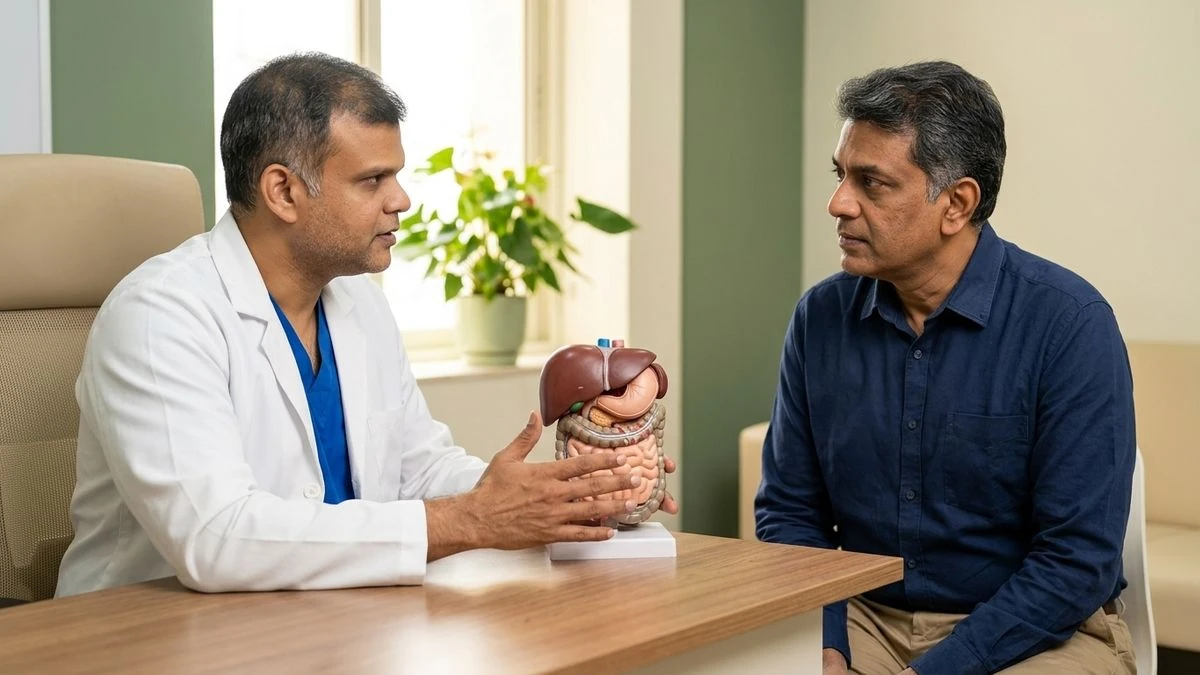
As a senior Surgical Gastroenterologist and Liver Transplant Surgeon with over two decades of experience, Dr. Babu Elangovan frequently evaluates patients presenting with jaundice at his consulting locations in Chennai, including Kauvery Hospital (Alwarpet) and Mira Health Care (Adyar). Determining the precise root cause of jaundice is the critical first step toward establishing an effective, highly targeted treatment plan.
Understanding Bilirubin: How Jaundice Develops
To comprehend what causes jaundice in adults, one must first understand the lifecycle of a yellow-orange pigment called bilirubin. Bilirubin is a natural byproduct formed during the normal breakdown of aging red blood cells (erythrocytes) in the spleen.
The physiological journey of bilirubin involves several distinct stages:
- Production: Red blood cells complete their lifespan of approximately 120 days and are broken down, releasing hemoglobin. This hemoglobin is metabolized into unconjugated (indirect) bilirubin, which is water-insoluble and travels through the bloodstream bound to a protein called albumin.
- Conjugation in the Liver: The liver absorbs unconjugated bilirubin and converts it into conjugated (direct) bilirubin. This conjugated form is water-soluble, allowing it to be safely excreted.
- Excretion via Bile: The liver secretes conjugated bilirubin into bile—a digestive fluid. Bile travels through the network of bile ducts into the gallbladder for storage, and eventually into the small intestine (duodenum) to assist in fat digestion.
- Elimination: In the intestines, bacteria convert bilirubin into urobilinogen. Most of this is excreted in the stool (giving feces its characteristic brown color), while a tiny fraction is reabsorbed and excreted in the urine.
When any part of this complex pathway is disrupted—whether through an overproduction of bilirubin, a failure of the liver cells to process it, or a physical blockage preventing its excretion—bilirubin builds up in the blood. When systemic levels rise significantly, the pigment deposits in bodily tissues, resulting in the characteristic yellow discoloration of the skin and the sclera of the eyes.
What Causes Jaundice in Adults? Classification of Triggers
In clinical practice, medical professionals categorize the causes of jaundice based on where the disruption occurs along the bilirubin pathway. These are divided into three major categories: pre-hepatic, intra-hepatic, and post-hepatic (obstructive).
1. Pre-Hepatic Causes (Before the Liver)
Pre-hepatic jaundice occurs when there is an accelerated rate of red blood cell destruction (hemolysis), overwhelming the liver’s capacity to conjugate and excrete the resulting bilirubin. In these cases, the liver itself is usually healthy, but it cannot keep up with the sheer volume of pigment.
Common pre-hepatic triggers include:
- Hemolytic Anemias: Genetic or acquired conditions where red blood cells are destroyed prematurely.
- Malaria: A parasitic infection that targets and ruptures red blood cells.
- Blood Transfusion Reactions: An immune response that occurs if incompatible blood is transfused.
- Large Hematomas: The reabsorption of a massive collection of clotted blood within body tissues can temporarily spike bilirubin levels.
2. Intra-Hepatic Causes (Within the Liver)
Intra-hepatic jaundice arises when the liver tissue itself is damaged, inflamed, or scarred. This impairment prevents hepatic cells (hepatocytes) from properly taking up, conjugating, or secreting bilirubin into the biliary system.
Key intra-hepatic causes include:
- Viral Hepatitis: Infections caused by hepatitis viruses (A, B, C, D, and E) lead to acute or chronic liver inflammation.
- Alcohol-Induced Liver Disease: Long-term, heavy alcohol consumption causes inflammation (alcoholic hepatitis) and progressive scarring.
- Non-Alcoholic Fatty Liver Disease (NAFLD / NASH): The accumulation of fat in liver cells can trigger chronic inflammation, potentially progressing to advanced scarring.
- Cirrhosis: This represents the advanced, irreversible scarring of the liver tissue resulting from long-term liver damage. When cirrhosis leads to liver failure, a comprehensive liver transplant evaluation may be required. Understanding options such as living and deceased-donor liver transplantation is crucial for patients facing end-stage liver disease.
- Drug-Induced Liver Injury (DILI): Certain medications, over-the-counter drugs (such as high doses of paracetamol), herbal supplements, and toxins can exert direct toxic effects on liver cells.
- Autoimmune Hepatitis: A condition where the body’s immune system mistakenly attacks its own liver cells.
3. Post-Hepatic / Obstructive Causes (After the Liver)
Post-hepatic jaundice, frequently referred to as obstructive jaundice, occurs when bilirubin has been successfully conjugated by the liver but cannot flow naturally into the intestines due to a physical blockage in the biliary system. This is a critical area of focus within hepato-pancreato-biliary (HPB) surgery.
Common obstructive triggers include:
- Gallstones in the Common Bile Duct (Choledocholithiasis): Gallstones formed in the gallbladder can migrate into the common bile duct, completely blocking the flow of bile. Patients experiencing recurrent gallstone issues often require laparoscopic gallbladder surgery to prevent such complications.
- Bile Duct Strictures: Benign or inflammatory narrowing of the bile ducts, sometimes occurring as a long-term complication of prior abdominal surgeries or chronic inflammation.
- Pancreatic Tumors: Tumors located in the head of the pancreas can physically compress the adjacent common bile duct, leading to progressive, painless jaundice. This requires highly specialized gastrointestinal cancer surgery or pancreatic resections.
- Cholangiocarcinoma (Bile Duct Cancer): Malignant tumors originating directly within the bile ducts.
- Pancreatitis: Severe inflammation of the pancreas can cause swelling that temporarily compresses the bile duct, disrupting normal bile flow. This requires dedicated pancreatic and biliary care.
Symptoms Accompanying Jaundice: What to Watch For
While yellowing of the skin and eyes is the hallmark sign, the accompanying symptoms provide vital clues regarding the specific cause of jaundice. Paying close attention to these signs helps clinicians differentiate between medical and surgical causes.
| Symptom | Clinical Significance / Potential Cause |
|---|---|
| Dark, Tea-Colored Urine | Indicates high levels of conjugated bilirubin being filtered and excreted by the kidneys. Common in intra-hepatic and post-hepatic causes. |
| Pale or Clay-Colored Stools | Signifies that bile is not reaching the intestines (obstructive jaundice). Without bilirubin, stool loses its typical brown color. |
| Severe Skin Itching (Pruritus) | Caused by the systemic accumulation of bile salts in the skin, a classic sign of chronic biliary obstruction. |
| Right Upper Abdominal Pain | Often suggests an acute inflammatory cause, such as gallstones blocking the bile duct or acute gallbladder inflammation. |
| Fever and Chills | When paired with jaundice and abdominal pain, this is a major warning sign of cholangitis (a bacterial infection of the bile ducts) requiring urgent intervention. |
| Unexplained Weight Loss & Fatigue | Chronic fatigue combined with weight loss and painless, progressive jaundice raises concern for an underlying pancreatic or biliary malignancy. |
| Abdominal Swelling (Ascites) | Fluid accumulation in the abdomen, often accompanied by mental confusion, points toward advanced liver cirrhosis and liver failure. |
How Doctors Diagnose the Root Cause of Jaundice
Because jaundice is a symptom of many diverse conditions, a structured diagnostic approach is essential to identify the underlying pathology.
Initial Blood Panel
The diagnostic process begins with a comprehensive blood panel:
- Liver Function Tests (LFTs): These measure total, direct, and indirect bilirubin levels, alongside key liver enzymes (ALT, AST, ALP, and GGT). High ALP and GGT levels often point toward a biliary obstruction, while markedly elevated ALT and AST levels indicate primary liver cell inflammation. For a line-by-line reading of the panel, see how to read your liver function test (LFT).
- Complete Blood Count (CBC): Helps detect signs of anemia (suggesting hemolysis) or elevated white blood cell counts (suggesting infection).
- Viral Marker Testing: Screens for active hepatitis infections (such as Hepatitis B or C).
Diagnostic Imaging
To visualize the liver and biliary anatomy, doctors utilize several imaging modalities:
- Abdominal Ultrasound: This is typically the first-line imaging study. It is highly effective at showing whether the bile ducts are dilated (indicating a blockage) and can easily identify gallstones.
- Contrast-Enhanced CT Scan: Provides detailed cross-sectional images of the liver, pancreas, and surrounding abdominal organs, which is invaluable for identifying tumors or structural abnormalities.
- MRCP (Magnetic Resonance Cholangiopancreatography): A non-invasive, specialized MRI scan that provides high-resolution images of the biliary tree and pancreatic ducts.
- Endoscopic Ultrasound (EUS): Combines endoscopy with ultrasound to obtain detailed images of the pancreas and bile duct from within the digestive tract.
Minimally Invasive Interventions
In cases of suspected biliary obstruction, diagnostic and therapeutic GI endoscopy plays an essential role.
ERCP (Endoscopic Retrograde Cholangiopancreatography): A specialized procedure where an endoscope is guided through the mouth down to the opening of the bile duct in the small intestine. A catheter is inserted, contrast dye is injected, and X-rays are taken. ERCP is highly therapeutic; if a gallstone is found blocking the duct, the specialist can remove it, or place a hollow plastic or metal tube (stent) to keep the duct open and restore normal bile flow.
Red Flag Symptoms: When Jaundice is a Surgical Emergency
While some forms of jaundice can be managed with lifestyle changes or medication, certain clinical presentations demand immediate, emergency medical or surgical evaluation. Delaying care in these scenarios can lead to life-threatening complications.
1. Acute Cholangitis (Bile Duct Infection)
When a gallstone or tumor blocks the bile duct, stagnant bile can easily become infected with bacteria from the intestines. This condition, known as acute ascending cholangitis, is a medical emergency. It is classically identified by Charcot’s Triad:
- High fever with shaking chills
- Severe pain in the upper right side of the abdomen
- Visible jaundice
Without rapid biliary decompression (typically via emergency ERCP stenting) and intravenous antibiotics, this infection can rapidly progress to septic shock.
2. Painless, Progressive Jaundice
Jaundice that develops slowly and is entirely painless is a significant clinical warning sign in older adults. Unlike the sharp pain associated with gallstones, a slow-growing tumor in the head of the pancreas or the bile duct can gradually compress the bile duct without causing immediate pain. Early evaluation is essential to catch pancreatic or biliary tumors at a stage where they can be surgically removed.
3. Acute Liver Failure
If jaundice is accompanied by sudden bruising, bleeding, or changes in mental state—such as confusion, extreme drowsiness, or slurred speech (hepatic encephalopathy)—it indicates that the liver is failing rapidly. This requires immediate hospitalization in a specialized intensive care unit and urgent evaluation for emergency liver transplantation.
Treatment Options for Jaundice in Adults
Because jaundice is a symptom, successful treatment relies entirely on addressing the specific root cause.
Medical Management
For intra-hepatic and pre-hepatic causes, treatment is typically medical:
- Supportive Care and Antivirals: Used for acute viral hepatitis infections.
- Medication Adjustment: Immediate cessation of any drug, herbal remedy, or toxin causing drug-induced liver injury.
- Immunosuppressants: Prescribed for autoimmune hepatitis to calm the overactive immune response.
- Lifestyle Modifications: Complete abstinence from alcohol in cases of alcoholic hepatitis, combined with nutritional support and lifestyle changes to manage fatty liver disease.
Surgical and Interventional Procedures
For obstructive (post-hepatic) causes, mechanical intervention is usually required to clear the pathway:
- Biliary Stenting (via ERCP): Placing a temporary or permanent stent across a stricture or tumor to restore bile flow and relieve jaundice.
- Laparoscopic Gallbladder Removal (Cholecystectomy): If gallstones have caused an obstruction, surgical removal of the gallbladder is recommended once the bile duct has been cleared, preventing future blockages.
- Complex HPB Surgery: If a tumor in the pancreas or bile duct is causing the obstruction, surgical resection may be necessary. This includes procedures such as the Whipple's operation (pancreaticoduodenectomy) or liver resections to remove the tumor and reconstruct the biliary tract.
- Liver Transplantation: For patients with end-stage liver disease (decompensated cirrhosis) or acute liver failure, where the liver can no longer function, a liver transplant offers a path to long-term survival.
Why Continuity of Care Matters in Complex Liver and Biliary Conditions
Navigating a diagnosis of liver disease or biliary obstruction can be overwhelming for patients and their families. Complex conditions involving the liver, pancreas, and bile ducts require highly specialized surgical expertise and precise decision-making.
Dr. Babu Elangovan operates on a single-surgeon continuity model. This means that from your very first diagnostic consultation, through any necessary surgical procedures (whether laparoscopic, open, or robotic), and throughout your long-term post-operative recovery, you are cared for by the exact same surgeon.
This consistent oversight ensures deep familiarity with your specific anatomy and clinical history, minimizing communication gaps and providing a cohesive, reassuring patient experience. With over 20 years of clinical experience, involvement in over 230 liver transplants, and specialized training in Da Vinci robotic surgery, Dr. Babu offers advanced, compassionate care for complex gastrointestinal and hepato-pancreato-biliary conditions.
If you or a loved one are experiencing symptoms of jaundice, early and accurate diagnosis is vital. Request a consultation with Dr. Babu Elangovan at his primary consulting clinic, Mira Health Care in Adyar, or at other convenient consulting locations across Chennai.
For personalized advice and expert care, consult Dr. Babu Elangovan — Surgical Gastroenterologist & Liver Transplant Surgeon, Chennai. Book an appointment.
References
- European Association for the Study of the Liver (EASL). "EASL Clinical Practice Guidelines on the management of benign biliary diseases." Journal of Hepatology, 2023. https://www.journal-of-hepatology.eu
- American Association for the Study of Liver Diseases (AASLD). "Practice Guidelines for the Evaluation of Jaundice in Adults." Hepatology, 2021. https://www.aasld.org
- National Comprehensive Cancer Network (NCCN). "NCCN Clinical Practice Guidelines in Oncology: Pancreatic Adenocarcinoma." 2024. https://www.nccn.org
- World Health Organization (WHO). "Global Progress Report on Viral Hepatitis." 2024. https://www.who.int
- Rochester, J. S., et al. "Diagnostic Approach to the Patient with Jaundice." American Family Physician, 2017. https://www.aafp.org
Authored by