Eating Well After Pancreatic Surgery: Enzymes, Fat and Portion Size
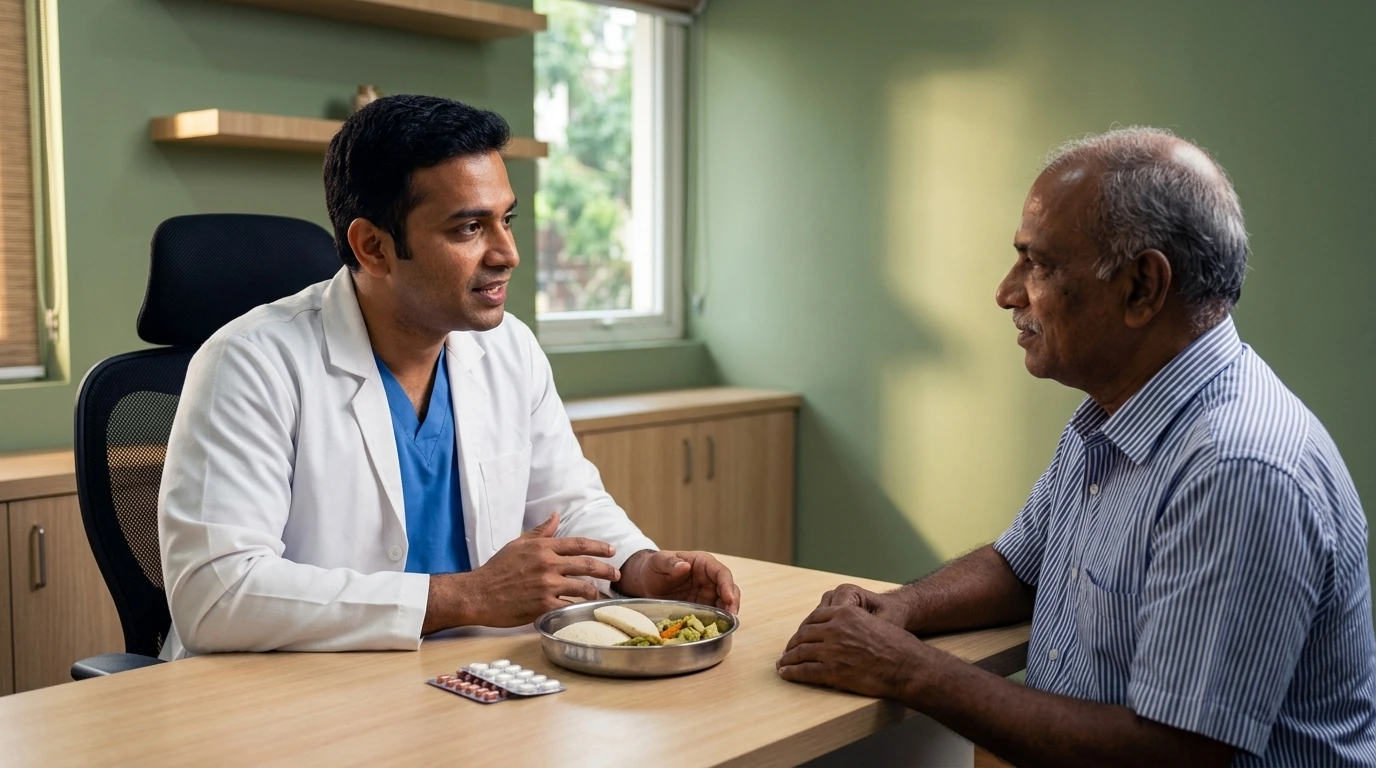
Need expert consultation? Book an appointment with Dr. Babu Elangovan.
Book AppointmentEating Well After Pancreatic Surgery: Enzymes, Fat and Portion Size
Patients are usually well prepared for the operation and much less well prepared for eating afterwards. Enzyme capsules get handed over with little explanation, they seem not to work, fat gets cut out, weight falls — and a recovery that should be going well starts to struggle.
Almost all of that is avoidable. This is about the food side specifically; the wider recovery timeline is covered in understanding the Whipple procedure recovery, and the operation itself in the Whipple procedure guide.
What actually changed inside
The pancreas does two separate jobs. It produces the enzymes that digest fat, protein and starch, and it produces insulin and glucagon to regulate blood sugar.
A Whipple procedure removes the head of the pancreas along with the duodenum, gallbladder and part of the bile duct, sometimes with part of the stomach, and reconnects what remains. So three things change at once:
- Fewer digestive enzymes reach your food.
- A smaller stomach reservoir, so you fill up quickly.
- Rerouted anatomy, which alters how fast food moves through.
Understanding that makes everything below make sense, rather than feeling like arbitrary rules.
Pancreatic enzyme replacement (PERT) — the part that is usually explained badly
If you take one thing from this page, take this section.
The capsules replace enzymes your pancreas can no longer make. They only work if they are physically mixed with your food inside the stomach.
How to take them:
- With the first few mouthfuls — not 30 minutes before, not after you have finished. This one error is the most common reason patients believe the capsules are useless.
- Split the dose across a longer meal. Some at the start, the remainder partway through. A meal eaten over 20 minutes needs enzymes present throughout, not all at the beginning.
- Match the dose to the fat content. A meal with paneer and ghee needs more than a bowl of plain rice porridge. Your team sets a baseline; you learn to adjust around it.
- Never crush, open or chew them. The enteric coating stops stomach acid destroying the enzymes before they reach the small intestine. Chewing also causes genuinely painful mouth ulcers.
- Keep them cool. Heat deactivates them.
How to tell your dose is too low
Undigested fat passing into the colon produces steatorrhoea, and it looks distinctive:
- Pale, clay-coloured or light-yellow stools
- Greasy or oily-looking, sometimes with a film on the water
- Floating, and hard to flush
- Strikingly foul-smelling — worse than normal
- Urgency shortly after eating
Alongside it: bloating, wind, cramps, and weight loss despite eating.
This is information, not something to endure. It means the enzyme dose is too low for what you are eating. Keep a short food-and-stool diary for a few days and contact your team so the dose can be adjusted. Patients often assume it is simply how things are now, and quietly lose weight for months.
Fat is not the enemy
This is the mistake that does the most damage.
Fat without enough enzymes causes bloating and loose stools. So patients cut fat right down — and things get worse, not better:
- Fat is the most calorie-dense nutrient available — roughly nine calories per gram against four for protein and carbohydrate. When you are trying to regain weight after major surgery, cutting it out makes the target nearly unreachable.
- Vitamins A, D, E and K need dietary fat to be absorbed. Remove the fat and these pass straight through, with consequences for vision, bones, immunity and clotting.
The aim is adequate fat with adequate enzymes — not fat avoidance. Reintroduce it in measured amounts, always with your capsules.
Portions and meal pattern
A smaller stomach reservoir means three large meals no longer work.
- Six to eight small meals a day, roughly two to three hours apart.
- Chew thoroughly. More of the mechanical work now has to happen in your mouth.
- Separate fluids from solids — stop drinking about 30 minutes before eating, and wait 30 to 45 minutes afterwards. Drinking with meals fills limited space with no calories and dilutes the enzymes.
- Protein and calories first, before filling up on watery vegetables or broth.
Indian meals that work
| Protein | Easy carbohydrate | Calorie boosters |
|---|---|---|
| Fresh soft paneer | Well-mashed moong dal khichdi | Measured ghee (with enzymes) |
| Well-set curd | Soft idli, mild chutney | Smooth almond or cashew paste |
| Soft-boiled or scrambled egg | Soft pongal, high water ratio | Milk powder stirred into curd |
| Well-cooked, mashed dal | Ragi or oats kanji | Nut pastes in porridge |
Keep spice mild early on — not because spice is harmful, but because an irritated gut tolerates it poorly while healing.
Blood sugar
Since the pancreas also makes insulin and glucagon, diabetes can follow pancreatic surgery. It may appear soon after, or emerge years later, so it needs continued monitoring rather than a single check.
It also behaves somewhat differently from ordinary type-2 diabetes: when both the sugar-lowering and sugar-raising hormones are reduced, levels can swing more than expected in either direction. This makes it worth managing with an endocrinologist alongside your surgical team, and worth being cautious about low readings as well as high ones.
Vitamins and long-term monitoring
Because fat absorption is impaired, the fat-soluble vitamins A, D, E and K are vulnerable. B12 and iron may also be affected depending on the reconstruction and stomach acid changes. Long term, low vitamin D and calcium threaten bone density.
The right approach is periodic blood testing and targeted correction — not a general-purpose multivitamin bought off the shelf, which may contain forms your altered gut absorbs poorly.
When to contact your team urgently
- Persistent vomiting, or unable to keep fluids down for 24 hours
- Fever, especially with shaking chills
- Jaundice — yellowing of the eyes or skin
- Severe or progressive abdominal pain not settling with your usual medication
- Continued weight loss despite eating and taking enzymes
- Signs of dehydration — dizziness, confusion, very dark or scanty urine
Getting the support right
Recovery from pancreatic surgery is as much a nutritional process as a surgical one, and it works best when enzyme dose, weight and blood results are reviewed together over the first year rather than set once at discharge. The wider service is described under HPB surgery and pancreatic and biliary care; if your surgery followed pancreatitis, acute vs chronic pancreatitis explained gives useful background.
To review your recovery, enzyme dose or nutrition, book an appointment or call +91 99626 60009.
This article is general information, not medical advice. Enzyme dose, diet and supplementation must be set and reviewed by your treating team and dietitian — deliberately, no doses are given here, because they are individual. Use this to ask better questions at your next appointment.
Authored by